A methodology for developing complex multifunctional materials that consist of or contain polymer/ carbon-nanotube composites has been conceived. As used here, “multifunctional” signifies having additional and/or enhanced physical properties that polymers or polymer- matrix composites would not ordinarily be expected to have. Such properties include useful amounts of electrical conductivity, increased thermal conductivity, and/or increased strength. In the present methodology, these properties are imparted to a given composite through the choice and processing of its polymeric and CNT constituents.
The methodology involves utilization of CNTs in any or all of several ways:
- Coating the CNTs to impart desired properties — for example, coating them with electrically and/or thermally conductive polymers, which could be dissolved in solvents;
- Incorporating uncoated or coated CNTs into a polymeric matrix, possibly in such a manner as to improve the properties of the CNTs, the matrix, and/or the resulting composite; and/or
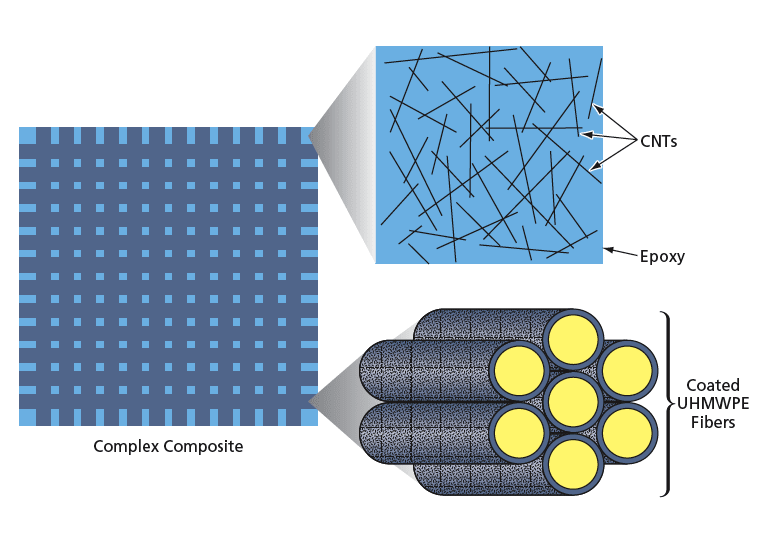
- Using a polymer/CNT composite as the matrix ingredient of a complex composite that includes any of a variety of other fibrous reinforcing materials.
This work was done by Pritesh Patel, Gobinath Balasubramaniyam, and Jian Chen of Zyvex Corp. for Marshall Space Flight Center. For further information, contact Sammy Nabors, MSFC Commercialization Assistance Lead, at