
White Paper: Transportation
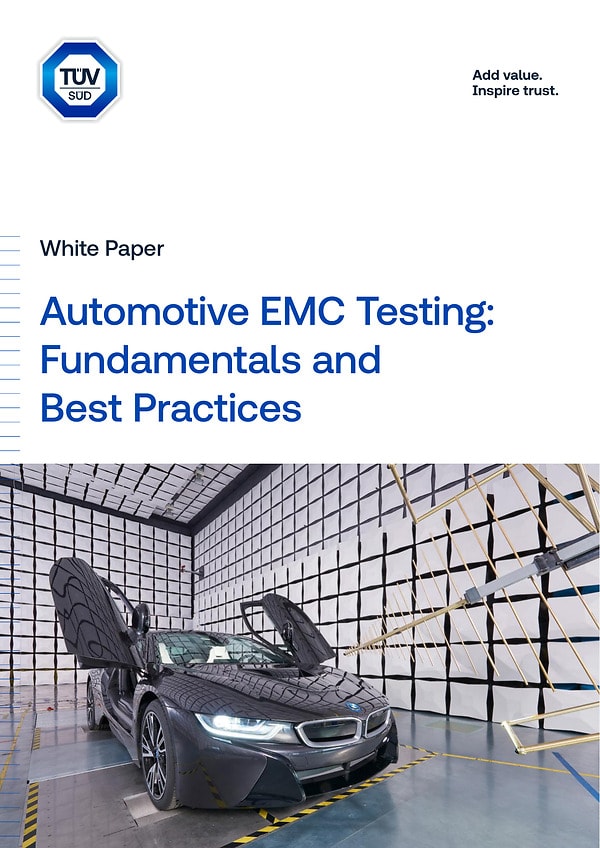
Automotive EMC Testing: Fundamentals and Best Practices
SPONSORED BY: ![]()

Automotive suppliers are responsible for devising test plans that comply with the requirements of any OEMs with whom they plan to do business selling cars in most major vehicle markets. Suppliers must be closely engaged with the EMC testing process to ensure compliance is achieved and can be readily proven on demand.
At TÜV SÜD, we offer tests to ensure compliance with international standards, including the European ECE R10. From component-level testing to complete vehicle evaluations, our comprehensive approach ensures that every aspect of EMC compliance is covered. Our white paper helps you to understand the basics of EMC testing.
Don't have an account?
Overview
The white paper on "Automotive EMC Testing: Fundamentals and Best Practices" by TÜV SÜD outlines the critical importance of electromagnetic compatibility (EMC) testing in the automotive industry. As vehicles become increasingly reliant on electronic systems, ensuring that these components function correctly without causing or being affected by electromagnetic interference is essential for safety and performance.
The document details the steps involved in the EMC testing process, beginning with the creation of a comprehensive test plan. This plan should include specifications for the components, their operational modes, input/output requirements, and performance criteria based on established standards such as ISO 11451-1. It emphasizes the need for collaboration between original equipment manufacturers (OEMs) and testing laboratories, highlighting that any adjustments to the testing process must be communicated and approved by the OEM.
Key aspects of the testing process include defining the sample size, understanding the environmental conditions for tests, and establishing pass/fail criteria. The paper also discusses the importance of real-time adjustments during testing to accommodate unforeseen changes, ensuring that the product meets all necessary standards.
TÜV SÜD offers end-to-end solutions throughout the automotive value chain, including homologation, compliance testing, and certification services. The white paper serves as a guide for automotive OEMs and suppliers, providing insights into best practices for EMC testing and the significance of adhering to regulatory requirements for global market access.
In conclusion, the white paper emphasizes that effective EMC testing is vital for the reliability and safety of modern vehicles, and it encourages collaboration with expert testing providers to navigate the complexities of compliance and certification in the automotive sector.