Browse extensive resources on the advances in Sensor and Test technologies. Find applications for smart sensor systems, data acquisition, transducers, detector systems plus the latest in advanced measuring instruments and monitoring systems, devices and instrumentation.
This application note describes how direct RF digitization enables precise measurement of extremely weak radio astronomy signals centered near 100 MHz. Traditional down-conversion...
This white paper explores the advantages of modern digital capacitive sensing technology for high-precision, non-contact measurement applications. It explains how...
Radio modules are transforming how products connect and communicate, but integration brings complex regulatory responsibilities. This whitepaper provides a clear, practical guide to navigating global approvals,...
Engineering safer, more secure EV chargers…the future of radial flux motors for mobility platforms...why the EV market will overcome tax credit losses. Read about these and other developments in this...
Harvard research breakthrough could speed development of room‐temperature quantum computers…New generation of ultra‐lightweight, high‐res space cameras takes flight…NASA LiDAR advance gives...
Stereo microscopes are essential when precise 3D visualization of samples is required in laboratories or production environments. Because users may spend extended periods examining, observing,...
Researchers at the University of Pennsylvania and University of Michigan have created the world’s smallest fully programmable, autonomous robots: microscopic swimming machines that can...
Sensors are expected to deliver accurate data reliably despite exposure to harsh environments including continued stress from thermal, chemical or mechanical factors. Epoxy compounds serve a critical role in...
The transition from traditional electrical/electronic (E/E) vehicle architectures to software-defined vehicles (SDVs) has increased the demand for development tools considerably....
Ultrashort laser pulses — that are shorter than a millionth of a millionth of a second — have transformed fundamental science, engineering and medicine. Despite this, their ultrashort duration...
Founded by MIT alumni, the Pickle Robot Company has built machines that can autonomously load and unload trucks inside warehouses and logistic centers.
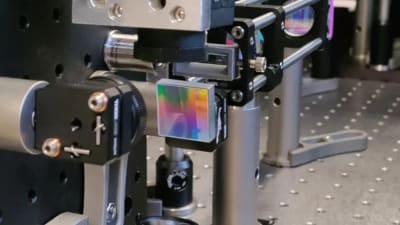
Endoscopic imaging system development requires coordination between various engineering disciplines, especially for optical illumination and imaging engines, particularly when adding fluorescence imaging capabilities. Read on to learn more about it.
If you’re wondering which of our videos from 2025 were the most popular, wonder no more! We’ve put together a list below of the top 5 Tech Briefs videos.
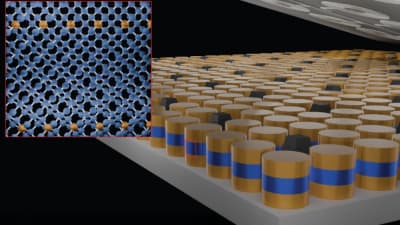
Miniaturization ranks as the driving force behind the semiconductor industry. The tremendous gains in computer performance since the 1950s are largely due to the fact that ever smaller...
Scientists have long sought to make semiconductors that are also superconducting, thereby enhancing their speed and energy efficiency and enabling new quantum technologies. However,...
As more devices get piled onto computer chips to increase processing power capacity, heat generation becomes increasingly concentrated. This heat must be removed to keep chip...
The phrase ‘liquid metal’ may bring to mind something hazardous, like mercury or molten steel. But in the Laboratory of Photonic Materials and Fiber Devices (FIMAP) in EPFL’s School of...
Aerospace and defense programs face increasing challenges in predicting and mitigating vibration, acoustic, and shock impacts on vehicle performance and reliability. This...
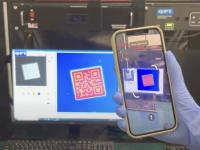
A collaborative multidisciplinary team of researchers from the Perelman School of Medicine at the University of Pennsylvania and the Tandon School of Engineering at New York University has developed a miniature device that could transform how blood cancer treatments are tested and tailored for patients. Read on to learn more.
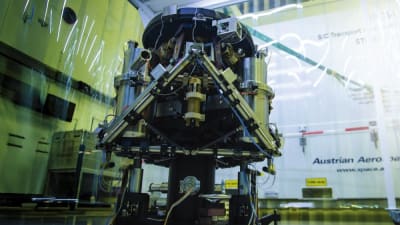
The micro-vibration test instrument gives the ESA a high confidence that a satellite’s mechanisms in space will generate verified forces and torques as displayed and confirmed on the micro-vibration test instrument on Earth. Read on to learn more about it.
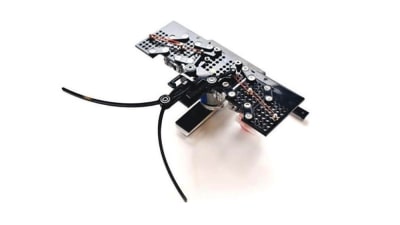
Mechanical engineering researchers in the Harvard John A. Paulson School of Engineering and Applied Sciences think there’s another way to design robots: Programming intended functions directly into a robot’s physical structure, allowing the robot to react to its surroundings without the need for extensive on-board electronics. Read on to learn more.
Without integrated vision, robots can only perform tasks in precisely the same way every time. If a part is even slightly out of position or rotated differently, the robot may fail to complete its task, or worse, cause an error in the process. Read on to learn more.
This compendium of articles from the editors of Tech Briefs and Aerospace & Defense Technology magazines looks at the latest advances in power electronics and energy storage for applications ranging from...
Discover how thin-film Parylene conformal coatings safeguard medical devices with unmatched biocompatibility, reliability, and performance under extreme conditions. In this insightful...







 Blog: Lighting
 Blog: AR/AI
 Quiz: Energy
 Blog: Robotics, Automation & Control
 Blog: Materials
 Blog: Robotics, Automation & Control
 Upcoming Webinars: Electronics & Computers
 Upcoming Webinars: Unmanned Systems
 Upcoming Webinars: Test & Measurement
 Upcoming Webinars: Electronics & Computers
 Upcoming Webinars: Power
 Upcoming Webinars: AR/AI