Find the latest advancements in the software used in simulation software, CAD, CAM, CAE, and mathematical and scientific software. Access technical and application briefs from NASA and other major research labs.
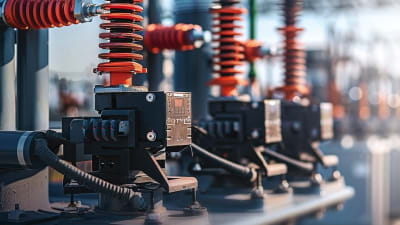
Pinggao Group focuses on the development and production of high-voltage and ultra-high-voltage electrical equipment. Different teams at the company use simulation to explore in depth the factors that affect the performance of high-voltage switches as well as to optimize switch designs and predict the operational status of equipment. Read on to learn more about the work.
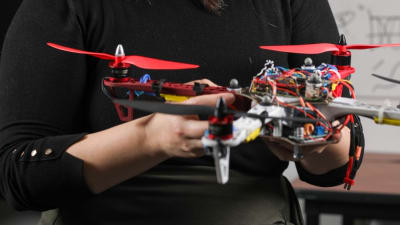
Leila Bridgeman and her team at Duke University Pratt School of Engineering are developing software that will improve upon existing techniques to ensure robust and safety-assured control for complex autonomous systems such as drones and medical robotics.
Engineers at Carnegie Mellon University have created a fast, highly accurate simulator for spray-based concrete 3D printing that could enable stronger, more complex, and less wasteful construction by predicting how concrete behaves and solidifies, even around rebar.
Founded by MIT alumni, the Pickle Robot Company has built machines that can autonomously load and unload trucks inside warehouses and logistic centers.
The core Flight System (cFS) is an open-source software framework that allows spacecraft to have a common starting point, without having to code all the base functions from scratch. Managed out of NASA’s Goddard Space Flight Center in Greenbelt, Maryland, cFS covers all the basics that a spacecraft’s computer needs to operate. Read on to learn more about it.
Manufacturers face increasing pressure to reduce downtime, improve precision, and accelerate time-to-market while managing complex production environments. This...
The automotive industry is facing a number of challenges in today's market including the pressure to adopt advanced digital technologies like digital twins, AI, big data, and AR/VR as well...
Aerospace and defense programs face increasing challenges in predicting and mitigating vibration, acoustic, and shock impacts on vehicle performance and reliability. This...
International research collaboration has unlocked a new approach that performs complex tensor computations using a single propagation of light. The result is single-shot tensor computing, achieved at the speed of light itself.
How the NVIDIA‐Magna collaboration is redefining autonomy…ultra‐realistic simulation speeds AV development…the 'autonomy underdogs' driving ADAS forward. Read about these and other new...
See what's new on the market, including the new ImageIR® 9800 from infraTec; Instron's new 100 kN table model for the 6800 and 3400 Series universal testing systems; Sumida Corporation's CIUH10D46 and CIUH10D47 pulse transformers; and much more.
Researchers have created a simulation model to analyze how coastal management activities meant to protect barrier islands from sea-level rise can disrupt the natural processes that are keeping barrier islands above water. Read on to learn more about it.
Researchers have successfully demonstrated the U.K.’s first long-distance ultra-secure transfer of data over a quantum communications network, including the U.K.’s first long-distance quantum-secured video call. Read on to learn more.
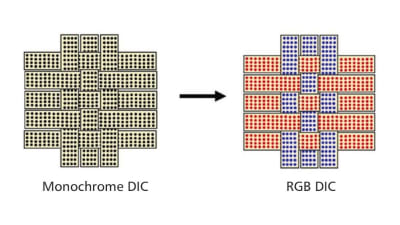
Innovators at NASA Johnson Space Center have developed a technology that can isolate a single direction of tensile strain in biaxially woven material. This is accomplished using traditional digital image correlation (DIC) techniques in combination with custom red-green-blue (RGB) color filtering software. Read on to learn more.
Through a combination of modeling, simulation, and machine learning (ML), USM researchers are laying the groundwork for intelligent uncrewed underwater vehicles (UUVs) capable of autonomously and accurately revealing what lies beneath the waves. Read on to learn more.
The future of industrial autonomy will not be defined by systems that operate as opaque black boxes, but by approaches that deliberately embed the expertise of the people who know the processes best. Machine teaching makes this possible by making the skills and strategies of expert operators the foundation of AI system design. Read on to learn more.
Robots may soon have a new way to communicate with people. Not through words or screens, but with light and images projected directly onto the world around them. University of South Florida's Zhao Han is developing technology that could transform how people interact with robots in both emergencies and everyday life. Read on to learn more.
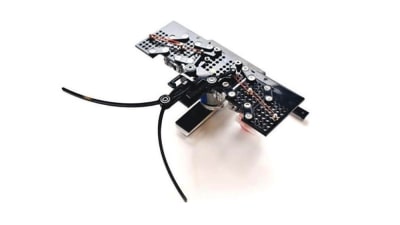
Mechanical engineering researchers in the Harvard John A. Paulson School of Engineering and Applied Sciences think there’s another way to design robots: Programming intended functions directly into a robot’s physical structure, allowing the robot to react to its surroundings without the need for extensive on-board electronics. Read on to learn more.
Without integrated vision, robots can only perform tasks in precisely the same way every time. If a part is even slightly out of position or rotated differently, the robot may fail to complete its task, or worse, cause an error in the process. Read on to learn more.
On the latest episode of the Aerospace & Defense Technology podcast, we sit down with two experts from Dassault Systèmes: Mariah Otte, Aerospace & Defense Solution Architect, and Jason Roberson, Industry Value Expert. Listen now!
Photonic processor enables ultrafast AI computations…how new polishing technique could revolutionize optical manufacturing…facial mapping technology is a leap forward in augmented reality. Read...
The automotive industry is under constant pressure to deliver faster, smarter, and more cost-effective solutions. Global competitors already are reducing time-to-market,...
Charles Wade, a fourth-year Ph.D. student in the Matter Assembly Computation Lab (MACLab) at the University of Colorado, Boulder, and Professor Rob MacCurdy, who leads the MACLab, have created a design package that uses functions and code to map not just shapes but where different materials belong in a 3D object.
SAE International’s Software-Defined Vehicle Summit is where industry experts gather to discuss the latest advancements, challenges, and opportunities in the realm of software-defined vehicles.