
White Paper: Test & Measurement
Developing An Effective Sound and Vibration Lab
SPONSORED BY: ![]()

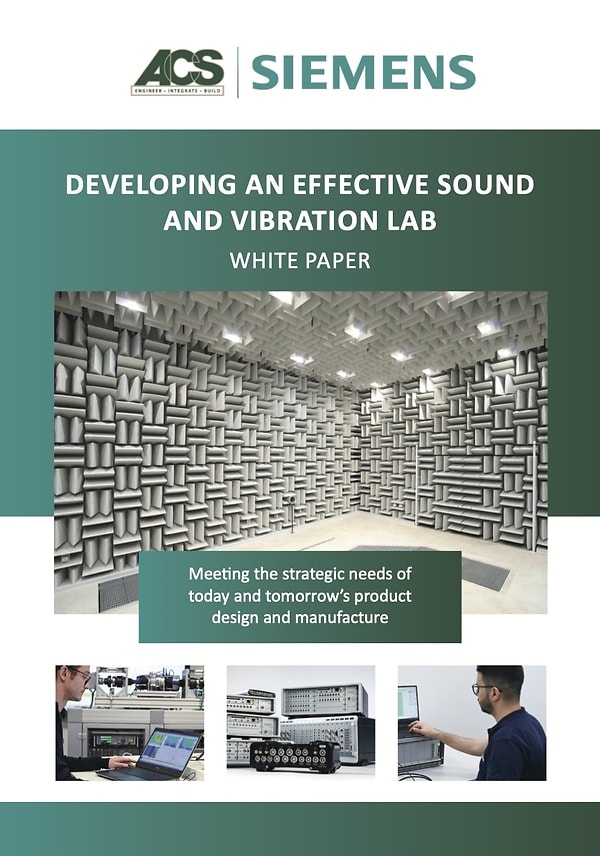
Optimizing sound and vibration performance is crucial in product development due to consumer demand for comfortable, quiet, and reliable products, alongside increasingly strict regulations. This requires strategies to accelerate product development, starting with an effective in-house sound and vibration lab. Key elements for such a lab include efficient data acquisition hardware, versatile sound and vibration software, robust data security and visualization, continuous team skill development, and seamless integration with simulation for a comprehensive digital twin. The partnership between ACS and Siemens bridges the gaps between hardware, software, and engineering expertise, offering comprehensive, turnkey testing solutions for Noise, Vibration, and Harshness (NVH) and durability requirements. This collaboration streamlines the development process, consolidates fragmented testing, and provides flexible solutions and licensing.
Don't have an account?
Overview
The document discusses the importance of establishing an effective in-house sound and vibration lab to enhance product development in today's competitive marketplace. As noise and vibrations significantly impact product performance and customer satisfaction, companies must optimize these factors to comply with regulations and gain a competitive advantage. The white paper outlines strategies for accelerating product development through systematic approaches to testing and data utilization.
Key points include the necessity of prompt measurements and direct access to sound and vibration testing data. Relying on third-party services can lead to inefficiencies, making in-house labs a strategic choice. The document emphasizes the need for a versatile data acquisition system and task-based software that can handle various testing requirements, including operational testing, troubleshooting, and certification.
The paper highlights the potential of sound and vibration data beyond reactive measures. By adopting structured workflows and advanced methodologies like root-cause analysis, companies can gain immediate insights into product improvement opportunities, leading to faster innovation cycles. A systematic approach to data management fosters better decision-making and enhances the overall development process.
Furthermore, the document discusses the concept of a digital twin, where data from physical testing is integrated into simulation processes. This integration allows for more accurate product predictions and enables teams to make informed decisions earlier in the development cycle, reducing costs and time associated with changes.
The white paper also addresses the importance of training and skill development within teams to keep pace with technological advancements. A technology partner should not only provide the necessary tools but also support project-based engineering services to ensure that the lab's framework is set up correctly and can adapt to evolving technologies.
In conclusion, the document advocates for a strategic investment in sound and vibration labs as a means to enhance product quality, speed up time-to-market, and maintain a competitive edge. By leveraging precise data and fostering collaboration between testing and simulation teams, companies can navigate the complexities of modern product development more effectively.