

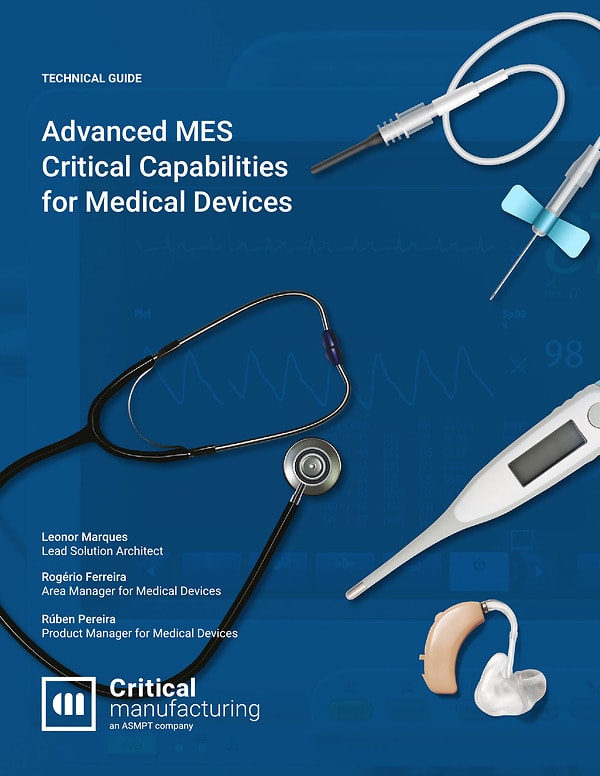
White Paper: Manufacturing & Prototyping
Discover Nine Key Critical Capabilities for Medical Devices Manufacturers
SPONSORED BY: ![]()

In the highly regulated medical device industry, success relies on precision, compliance, and efficiency. Manufacturers need more than basic production control – it’s crucial to have an MES that delivers real-time insights, ensures traceability, and drives continuous improvement.
Download this paper to explore nine different industry challenges and the details of what MES must do to enhance medical device operations performance.
Don't have an account?
Overview
The white paper on Advanced Manufacturing Execution Systems (MES) for the medical devices industry outlines the critical capabilities required for MedTech manufacturers to thrive in a rapidly evolving landscape. As the demand for personalized healthcare and data analytics increases, manufacturers face challenges such as regulatory complexities, stringent safety standards, and the need for detailed traceability throughout the production process.
The document emphasizes the importance of compliance and quality management in MedTech manufacturing. It highlights that manufacturers must ensure adherence to safety and effectiveness standards through comprehensive documentation, including electronic Device History Records (eDHR). This documentation is essential for regulatory audits and inspections, ensuring that every step of the manufacturing process is traceable from raw materials to the final product.
Key capabilities of an advanced MES include automated compliance monitoring, streamlined non-conformance handling, enhanced traceability, and data-driven insights. Automated systems can continuously monitor production processes, generating real-time compliance reports and audit trails. In the event of non-conformance, MES can trigger alerts and integrate Corrective and Preventive Actions (CAPA) to address issues promptly.
The white paper also discusses the role of IoT connectivity in enhancing manufacturing control. By integrating IoT devices, manufacturers can maintain optimal environmental conditions, reduce contamination risks, and improve product quality. Predictive analytics derived from collected data can facilitate proactive maintenance scheduling, minimizing unplanned downtime and enhancing operational efficiency.
Furthermore, the document underscores the significance of selecting the right MES solution, considering factors such as maintenance costs and validation processes. A well-chosen MES can provide off-the-shelf capabilities that reduce long-term costs and support the agility and precision needed to lead in the competitive MedTech market.
In conclusion, the white paper serves as a comprehensive guide for MedTech manufacturers seeking to leverage advanced MES to improve compliance, quality, and operational efficiency in their manufacturing processes.