

White Paper: Robotics, Automation & Control
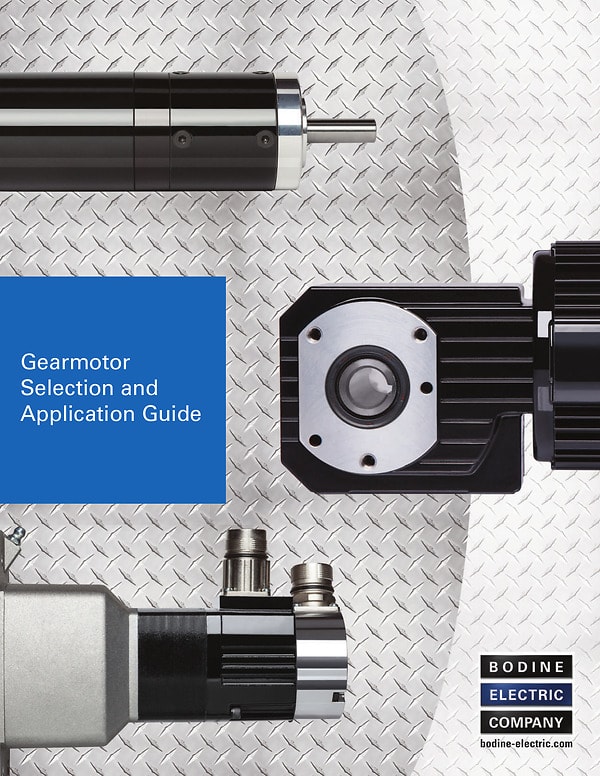
Gearmotor Selection and Application Guide
SPONSORED BY: ![]()

This technical bulletin is packed with a wide range of tips, recommendations, calculations, and real-world examples to guide engineers in selecting the best gearmotor to use in their machine design. The information was compiled by Bodine Electric Company application engineers after decades of experience working with OEM machine designers in many diverse industries.
Don't have an account?
Overview
The Bodine Electric Gearmotor Selection and Application Guide provides comprehensive insights into the selection, design, and application of gearmotors, which are compact electric motors integrated with gear reducers. The guide emphasizes the importance of understanding various factors that influence gearmotor performance, including operating speed, load, duty cycle, and ambient temperature.
Key design considerations are highlighted, such as the choice between oil and grease lubrication. Oil offers consistent lubrication under load, while grease provides flexibility in mounting and minimizes leakage risks. The guide also discusses the impact of gear design on longevity, noting that worm gears, while quieter, may wear out faster than spur and helical gears due to their sliding action.
The document outlines specific applications for gearmotors, including automated bag sealers and automated guided vehicles (AGVs). For instance, in the case of an automated bag sealer, the requirement for synchronous operation of two conveyors led to a solution involving individual gearmotors synchronized by a single AC speed control, eliminating the need for bulky chain and sprocket assemblies. This design not only simplified the system but also enhanced operational efficiency.
The guide also addresses the need for quiet operation in medical equipment, detailing how specific gearmotor designs can minimize noise and vibration, thereby reducing patient anxiety. It emphasizes the importance of selecting the right gearmotor based on application-specific requirements, such as torque output and environmental conditions.
Additionally, the guide provides practical calculations for determining output torque in motor-reducer combinations, illustrating how to assess whether a system is motor-limited or gear-limited based on the specifications of the motor and gear reducer.
Overall, the Bodine Electric Gearmotor Selection and Application Guide serves as a valuable resource for engineers and manufacturers, offering essential information for selecting and applying gearmotors effectively in various industrial applications. It combines technical specifications with practical examples, ensuring users can make informed decisions tailored to their specific needs.