

Vehicle Electrification - July 2021
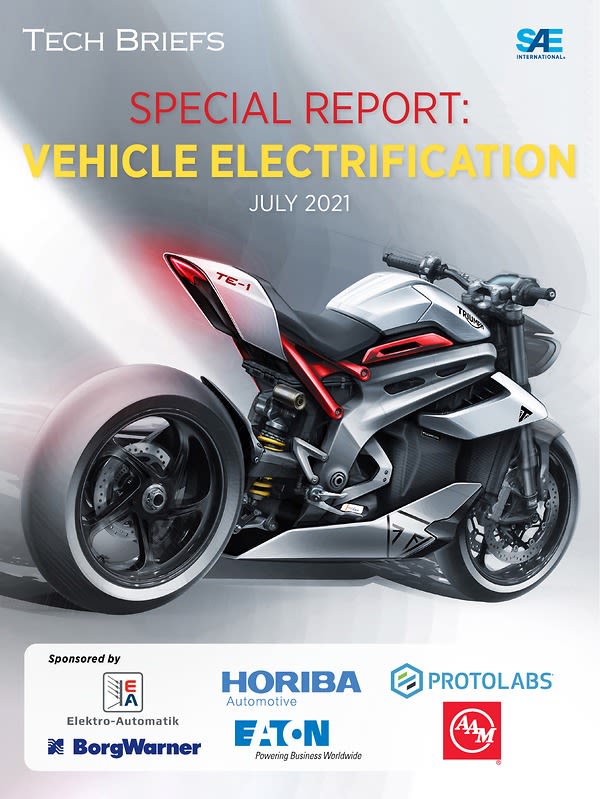
GM electrifies the new Corvette...a French nanomaterials company aims for a 5-minute EV recharge...Triumph unveils a radical new electric sportbike design. These are just a few of the innovations you'll read about in this compendium of recent articles from the editors of Automotive Engineering, Truck & Off-Highway Engineering, and Tech Briefs magazines.
Don't have an account?
Overview
The "Vehicle Electrification Special Report" from July 2021 provides a comprehensive overview of the rapidly evolving electric vehicle (EV) landscape, highlighting significant innovations, market trends, and the challenges faced by manufacturers in this transition from traditional internal combustion engine vehicles to electric alternatives.
As consumer concern for the environment grows, electric vehicles are poised to become the preferred mode of transportation, with projections indicating that the EV market could reach an all-time high of 116 million units on the road by 2030, up from just 8.5 million in 2020. This surge is driven by changing consumer mindsets, government legislation aimed at reducing greenhouse gas emissions, and the increasing pressure to phase out petrol and diesel vehicles. Notably, countries like Norway are leading the charge, planning to ban fossil fuel vehicle sales by 2025.
The report emphasizes the need for manufacturers to adapt quickly to these changes. Traditional automotive companies are rationalizing their product portfolios and electrifying their offerings, while numerous EV startups are entering the market, aiming to deliver innovative products at competitive prices. This competitive landscape has led to a significant reduction in product development timelines, shrinking from an average of 48 months to approximately 24 months. Additionally, the time a vehicle spends on the market has decreased by nearly 50%, necessitating rapid innovation and efficient manufacturing processes.
Key features of the report include a focus on technological advancements, such as Triumph Motorcycles' TE-1 electric project, which showcases innovations in battery technology and powertrain performance. The report also discusses the importance of efficiency in EV design, including the development of liquid-cooled battery systems and the integration of digital threads to streamline vehicle development.
Moreover, the report addresses the challenges manufacturers face in balancing cost, manufacturability, and performance. As the industry shifts towards electrification, there is an urgent need for innovative solutions to ensure that new products meet market demands while remaining profitable. The pressure from government regulations and the need for sustainable transport solutions are driving manufacturers to rethink their strategies and accelerate their development processes.
In summary, the "Vehicle Electrification Special Report" highlights the transformative changes occurring in the automotive industry as it moves towards electrification. With ambitious government targets, evolving consumer preferences, and the emergence of new players in the market, the report underscores the urgency for manufacturers to innovate and adapt to stay competitive in this dynamic environment. The future of transportation is increasingly electric, and this report captures the essence of that shift, providing valuable insights into the trends and technologies shaping the industry.











