

There is a significant shift toward the electrification of military systems as defense chiefs worldwide look to secure operational advantage across land, sea, and air. From ground vehicles to naval vessels, fighter jets to autonomous drones, senior officials, and planners are eager to accelerate the adoption of batteries, hybrid electric systems, and other sustainable technologies — thereby improving the performance of major platforms.
Earlier this year, the United States Department of Defense (DoD) awarded several multi-million-dollar contracts to prime and Tier 1 suppliers under its Next Generation Adaptive Propulsion program, covering the electrification of the air fleet through “digital transforming the propulsion industrial base.” Meanwhile, the Department of the Air Force is also running several initiatives looking at the transformation of next-generation air platforms through “cutting-edge digital engineering techniques.”
Furthermore, the recent announcement of plans for a Golden Dome multi-layered defense shield for the combined armed forces in the U.S. creates a requirement for reliable data centres with Design Assurance Level A (DAL A) system power and mobile launchers. In the future, any integration with broader NATO forces will require even higher protection, with DAL A power systems for remote monitoring and control.
A similar story of electrification is unfolding among major U.S. allies. A recent report by the British Army described battlefield electrification as a “win-win,” providing a digital backbone for operational advantage that would reduce logistical demand and enhance efficiency in the armed forces, encouraging simplification by reducing the documented types of in-service power generation systems.
Clearly, the electrification of military systems is gathering pace worldwide. These activities will result in expanded electronics and software content of next-generation military platforms, driven in no small part by investment in innovative digital technologies throughout the supply base.
The Advantages of More Modern Electric Systems
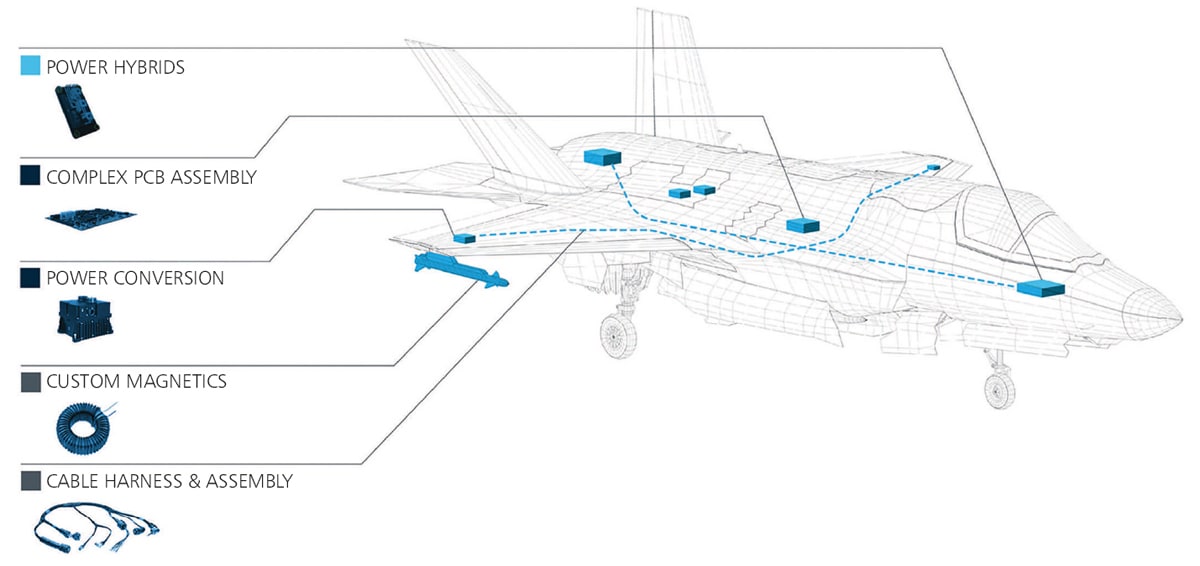
So, what might more electrified military systems look like at a practical level, and what benefits might they bring?
First, electrified military systems promise substantial operational advantages. Many modern military platforms feature a suite of new sensors, active protection, communication, and information systems that require power on demand. Meeting this requirement while overcoming current power budget constraints or the inefficient overmatch of running diesel generators can be achieved through electrification.
Electrification also reduces diesel dependency and logistical vulnerabilities. The U.S. DoD spends around $10 billion a year on bulk fuel, with additional expenditure on transporting that fuel to where it needs to be.
Electric-powered vehicles also have quiet operation, quick deployment, and no heat signature, which means they are undetectable through thermal imaging. Other key benefits include enhanced vehicle performance through instant torque and precision control, as well as flexible design potential. For instance, hub-mounted motors free up internal space while creating new tactical possibilities.
Battery technology also enables power sharing between platforms and personnel, while improved reliability from fewer moving parts reduces maintenance demands. This combination of enhanced capability and reduced logistical burden allows forces to operate longer at a higher tempo with greater survivability and tactical flexibility.
Understanding Electric Architectures
While electrical architecture varies by application, fundamental hardware and software systems underpin all power setups. The main energy source is usually the battery, primarily but not exclusively Lithium-ion, Lithium-Iron Phosphate, Nickel-Metal Hydride, or single-use thermal batteries activated by heat. Alternative and auxiliary energy sources may also include supercapacitors, auxiliary power units, or renewable inputs such as solar or hybrid generators.
The power conversion and management layer will typically include DC/ DC converters, DC/AC converters, power distribution units/solid-state power controllers, and energy management software. Distribution and protection are provided by power bus architectures, either for high-voltage DC backbones (200–800 VDC on electrified vehicles) or low-voltage distribution (28 VDC per MIL-STD-704), along with circuit protection such as EMI/EMC filters, and monitoring and control. Finally, there is load interface and conversion hardware, such as motor drives and pulse power modules, that feed the end systems and loads –— whether that be propulsion systems, mission electronics, weapons, or crew system displays.
Design Engineering Challenges
The electrification of military platforms presents complex challenges around range and aircraft payload, as well as the specific challenges of providing enough power for next-generation weapons systems such as hypersonic missiles. Addressing these challenges requires sophisticated power electronics solutions.
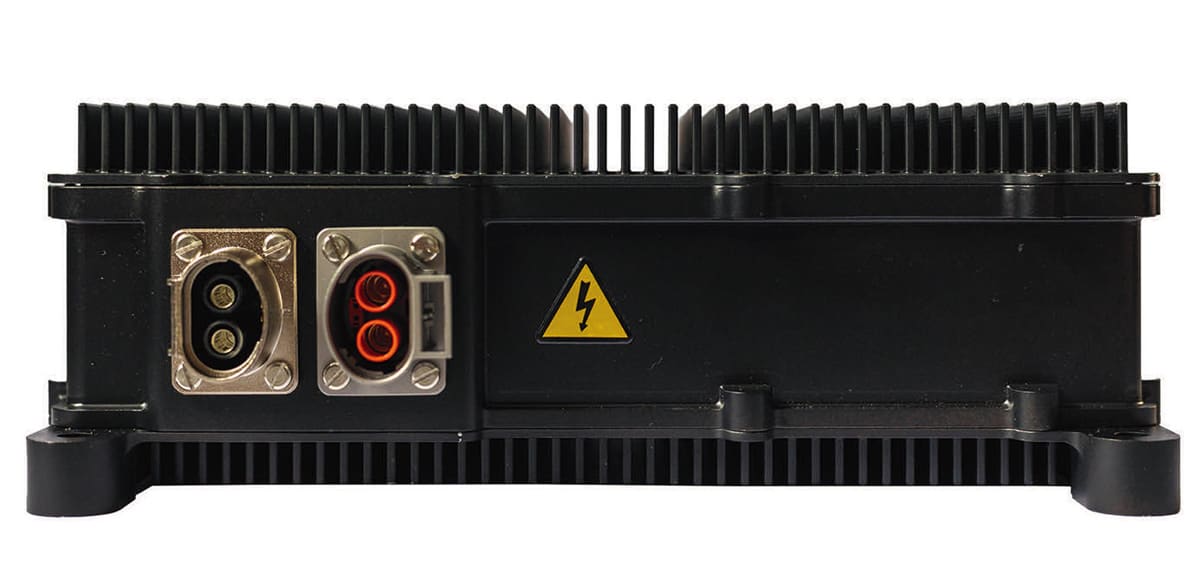
For design engineers concentrating on power electronics, most effort is focused on the conversion, distribution, and conditioning layers. Here, numerous technical objectives must be met. Thermal management is arguably the biggest single challenge and is sometimes referred to as the “Achilles heel” of electrification. Considerable effort is invested in managing thermal loads across platforms, particularly when traditional cooling methods reach their limits. Then there is power density and energy management optimization. Design engineers are increasingly considering new power electronic topologies and advanced switching techniques to maximize power output while minimising system footprint and weight.
EMC and signature management also come into play. Engineers look to balance increased electrical power with stealth requirements by controlling electromagnetic signatures while delivering higher switching frequencies and power levels. Mission-critical software integration, meanwhile, involves developing adaptive control systems that can reconfigure in real-time to counter jamming, implement countermeasures, and maintain operational flexibility while upholding safety-critical and mission-critical reliability standards.
When factors such as survivability, distributed control design, cybersecurity integration, and upgrade pathways are considered, it’s clear that design engineers working on power electronics have their work cut out to electrify safely and efficiently across military platforms.
Effective Strategies for Electrification
Increasingly, engineers are delivering efficiency-driven architecture design through the implementation of advanced converter topologies and control systems to maximize electrical efficiency. For example, increasing efficiency from 90 percent to 95 percent can halve the thermal management requirements in high-power systems. Higher voltage system architectures are also being deployed, transitioning to elevated voltage levels to minimize conductor weight and size while managing increased arcing and insulation challenges. This is critical for weight-sensitive aerospace applications.

Distributed thermal management techniques, where heat sources are spread across the platform rather than centralized, combined with advanced cooling methods such as liquid cooling, heat pipes, and heat exchangers, can result in significantly improved thermal distribution. Moving beyond component-level optimization to holistic architectural solutions that balance power requirements, thermal constraints, and environmental survivability, from the ground up, can lead to more integrated system-level design approaches.
Engineers are also deploying advanced analysis and simulation integration for thermal, vibration, and shock analysis during the design phase, particularly critical for unique military stresses such as gunfire shock loads.
Advanced Component Development
Such strategies are enabled by innovations in components and hardware. For instance, wide-bandgap semiconductor technologies, such as silicon carbide (SiC) and gallium nitride (GaN), are being used in switching devices. This adoption enables higher frequencies, reduced losses, and improved thermal performance — fundamental enablers of compact, efficient power electronics. Advanced magnetic components and power modules, such as high-frequency transformers, inductors, and integrated power modules, are specifically designed for extreme environments while maintaining efficiency and thermal performance.
Ruggedised interconnection systems, including connectors, harnesses, and cabling, are designed to withstand higher voltages while surviving shock, vibration, temperature extremes, and potential battle damage. Integrated thermal management hardware, including heat sinks, thermal interface materials, liquid cooling systems, and thermal monitoring components, can be designed to operate reliably in extreme military environments.
High-reliability discrete components are important, too. These include resistors, capacitors, and other passive components that are qualified for extended operation in harsh conditions, with predictable failure modes and long-term stability. And finally, advanced insulation systems using materials and design approaches for high-voltage operation can help maintain performance over decades of operation in high altitude, temperature cycling, and humidity.
Power System Partnership
With such an extensive list of strategies and technologies that can support the efficient electrification of military platforms, it is of no wonder that defense system integrators are increasingly looking to partner with electronics suppliers that have proven full-system technical capabilities for performance-critical applications in specialized markets.
TT Electronics, for example, provides vertical integration across the power chain. This end-to-end capability extends from discrete components such as magnetics through to high-voltage power conversion solutions and complete line-replaceable units, enabling system-level optimization rather than point solutions. Having evolved over the past 100 years, TT Electronics retains and transfers deep-level institutional knowledge, which helps it maintain engineering expertise across 30-year platform lifecycles, bridging the generational knowledge gaps that OEMs struggle with due to program-based workforce cycles.
This background enables TT Electronics to act as a system-level partner, accurately matching load profiles and optimizing power electronic systems for actual use cases rather than worst-case scenarios, therefore delivering right-sized solutions through smart power management and control architectures. Meanwhile, specialized knowledge in component selection, design practices, and reliability prediction integrated early in the design process ensures that technical specifications are met every step of the way.
Powering the Way Forward
The electrification of military systems is a positive step that will deliver enormous technical, operational, and sustainability advantages across defense equipment lifecycles. But it requires deep system-level technical expertise to ensure systems work seamlessly together across power conversion, distribution, and conditioning.
This article was written by Sanjeev Sachan, Engineering Director, TT Electronics (Kansas, U.S.). For more information, visit here .