

Connected Commercial Vehicles - March 2019
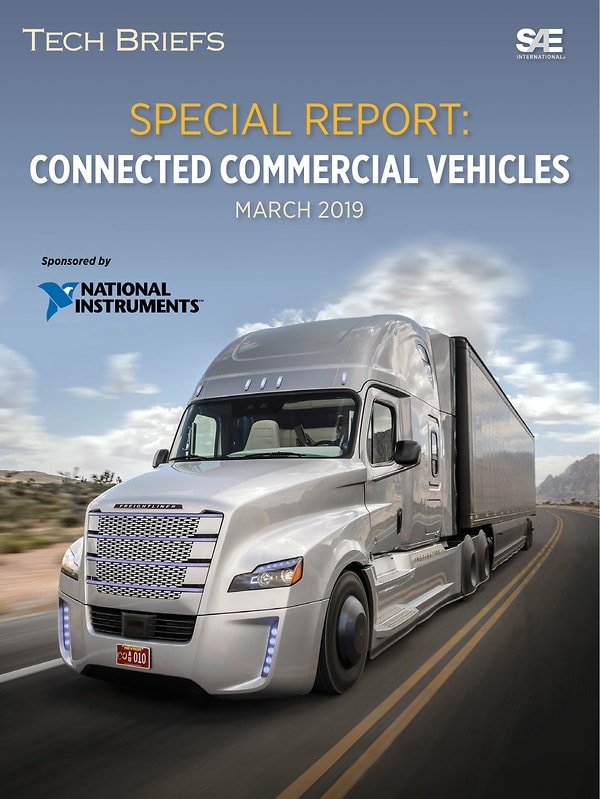
Trucks and other commercial vehicles are becoming smarter and more connected, moving rapidly on the road to autonomy. To help you keep pace with the latest developments, we present this compendium of recent articles from the editors of Truck & Off-Highway Engineering and Autonomous Vehicle Engineering.
Don't have an account?
Overview
The "Connected Commercial Vehicles Special Report," published in March 2019, explores the advancements and challenges in the realm of connected and autonomous commercial vehicles. As the industry faces a growing driver shortage and seeks to improve operational efficiency, the integration of technology into commercial fleets has become increasingly vital.
One of the key themes of the report is the adoption of connectivity by commercial fleet owners. Early adopters have leveraged wireless technology to gain insights into vehicle locations and various operational parameters. This connectivity allows for enhanced data collection, which is crucial for optimizing fleet management and improving efficiency. Equipment manufacturers are increasingly partnering with large cloud service providers to facilitate data collection and compliance with diverse regulations across different countries. For instance, BlackBerry's Radar utilizes Amazon's cloud services to gather data from various freight carriers, showcasing the trend of collaboration between tech companies and traditional manufacturers.
The report also addresses the technical challenges associated with developing autonomous vehicles. These challenges include the need for vehicle-to-vehicle (V2V) communication, the integration of sensors and controllers, and the navigation of regulatory and insurance hurdles. The integration of safety systems is highlighted as a critical aspect of enabling vehicles to operate autonomously. This involves collecting and analyzing inputs from various sensors and making real-time decisions, which is essential for ensuring safety on the roads.
Moreover, the report discusses the gradual approach to implementing autonomy in military applications, as exemplified by TARDEC's efforts to reduce the number of personnel in vehicle cabs. The strategy involves starting with a few unmanned units that follow a manned vehicle, indicating a cautious but progressive move towards full autonomy.
The report emphasizes the importance of collaboration among stakeholders in the industry, including manufacturers, technology providers, and regulatory bodies. Addressing the multifaceted challenges of data collection, storage, and analysis requires a concerted effort from all parties involved. The integration of advanced technologies and the development of robust systems are essential for the successful deployment of connected and autonomous vehicles.
In summary, the "Connected Commercial Vehicles Special Report" provides a comprehensive overview of the current state and future prospects of connected commercial vehicles. It highlights the significance of connectivity in enhancing fleet operations, the technical and regulatory challenges of developing autonomous systems, and the collaborative efforts needed to navigate this evolving landscape. As the industry continues to innovate, the report underscores the potential for connected vehicles to transform transportation and logistics, ultimately leading to safer and more efficient operations.










