

Medical Manufacturing - April 2019
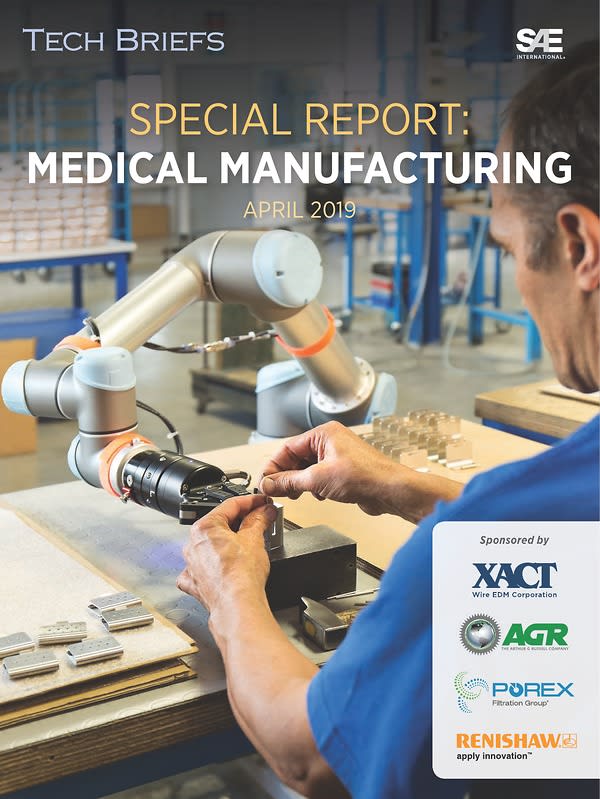
How are advances in 3D printing, robotic assembly, molding and other fabrication technologies shaping the future of medical device manufacturing? Find out in this Special Report – a compilation of recent articles from the editors of Medical Design Briefs magazine.
Don't have an account?
Overview
The Special Report on Medical Manufacturing from April 2019 provides a comprehensive overview of advancements and trends in the medical manufacturing sector, highlighting the integration of technology, efficiency improvements, and the importance of quality in producing medical devices.
One of the key themes of the report is the significant impact of automation and robotics in manufacturing processes. For instance, Dynamic Group successfully implemented collaborative robots (cobots) to enhance production capacity and reduce labor costs. By deploying additional cobots for tasks such as transporting delicate parts and kitting applications, the company was able to streamline operations, reducing the workforce needed from six to seven employees to just two. This shift not only increased production efficiency but also minimized scrap rates, showcasing the potential of automation in achieving sustainable manufacturing practices.
The report emphasizes the critical need for accuracy and reliability in medical manufacturing, as patients depend on healthcare providers for precise information and effective treatments. The use of dependable materials is highlighted as a foundational step in delivering quality medical devices. Specific requirements for medical devices include the need for antimicrobial or chemically resistant components, as well as materials that can withstand high temperatures and repeated impacts. This focus on material properties is essential for ensuring the safety and efficacy of medical products.
Additionally, the report discusses innovative technologies designed to enhance sample handling and reduce contamination risks in laboratory settings. For example, patented porous matrix technology is introduced, which allows for the collection, transport, storage, and release of samples in a single system. This technology is adaptable to various throughput formats and includes liquid-tight components that prevent leakage during transport, thereby addressing biohazard shipping concerns and reducing associated costs.
The report also touches on the importance of quality control and testing in the manufacturing process. It highlights the need for rigorous testing protocols to ensure that medical devices meet regulatory standards and perform reliably in clinical settings. The integration of advanced testing methods and materials is crucial for maintaining high-quality production standards.
Overall, the Special Report on Medical Manufacturing underscores the transformative role of technology in the industry, particularly through automation and innovative material solutions. It illustrates how these advancements not only improve production efficiency but also enhance the quality and safety of medical devices. As the industry continues to evolve, the insights provided in this report serve as a valuable resource for manufacturers seeking to navigate the complexities of medical device production and meet the growing demands of the healthcare sector.











