

Vehicle Electrification - January 2021
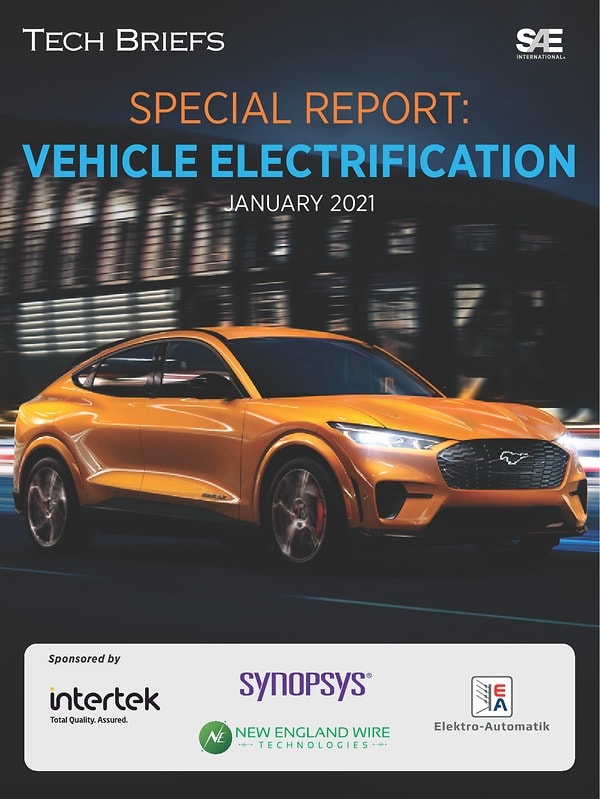
See how Ford, Volkswagen, Cadillac, and other manufacturers are pushing the boundaries of battery & EV design to compete with Tesla in a rapidly growing market, plus learn about the latest EV testing technologies and standards in this compendium of recent articles from the editors of Automotive Engineering and Truck & Off-Highway Engineering.
Don't have an account?
Overview
The "Vehicle Electrification Special Report" from January 2021 provides a comprehensive overview of the current state and future prospects of electric vehicles (EVs) in the automotive industry. It highlights significant advancements, challenges, and market trends related to vehicle electrification.
The report features the Ford Mustang Mach-E, which is Ford's first dedicated battery electric vehicle (BEV) built on a new electric vehicle platform. This model represents a significant step for Ford as it enters the competitive EV market, showcasing the challenges and opportunities that come with developing state-of-the-art electric vehicles.
Another key highlight is Volkswagen's ID.4, which is positioned as a mass-market electric vehicle aimed at making EVs more accessible to the general public. This model is part of VW's broader strategy to lead the charge in electrification, emphasizing the importance of affordability and practicality in the transition to electric mobility.
The report also delves into the intricacies of EV testing and development, featuring insights from FEV, a renowned powertrain engineering group that has expanded its focus to include EV technologies. The rigorous testing processes for EV components, including innovative methods like static testing of battery packs, are discussed, underscoring the importance of safety and performance in the development of electric vehicles.
A significant portion of the report is dedicated to the evolving battery market, which is crucial for the success of electric vehicles. It notes that the global automotive battery market is projected to grow from $49 billion in 2017 to over $85 billion by 2025, reflecting a compound annual growth rate (CAGR) of 7.02%. This growth is driven by increasing electrified vehicle production plans and the demand for advanced battery technologies.
The report also touches on emerging technologies in the EV space, such as new materials and cell technologies aimed at enhancing energy density and overall performance. For instance, Triumph's TE-1 project is highlighted for its innovative approach to pushing battery boundaries.
Additionally, the report discusses the introduction of a new SAE wireless charging standard, which is expected to be a game-changer for EV charging infrastructure. This development could significantly enhance the convenience of charging electric vehicles, making them more appealing to consumers.
The report concludes with insights into the ongoing research and development efforts by companies like Mahle, which is focusing on electrification and battery-cooling capabilities. These advancements are essential for improving the efficiency and performance of electric vehicles.
Overall, the "Vehicle Electrification Special Report" provides a detailed look at the current landscape of electric vehicles, emphasizing the importance of innovation, market growth, and the transition to sustainable transportation solutions. It serves as a valuable resource for stakeholders in the automotive industry, investors, and consumers interested in the future of mobility.











