

Vehicle Electrification - July 2021
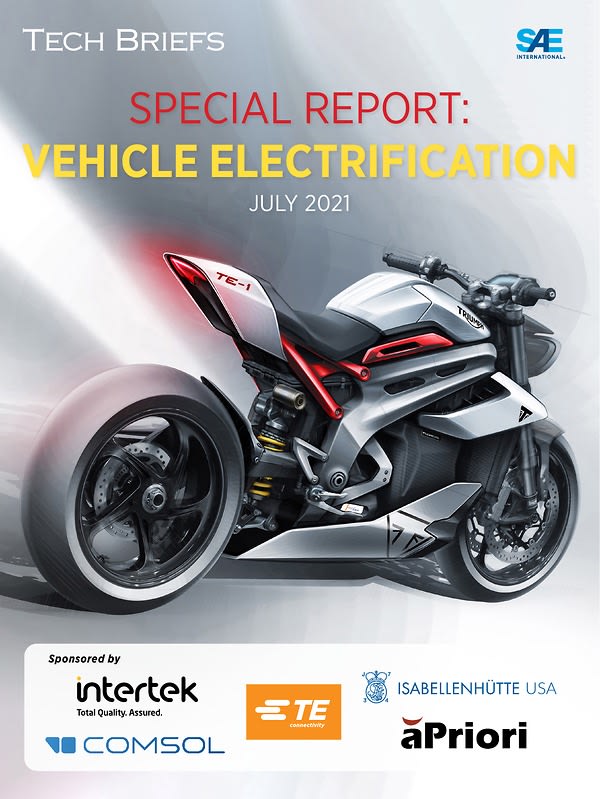
GM electrifies the new Corvette...a French nanomaterials company aims for a 5-minute EV recharge...Triumph unveils a radical new electric sportbike design. These are just a few of the innovations you'll read about in this compendium of recent articles from the editors of Automotive Engineering, Truck & Off-Highway Engineering, and Tech Briefs magazines.
Don't have an account?
Overview
The "Vehicle Electrification Special Report" from July 2021 provides a comprehensive overview of the rapidly evolving electric vehicle (EV) landscape, driven by increasing consumer concern for the environment and significant advancements in technology. The report highlights the anticipated growth of the electric vehicle market, projecting that by 2030, there will be 116 million EVs on the road, a substantial increase from 8.5 million in 2020. This surge is attributed to changing consumer mindsets, government legislation aimed at reducing emissions, and the emergence of numerous EV startups.
Key features of the report include a focus on innovative technologies, such as Triumph Motorcycles' TE-1 electric project, which showcases advancements in battery technology and powertrain performance. The report discusses the development of a new liquid-cooled battery system by Williams Advanced Engineering, emphasizing the importance of efficiency and performance in EV design.
The report also addresses the challenges faced by traditional car manufacturers as they transition to electrification. With shrinking product development timelines—now averaging around 24 months compared to the traditional 48 months—manufacturers are under pressure to accelerate their product offerings while maintaining cost-effectiveness. This urgency is compounded by ambitious government targets, such as the EU's goal to reduce greenhouse gas emissions by 40% over the next decade, and the phasing out of internal combustion engine vehicles in countries like Norway.
Additionally, the report highlights the importance of incorporating a digital thread in the development process to streamline the creation of electric vehicles. This approach allows manufacturers to enhance collaboration, improve efficiency, and reduce time-to-market for new products. The report emphasizes that in the face of stringent regulations and competitive pressures, manufacturers must innovate to stay ahead.
The report also touches on the broader implications of electrification, including the potential for reduced reliance on petrol and diesel vehicles, which aligns with global sustainability goals. It notes that various countries are implementing policies to encourage sustainable transport, with the EU leading the charge in banning fossil fuel vehicle sales.
In summary, the "Vehicle Electrification Special Report" provides valuable insights into the current state and future prospects of the electric vehicle market. It underscores the critical role of innovation, regulatory support, and changing consumer preferences in shaping the transition to electric mobility. As the industry evolves, manufacturers must adapt quickly to meet the demands of a more sustainable future while navigating the challenges of rapid technological advancement and market competition.










