

Adas/Connected Car - June 2022
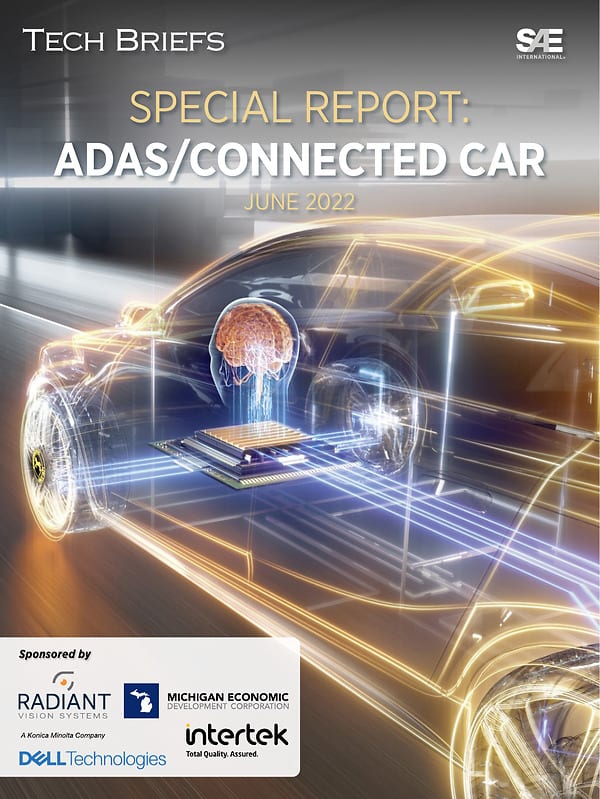
In this compendium of articles from the editors of Automotive Engineering and Autonomous Vehicle Engineering magazines, see how advances in edge computing, lidar and camera technology, cabin design, and more are driving the evolution of ADAS and autonomous systems.
Don't have an account?
Overview
The ADAS/Connected Car Special Report from June 2022 provides a comprehensive overview of the advancements in automotive technology, particularly focusing on advanced driver-assistance systems (ADAS) and the increasing demands for high-speed data transmission within vehicles. As vehicles become more sophisticated, the integration of high-resolution cameras and radars necessitates enhanced bandwidth and lower latency in in-vehicle networks.
Key highlights of the report include the need for data rates exceeding 1 Gbps over existing cabling infrastructures. This requirement drives the development of new networking solutions, switches, and connections capable of handling the vast amounts of data generated by modern automotive systems. Experts from Keysight Technologies emphasize the importance of testing and development solutions to meet these challenges.
The report also discusses the role of edge inference computers, which are equipped with configurable processing power to run machine learning and deep learning analyses at the edge. These systems utilize performance accelerators such as multi-core processors, GPUs, and FPGAs to enhance computational capabilities. The integration of various I/O ports, including USB Type-A and Gigabit Ethernet, facilitates connections between cameras, sensors, and data computers, enabling efficient data management and processing.
Moreover, the report highlights the significance of radar technology in the automotive industry. While the integration of radar hardware is well understood, there is a learning curve for AI engineers to effectively interpret radar imagery. This presents an opportunity for further training and development in the field, ensuring that engineers can leverage radar data for improved vehicle safety and performance.
The report also touches on the importance of innovation in the automotive sector, encouraging participation in contests like the Create the Future Design Contest, which seeks bold ideas for improving transportation and other industries. This initiative reflects the ongoing push for creativity and advancement in automotive technology.
In summary, the ADAS/Connected Car Special Report underscores the critical role of high-speed data transmission, advanced processing capabilities, and innovative technologies in shaping the future of connected vehicles. As the automotive landscape evolves, the integration of sophisticated systems and the ability to process large volumes of data will be essential for enhancing safety, performance, and overall driving experience. The report serves as a valuable resource for industry professionals looking to stay informed about the latest trends and developments in automotive technology.









