Adas/Connected Car - June 2022
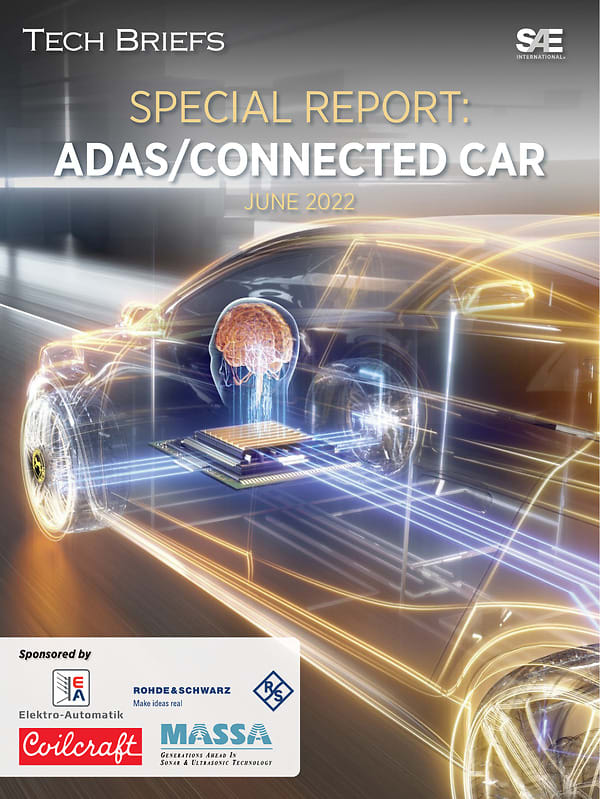
In this compendium of articles from the editors of Automotive Engineering and Autonomous Vehicle Engineering magazines, see how advances in edge computing, lidar and camera technology, cabin design, and more are driving the evolution of ADAS and autonomous systems.
Don't have an account?
Overview
The ADAS/Connected Car Special Report from June 2022 provides a comprehensive overview of the advancements and challenges in the field of advanced driver-assistance systems (ADAS) and connected vehicles. It highlights the integration of cutting-edge technologies that are shaping the future of automotive safety and connectivity.
One of the key themes of the report is the increasing importance of edge computing in automotive applications. Edge inference computers, equipped with configurable processing power, are capable of running machine learning and deep learning analyses directly within the vehicle. This capability is crucial for processing data from various sensors and cameras in real-time, enhancing the vehicle's ability to make informed decisions quickly. The report discusses the role of performance accelerators, such as multi-core processors, GPUs, and FPGAs, which significantly boost the computational capabilities necessary for modern automotive architectures.
The report also emphasizes the significance of radar technology in the automotive industry. While the integration of radar hardware is well-established, there is a noted challenge in getting AI engineers to effectively interpret radar imagery. This learning curve is critical as radar plays a vital role in enabling features such as adaptive cruise control and collision avoidance systems.
Additionally, the report touches on the importance of connectivity in vehicles. It outlines the various I/O options available in autonomous vehicle data recorders, including USB Type-A ports, Gigabit Ethernet ports, and Serial COM ports, which facilitate seamless connections between sensors, cameras, and data processing units. This connectivity is essential for the functioning of ADAS, as it allows for the aggregation and analysis of data from multiple sources.
The report also highlights the ongoing innovation in the automotive sector, encouraging participation in initiatives like the Create the Future Design Contest, which invites bold ideas for improving transportation and other sectors. This contest not only fosters creativity but also aims to reward innovative solutions that can lead to significant advancements in technology.
Furthermore, the report acknowledges the role of companies like Keysight Technologies, which are pivotal in addressing the complexities of time-sensitive automotive technologies. Their contributions are vital for ensuring that the industry keeps pace with the rapid advancements in technology and consumer expectations.
In summary, the ADAS/Connected Car Special Report serves as a valuable resource for understanding the current landscape of automotive technology. It underscores the critical role of edge computing, the challenges of integrating AI with radar systems, and the importance of connectivity in enhancing vehicle safety and performance. As the automotive industry continues to evolve, the insights provided in this report will be instrumental for stakeholders looking to navigate the future of connected and autonomous vehicles.