

Space Technology - July 2022
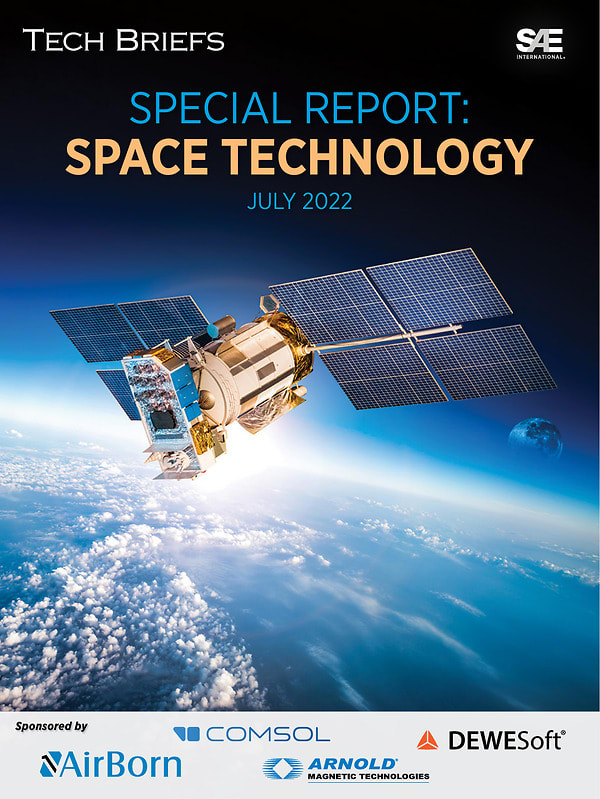
Read about a novel approach to space mining, an advanced propulsion system for hypersonic flight to Mach 17, how digital technology is fueling a new space economy, and much more in this compendium of recent articles from the editors of Tech Briefs and Aerospace & Defense Technology magazines.
Don't have an account?
Overview
The July 2022 Special Report on Space Technology provides a comprehensive overview of the advancements and challenges in the space industry, focusing on the integration of new technologies, the emergence of a new space economy, and the importance of data management in future missions.
One of the key highlights is NASA's plans to utilize unmanned Orion spacecraft for lunar missions starting in 2022. This initiative includes crewed landings, the construction of lunar habitats, and infrastructure to support future missions, including a potential visit to Mars. This ambitious program underscores the ongoing commitment to exploring and utilizing space.
The report also discusses the significant advancements made by private companies, particularly SpaceX, which has revolutionized space travel. The Inspiration4 mission exemplifies how market forces have led to increased automation and sophistication in spacecraft, allowing civilians to pilot missions into space with minimal training. The reduction in costs associated with space launches and the development of reusable launch vehicles have made space more accessible than ever.
Digitalization plays a crucial role in enhancing the efficiency of space missions. The report emphasizes the importance of data management within an integrated environment, where stakeholders can access critical information in real-time. This capability is vital for improving decision-making and reducing costs associated with development, manufacturing, and maintenance. A notable example cited is the loss of the Mars Climate Orbiter due to a navigation error caused by a mismatch in measurement units, highlighting the need for proper data management to avoid costly mistakes in future missions.
The report also addresses various design challenges faced by spacecraft, including the need for high pin density configurations to accommodate necessary connectors. This aspect is crucial for ensuring that spacecraft can withstand the extreme conditions of space travel while maintaining functionality.
In addition to these themes, the report features application briefs and technical insights into specific technologies. For instance, it discusses the development of modular artificial-gravity orbital refinery spacecraft and propulsion systems for hypersonic flight. These innovations are indicative of the ongoing research and development efforts aimed at enhancing the capabilities of space vehicles.
Overall, the Special Report on Space Technology serves as a valuable resource for understanding the current landscape of the space industry. It highlights the interplay between government initiatives and private sector advancements, the critical role of data management, and the innovative technologies that are shaping the future of space exploration. As the industry continues to evolve, the insights provided in this report will be essential for stakeholders looking to navigate the complexities of space technology and capitalize on emerging opportunities.










