

RF & Microwave Electronics - October 2024
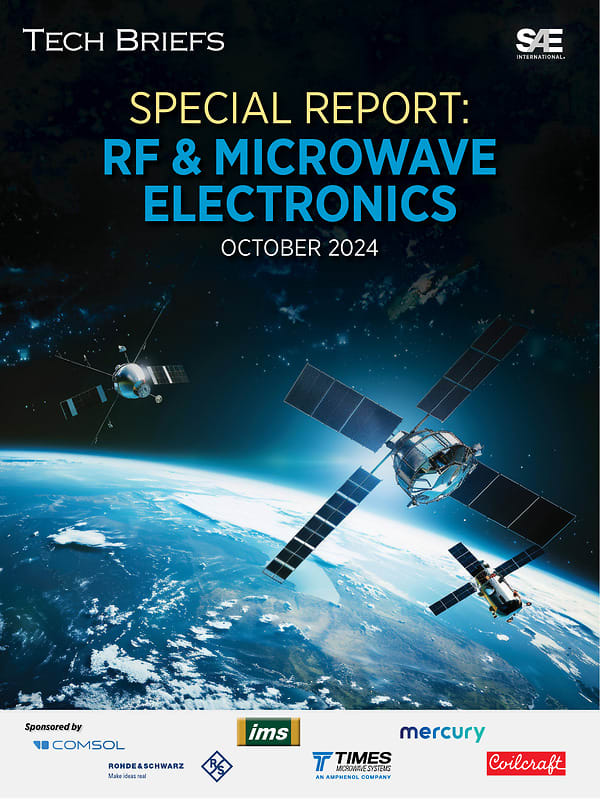
How a tiny filter could have an enormous impact on wireless communications…RF interconnects play key role in hypersonic missile development…a laser clock could transform satellite navigation accuracy. Read about these and other advances in this compendium of articles from the editors of Tech Briefs and Aerospace & Defense Technology.
Don't have an account?
Overview
The RF & Microwave Electronics Special Report for October 2024 presents a comprehensive overview of recent advancements and challenges in the field of radio frequency (RF) and microwave technologies. This edition highlights several key areas of innovation, including developments in wireless communications, space communication, and hypersonic missile technology.
One of the standout features of this report is the introduction of a new adjustable filter developed by Penn Engineers. This innovative tool aims to prevent signal interference, particularly in higher-frequency bands of the electromagnetic spectrum. The filter addresses a significant issue that previously led to the bankruptcy of LightSquared, a startup that struggled to prevent its signals from interfering with GPS systems. The new technology is expected to facilitate the next generation of wireless communications, particularly as the Federal Communications Commission (FCC) has recently made the Frequency Range 3 (FR3) band available for commercial use, which includes frequencies from 7 GHz to 24 GHz.
The report also delves into the complexities of space communication. As communication distances in space can extend into thousands of kilometers, the need for powerful yet energy-efficient solutions becomes critical. The report discusses how platforms like satellites and balloons serve as transmission towers, necessitating equipment that is lightweight and compact while also capable of withstanding the harsh conditions of space, including radiation exposure. This requires a tailored approach to communication technology that adapts terrestrial expertise to meet the unique challenges of non-terrestrial environments.
In addition to wireless and space communication, the report addresses the advancements in hypersonic missile technology. Hypersonic missiles, which travel at speeds exceeding Mach 5, present unique design and technological challenges. The report emphasizes the need for advanced RF interconnects that can operate within confined spaces while maintaining reduced weight and rugged construction. These interconnects must withstand high vibrations and impacts from deployment to target, highlighting the intricate engineering required in modern defense systems.
Furthermore, the report touches on the importance of multiphysics simulation in RF analysis, which is transforming how engineers approach the design and testing of RF systems. This simulation technology allows for a more integrated understanding of the various physical phenomena that affect RF performance, leading to more efficient and effective designs.
Overall, the RF & Microwave Electronics Special Report for October 2024 encapsulates the dynamic landscape of RF and microwave technologies, showcasing how innovations are addressing critical challenges in communication and defense. The advancements discussed not only promise to enhance the capabilities of wireless communications and space exploration but also reflect the ongoing evolution of technology in response to the demands of modern applications. As the industry continues to push the boundaries of what is possible, this report serves as a valuable resource for understanding the current trends and future directions in RF and microwave electronics.









