

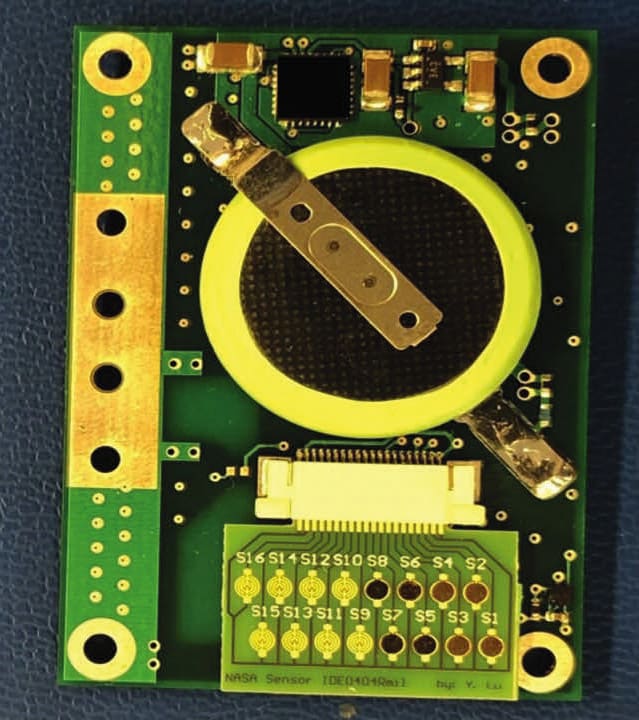
Innovators at NASA Johnson Space Center have developed an adaptable Radio Frequency Identification (RFID) system that optimizes transmission for priority data as targets move in and out of passive coverage areas. The method extends the range, and reduces data latency, of ultra-low power battery-assisted passive (BAP) RFID sensor tags, improving previously developed store-and-forward techniques to support autonomous operations in complex environments where RFID interrogator access may be strained.
This RFID sensor tag technology normally operates in a low-to-no-power mode, collecting data until triggered by a critical event that activates an emergency mode of operation. Once triggered, the tag’s RFID range is boosted using the BAP RFID device’s onboard power supply. This allows RFID application programmers to sacrifice battery life for reduced latency for high priority sensing applications such as the technology’s original intention to monitor for life-threatening CO 2 levels in spacecraft cabins.
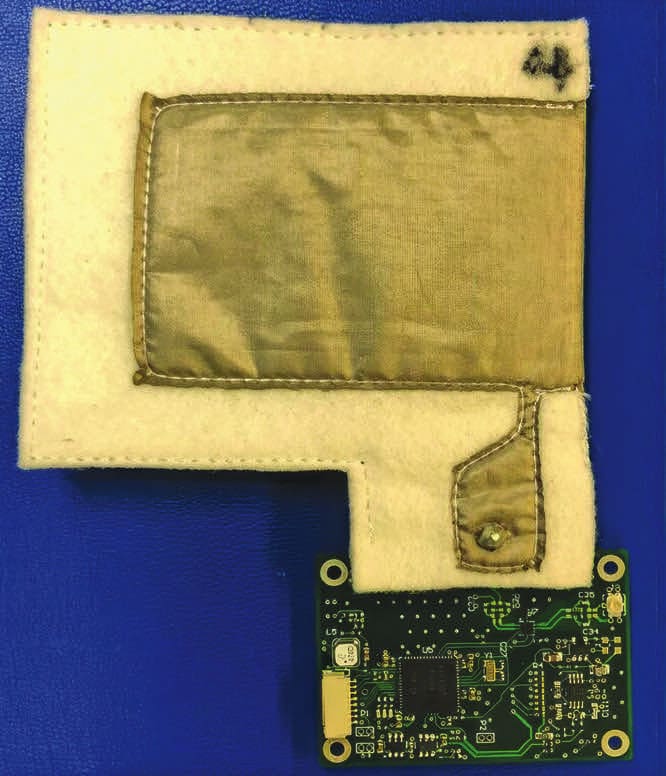
This technology builds upon a previously (NASA-developed) store-and-forward overlay architecture using COTS RFID protocols for BAP devices. It enables the range-extension and priority forwarding of critical sensor-collected data, even when an RFID interrogator is not in range. With this method, an RFID sensor maintains data queues of varying priority, maintaining at least one high priority queue. When high priority data is collected, the RFID sensor activates a BAP mode that enhances the effective range of the RFID link to the interrogator. After high priority queues are cleared, BAP mode is deactivated to preserve onboard battery life and passive RFID operations resume for proximity-based data delivery.
This technology may deliver the most value in applications where long battery lifetime and remote sensing/data collection are essential and when regularly scheduled data transfer may not be available or possible if the target is out of the normal coverage area.
The RFID sensor tags can operate in a low to no power mode and collect data until a trigger or threshold value is measured. At this time, the critical data can be transmitted from outside passive RFID coverage areas to the nearest interrogator.
Although this technology was developed to enhance the effective range of CO2 sensors worn by astronauts aboard the International Space Station, it could find additional applications in food, pharmaceutical, and other industries whose perishable and/or fragile goods rely on a stable climate throughout the transport and storage lifecycle.
NASA is actively seeking licensees to commercialize this technology. Please contact NASA’s Licensing Concierge at











