

Connected & Automated Vehicles - March 2025
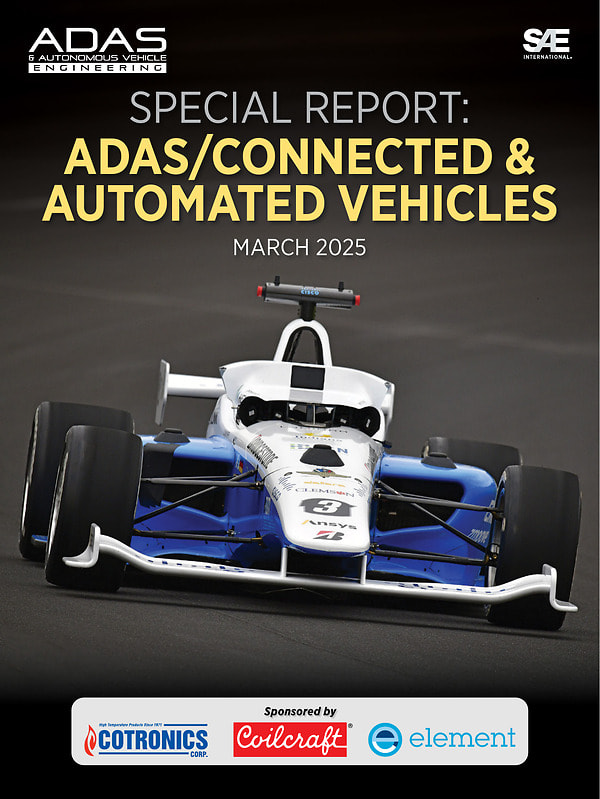
In this compendium of articles from the editors of Automotive Engineering and ADAS & Autonomous Vehicle Engineering, we look at the next generation of driver assistance and AV technologies, and what the changing landscape means for 2025.
Don't have an account?
Overview
The ADAS/Connected & Automated Vehicles Special Report for March 2025 highlights the rapid advancements and trends in the automotive industry, particularly focusing on Advanced Driver Assistance Systems (ADAS) and autonomous vehicle (AV) technologies. The report emphasizes the ongoing transformation in our relationship with vehicles, as we increasingly delegate control to them, necessitating improvements in the accuracy and precision of the sensors and systems that power these vehicles.
Key features of the report include insights from the CES 2025 exhibition, where companies showcased innovations aimed at enhancing the future of transportation. Notably, Oshkosh Corporation made its debut at CES, presenting its purpose-built vehicles and equipment designed for various sectors, including airports, job sites, and neighborhoods. The company highlighted its commitment to integrating AI, autonomy, and electrification into its offerings, aligning with the theme of "Technology for Everyday Heroes."
The report also discusses the importance of software trends in the automotive industry, particularly as Original Equipment Manufacturers (OEMs) reassess their strategies regarding self-driving technology. There is a growing focus on enhancing the in-cabin experience for drivers and passengers, ensuring safety, health, and entertainment. This shift reflects the industry's recognition of the need to prioritize user experience alongside technological advancements.
Another significant topic covered is the integration of sensor data and the decision-making processes within ADAS. The timing of sensor fusion—whether it occurs early or late in the operational sequence—can significantly impact the overall effectiveness of the system. The report underscores the necessity for precise sensor data integration to improve navigation and guidance for autonomous vehicles.
Additionally, the report addresses the critical issue of cybersecurity in the context of software-defined vehicles. It highlights the role of virtualization technologies, such as digital twins and virtual patching, in enhancing the agility and security of commercial vehicles. As the automotive landscape evolves, ensuring the safety and security of connected vehicles becomes paramount.
The report also mentions the Automated Vehicle Safety Consortium (AVSC), which is developing best practices for traceable AV safety inspection protocols. This initiative aims to establish standardized safety measures that can be universally applied across the industry, fostering greater trust in autonomous technologies.
Furthermore, the report notes advancements in wireless communication and electric vehicle (EV) technology for trucks, indicating a broader trend towards electrification and connectivity in commercial transportation.
In summary, the ADAS/Connected & Automated Vehicles Special Report for March 2025 provides a comprehensive overview of the current state and future directions of the automotive industry. It highlights the integration of advanced technologies, the importance of user experience, and the critical need for safety and cybersecurity measures as vehicles become increasingly autonomous and connected. The insights from CES 2025 and ongoing industry initiatives reflect a dynamic landscape poised for significant transformation in the coming years.











