

Medical Manufacturing & Outsourcing - July 2025
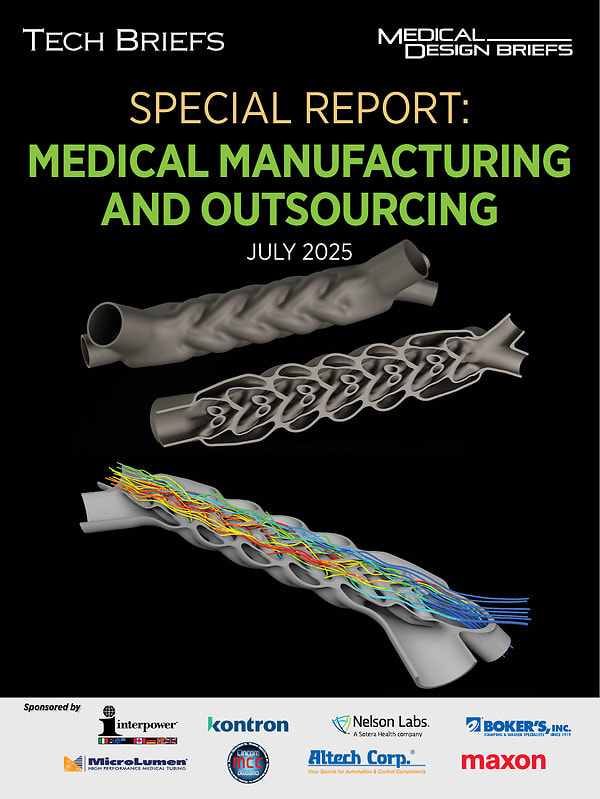
The promise of additive manufacturing has always been clear – to rapidly create intricate geometries, structures, and implants. But its real power lies in the ability to rethink how medical devices function and interact with the human body. Read about this and much more in a special collection of articles from the editors of Medical Design Briefs magazine.
Don't have an account?
Overview
The document is a special report on Medical Manufacturing and Outsourcing, published in July 2025, focusing on the critical role of effective communication in the medtech manufacturing sector. It emphasizes that clear and consistent communication is essential for ensuring product quality, employee satisfaction, regulatory compliance, and patient safety. The report outlines the significant impact of communication breakdowns, which can lead to costly production delays, accidents, and compliance issues, potentially costing companies up to $250,000 per incident.
Key challenges in communication within medical device manufacturing are highlighted, particularly due to high noise levels in production areas and the complexity of coordinating multiple departments. Common issues include delayed response times and misinterpreted instructions, especially during shift transitions and cross-departmental interactions. The report advocates for systematic analysis and data-driven approaches to identify and address communication weaknesses.
To improve communication, the report suggests implementing standardized communication protocols across teams. These protocols should be adaptable to various manufacturing scenarios and include regular training programs, multi-modal communication systems (combining verbal, visual, and digital methods), and consistency across all departments. Effective communication protocols not only facilitate real-time information exchange but also establish procedures for feedback and complaints, enhancing clarity and minimizing errors throughout the production lifecycle.
The document also outlines key communication requirements from FDA and ISO standards, emphasizing the need for comprehensive documentation in quality management systems, product communication, and customer interfaces. It notes the upcoming harmonization between FDA 21 CFR Part 820 and ISO 13485, which aims to streamline communication requirements into a unified Quality Management System Regulation (QMSR), simplifying compliance for manufacturers globally.
Additionally, the report discusses the integration of advanced technologies, such as noise-canceling headsets and multi-modal systems, to overcome common communication barriers. It stresses the importance of measuring communication effectiveness through key performance indicators (KPIs) like response times, error rates, and employee feedback, which are crucial for continuous improvement.
Overall, the report underscores that effective communication is vital for enhancing efficiency, ensuring regulatory compliance, and ultimately improving patient safety in the medical manufacturing industry.










