

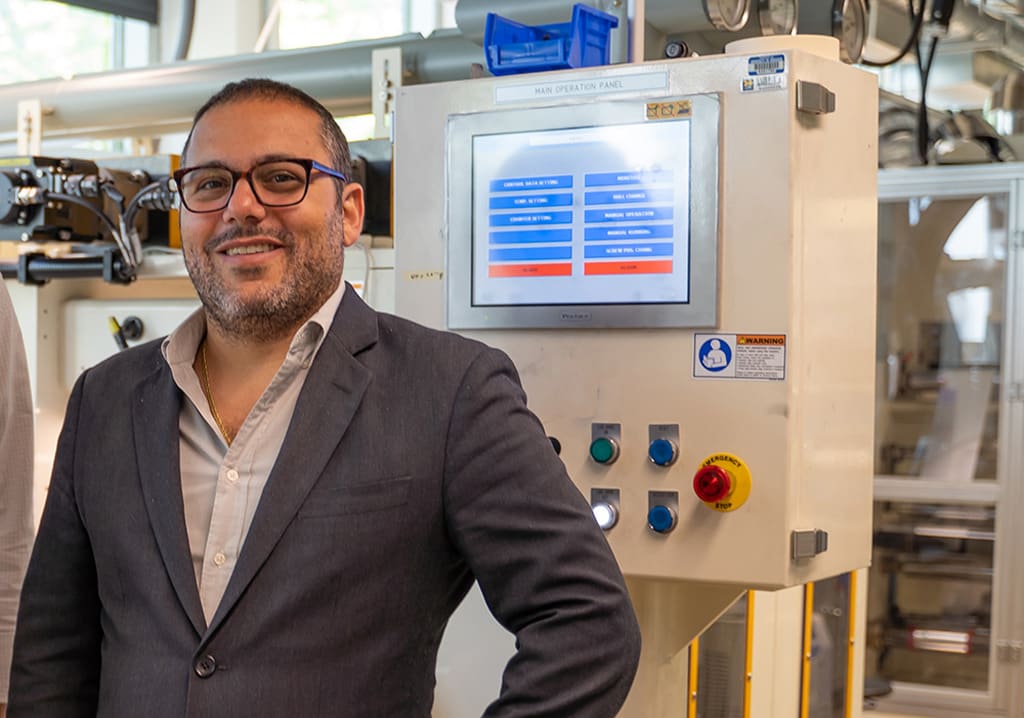
Tal Sholklapper, cofounder and CEO of Voltaiq, a battery analytics company, made bold statements on the eve of the Battery Show in 2024 that Western and European automakers had about five years to catch China in technology and manufacturing capability if they wanted to compete in the global EV and EV battery space. This year, Sholklapper sat down with SAE senior editor Chris Clonts for an episode of the SAE Automotive Engineering Podcast. What follows is an edited version of our conversation, which will air later in October.
CC: Are we now at four years? Because it feels like the timeline has accelerated with all the development in China and the uncertain future of EVs in America.
TS: It feels like it accelerated. Even from last year, we've continued to see efficiency improvements and lower costs for battery cells and battery packs coming out of China.
The good thing is we do have a number of operating plants, mostly joint ventures with Asian cell suppliers, but our domestic industry has a lot of presence in there. Those plants are not running as efficiently or at the price points where the Chinese cell suppliers are at today. And so, the opportunity here is to really take that existing infrastructure we do have in place. We've shown that we can produce these cells domestically, but as far as the cost competitiveness, we're not there today. And so, the way to get there, you need to really train domestic staff, and build in more automation. We need to build in more analytics to allow people to do this faster, optimize the designs and get to lower cost cells and then really a lot of the cost goes into yield and scrappage rates and issues that are happening in the production process that are slowly eating up some of those margins and price points. And if we can really build in more of these modern tools and move faster, it's really going to allow us to remain competitive longer term.
CC: For those who may not know, tell us a little about Voltaiq’s origin story.
TS: It all started about 13 years ago. I was one of the folks designing new batteries and fuel cells earlier on in my career and took some to market. And one of the key challenges I kept on seeing is it takes a long time to see if a battery is good or bad. And what we realized is that if we built some modern analytics tools and could start collecting this data as it was being generated, we could have a much faster sense of which batteries are doing better than others - which ones can cause potential quality issues down the road - and then really connect those dots upstream to figure out how do you actually optimize these things and really have this process hum so you could have high-performing, low-cost, reliable battery systems.
CC: You've said before that a lot of these problems are created during manufacturing. If you wait until a product is produced that has the battery in it to discover it, not only is that enormously expensive, but then it also potentially means that all of your time was for naught because you're still producing these bad cells, right?
TS: Now you hit the nail on the head. It's just the nature of this as a relatively new technology, as far as being rolled out at this kind of scale in this many devices on these kinds of aggressive conditions. Batteries – to go back 10, 15 years ago – were mostly in consumer devices with a two-year warranty or one-year warranty and you're just going to replace [them] relatively regularly. These are 10-year devices that are out there in the field 10 years or longer.
The approach here needs to change and a lot of these quality defects that are coming from the manufacturing process that aren't being identified, we're sort of doing the whack-a-mole trying to identify these in the field when it's warranty issues or, worst case scenario, actual failures and fires on the road. But there's a big opportunity here not only to improve the customer experience and the overall return by catching these issues beforehand, but also to really accelerate the pace of development and drop the costs of these products by really optimizing that production process.
CC: You’ve said that before entering the field, that there was all this data that existed. It's just that no one really knew what to do with it. If you're taking data off of either a manufacturing line or out of a battery in an EV, how many separate pieces of data is that?
TS: It’s easily, with a lot of the manufacturers, at least what they log and we collect, it's into the many thousands, from incoming materials through the seller module that comes out the back end. In the field, similarly, you could have thousands of different tags and traces. And ultimately, that data, in most cases, at least for the manufacturing side, is collected on disk somewhere. It doesn't get looked at unless something goes wrong. And then all of a sudden, everyone is trying to pour over that data. And it's literally engineers going with thumb drives and Excel and just trying to manually try to dig through all that information.
CC: And that’s where you come in, with your own software and analysis tools?
TS: Yeah, so basically what we've primarily focused on is creating a way to not only bring in this data and learn from it faster, but also create the linkages across all of that information. For instance, humidity is really important for how the battery production process works. There's information from quality labs that may only be using Excel. And being able to take that data, bridge it, and create that traceability where you can figure out if something goes wrong, where did that come from? How do I fix it? And do it a whole lot faster.
For more of our conversation with Scholklapper, including his advice for aspiring battery engineers, listen to the Automotive Engineering Podcast on Apple Podcasts or wherever you listen to podcasts, later this month.











