Stories
0
7080
30
Briefs: Photonics/Optics
Moving from electrical communication to optical communication is attractive to chip manufacturers because it could significantly increase chips’ speed and reduce power consumption, an...

Briefs: Aerospace
Auto-Zero Differential Amplifier
Engineers in the NASA Goddard Space Flight Center Instrument Electronics Development Branch have developed a chopper-stabilized auto-zero amplifier capable of amplifying signals with extremely small amplitude originating from a thermopile-based infrared (IR) sensor. The instrument is self-adjusting in that it...
Briefs: Software
Overt symptoms of many diseases often do not manifest until days after a person’s initial exposure to the causative pathogen, typically a virus or bacteria. By then, the disease may have...

Briefs: Sensors/Data Acquisition
Mobile Health Platform
A mobile health technology was developed to monitor and predict a user’s psychological status, and to deliver an automated intervention when needed. The technology uses smart-phones to monitor the user’s location and ask questions about psychological status throughout the day.
Blog: Data Acquisition
If digital transformation is a boardroom priority, why are companies so slow to transform product development? A reader asks our experts.

INSIDER: Materials
A 3D-printed smart gel that grabs objects and moves them could lead to soft robots that mimic sea animals like the octopus, which can walk underwater and bump into things without damaging them. Soft...

Blog: Communications
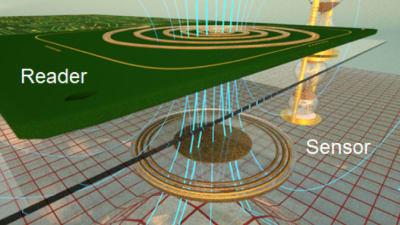
A researcher tells Tech Briefs how his team's "symmetrical" sensor approach will support the growing "Internet of Things."
Question of the Week: Manufacturing & Prototyping
How Do You Feel About Back-Flipping Robots?
Have you seen the ‘Atlas’ humanoid robot running outside yet? Watch a demo of the Boston Dynamics technology on Tech Briefs TV.
Products: Electronics & Computers
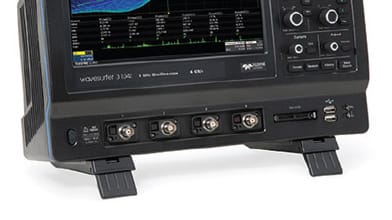
Teledyne LeCroy, Chestnut Ridge, NY, introduced WaveSurfer 3000z oscilloscopes that feature a 10.1” capacitive touchscreen, a set of debug and analysis tools, multi-instrument capabilities, feature/option upgrades, and...
Blog: Materials
Answering Your Questions: Beyond Prototyping, How is 3D Metal Printing Being Used in the Automotive Industry?
Can metal 3D printing help automakers with more than just prototyping? It can, and it has, says our engineering expert.
INSIDER: Electronics & Computers
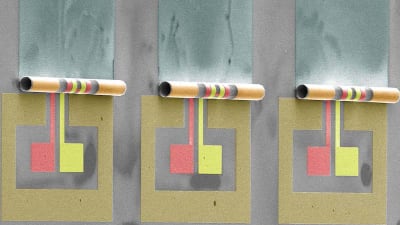
The future of electronic devices lies partly within the “internet of things” – the network of devices, vehicles and appliances embedded within electronics to enable connectivity and data...
INSIDER: Electronics & Computers
The Internet of Things makes our lives more streamlined and convenient, but the cybersecurity risk posed by millions of wirelessly connected devices remains a huge concern. UC Santa Barbara...

Blog: Materials
Professor Paul Steen helped to create a beetle-inspired adhesive. Now it's about finding applications for it.

Question of the Week: Manufacturing & Prototyping
What are your Biggest Manufacturing Challenges?
What parts of the design process are the most difficult? What information are you looking for now to help you with your job? Is there a specific technology area that can be challenging to find out the latest solutions for?
Blog: Energy
Researchers from Purdue University demonstrated that thermoacoustics properties could theoretically occur in solids as well as liquids.

Blog: Sensors/Data Acquisition
‘FingerPing’ Recognizes Micro Motions, Soundly
A new system from the Georgia Institute of Technology has a sound approach to recognizing tiny gestures of the hand.
Question of the Week: Green Design & Manufacturing
Can a 'Cool' Strategy Improve Water-Purification Efforts?
Researchers from the University of Buffalo found a counter-intuitive way of improving the water-purification process: keeping things cool.
Blog: Materials
A stretchy material, modeled after squid skin, achieves thermal invisibility by reflecting heat.

Blog: Semiconductors & ICs
A new microchip allows sensor nodes to run uninterruptedly, even when the battery runs out.
Podcasts: Robotics, Automation & Control
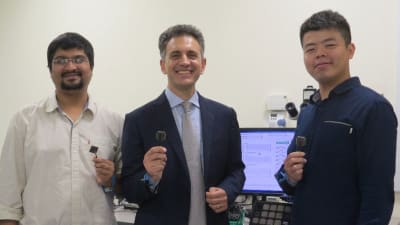
Some conditions are too dangerous, or just too mundane, for people.
Blog: Sensors/Data Acquisition
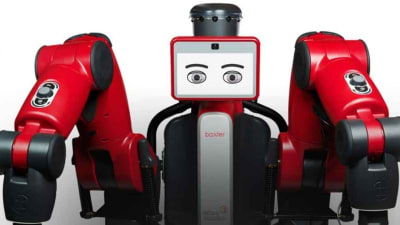
A “MapLite” framework from MIT allows self-driving cars to navigate roads – with just GPS and sensors as a guide.

Blog: Mechanical & Fluid Systems
Researchers at the University of Buffalo have found a counter-intuitive way of improving the water-purification process: keeping things cool.
Question of the Week: Electronics & Computers
Would You Wear a 'Mind-Reading' Headset?
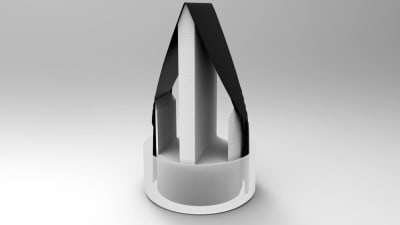
A Tech Briefs TV video this week featured AlterEgo, a “mind-reading” wearable headset from MIT's Media Lab.The technology allows a user to silently converse with a computing device, AI assistant, or application without any audible voice or discernible movements. The wearable device captures electrical...
INSIDER Product: Photonics/Optics
Thermal Imager
Sierra-Olympic Technologies (Hood River, OR) introduced the Tenum™640, a thermal imager with a 640 x 512 array and 10-micron pixel pitch. The new camera, from the Leonardo DRS line of uncooled thermal cores...

INSIDER: Photonics/Optics
Holography, like photography, is a way to record the world around us. Both use light to make recordings, but instead of two-dimensional photos, holograms reproduce...

INSIDER: Imaging
MIT researchers have developed a system that can produce images of objects shrouded by fog so thick that human vision can’t penetrate it. It can also gauge the objects’ distance.

INSIDER: Photonics/Optics
To catch chemistry in action, scientists at the Department of Energy’s SLAC National Accelerator Laboratory use the shortest possible flashes of X-ray light to create “molecular movies”...

Blog: Automotive
Answering Your Questions: Will Reducing Nitrogen Oxide (NOx) Lead to Increased Particulate?
Does less nitrogen oxide mean more particulate emissions? A reader asks our expert.
Blog: Manufacturing & Prototyping
Will 3D Printing Get Past the Plastic?
If you think there’s too much hype surrounding 3D printing, perhaps that’s because you’re only thinking about plastic parts.
Top Stories
 Blog: Power

My Opinion: We Need More Power Soon — Is Nuclear the Answer?
 Blog: AR/AI
Aerial Microrobots That Can Match a Bumblebee's Speed
 News: Energy

 Blog: Electronics & Computers

Turning Edible Fungi into Organic Memristors
 Blog: Robotics, Automation & Control

Microscopic Swimming Machines that Can Sense, Respond to Surroundings
 INSIDER: Sensors/Data Acquisition

Webcasts
 Upcoming Webinars: Transportation

Hydrogen Engines Are Heating Up for Heavy Duty
 Upcoming Webinars: Automotive

Advantages of Smart Power Distribution Unit Design for Automotive...
 Upcoming Webinars: Automotive

Quiet, Please: NVH Improvement Opportunities in the Early Design...
 Upcoming Webinars: Test & Measurement

From Spreadsheets to Insights: Fast Data Analysis Without Complex...
 Upcoming Webinars: Automotive

Battery Abuse Testing: Pushing to Failure
 Upcoming Webinars: Connectivity