Stories
0
1740
30
Special Reports: Photonics/Optics
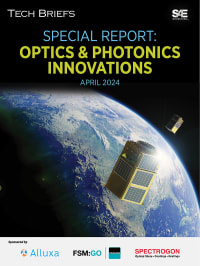
Optics & Photonics Innovations - April 2024
How to turn a mobile phone into a high–resolution microscope…hyperspectral imaging technology spots pipeline leaks from space…a MEMS solution to self–driving cars' LiDAR challenges. Read about...Products: Test & Measurement
See the product of the month: The IMS5420-TH white light interferometer from Micro-Epsilon. The IMS5420-TH can be used for undoped, doped, and highly doped SI wafers.

Articles: Electronics & Computers
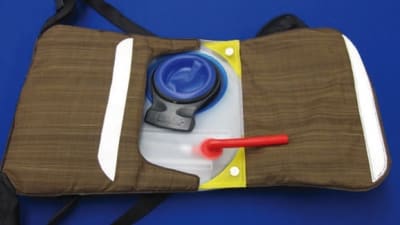
See the products of tomorrow, including: a new metamaterial that takes advantage of the non-reciprocal magnetoelectric (NME) effect; fully 3D-printed, three-dimensional solenoids; and a freeze-resistant hydration system.
Products: Electronics & Computers
See what's new on the market, including: new TEMPUS™ technology from Renishaw, SPIROL's Series CL6000 Compression Limiters, binder-USA's protective caps, a breakthrough lithium coin cell holder from Keystone Electronics, and more.

Briefs: RF & Microwave Electronics
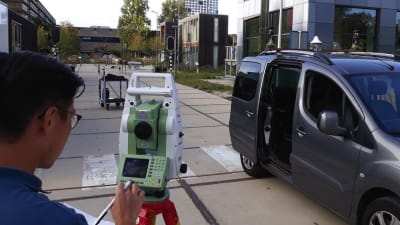
This new technology — developed by engineers at Delft University of Technology, Vrije Universiteit Amsterdam, and VSL, and which can achieve an accuracy of 10 centimeters — is important for the implementation of a range of location-based applications, such as automated vehicles, quantum communication, and next-generation mobile communication systems.
Briefs: Photonics/Optics
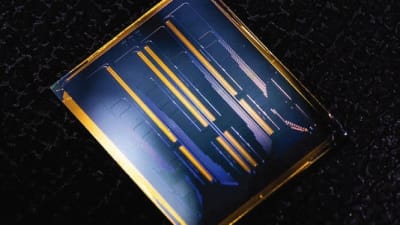
RMIT University’s Arnan Mitchell and University of Adelaide’s Dr. Andy Boes led an international team to review lithium niobate’s capabilities and potential applications in the journal Science. The team is working to make navigation systems that help rovers drive on the Moon — where GPS is unable to work — later this decade.
Briefs: Communications
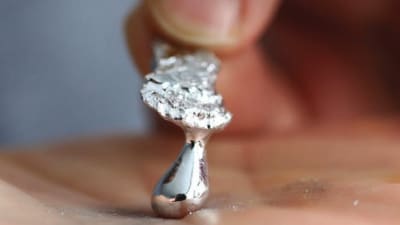
Researchers at the University of Birmingham have developed a new type of high-performance “phase shifter” using a liquid gallium alloy — which varies the phase angle of microwave and millimeter-wave radio signals — for use in advanced phase array antenna systems.
Briefs: Electronics & Computers
MIT researchers have developed a quantum computing architecture that aims to enable extensible, high-fidelity communication between superconducting quantum processors.

Briefs: Design
Researchers at the Georgia Institute of Technology have developed low-cost, painless, and bloodless tattoos that can be self-administered and have many applications, from medical alerts to tracking neutered animals to cosmetics.

Briefs: Medical
Taking inspiration from origami, MIT engineers have now designed a medical patch that can be folded around minimally invasive surgical tools and delivered through airways, intestines, and other narrow spaces, to patch up internal injuries.

Briefs: Green Design & Manufacturing
Researchers at Kennedy Space Center have developed a technology that generates plasma activated water in pH ranges that allow for the addition of nitrates and other nutrients to the water while maintaining a healthy pH for plants.

Briefs: Photonics/Optics
Usually developing slowly over time, many cases of glaucoma are only picked up during routine eye tests, by which time lasting damage may already have been caused. But this could change in the future as academics from the U.K. and Türkiye have developed a contact lens which can detect changes in eye pressure which signal possible glaucoma.

Briefs: Electronics & Computers
A research team led by Lawrence Berkeley National Laboratory (Berkeley Lab) has developed “supramolecular ink,” a new technology for use in OLED (organic light-emitting diode) displays or other electronic devices.

Briefs: Manufacturing & Prototyping
Researchers at Universidad Carlos III de Madrid (UC3M) have created software and hardware for a 4D printer with applications in the biomedical field.

Briefs: Data Acquisition
A multi-institutional project led by a Penn State researcher is focused on developing an all-in-one semiconductor device that can both store data and perform computations. The project recently received $2 million in funding over three years as part of the new National Science Foundation Future of Semiconductors (FuSe) program.

Briefs: Materials
Recognizing the need for in-situ resource utilization (ISRU) to support long-duration human missions to the Moon and Mars, NASA’s Kennedy Space Center and Sidus Space have developed a novel three-dimensional print head apparatus using regolith-polymer mixtures as a building material.

Briefs: Power
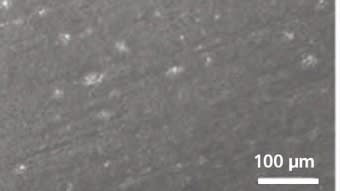
Researchers at Lawrence Berkeley National Laboratory (Berkeley Lab) have developed a conductive polymer coating — called HOS-PFM — that could enable longer lasting, more powerful lithium-ion (Li-ion) batteries for electric vehicles.
Briefs: Energy
UC Santa Cruz Assistant Professor of Electrical and Computer Engineering Yu Zhang and his lab are leveraging tools to improve the efficiency, reliability, and resilience of power systems, and have developed an artificial intelligence (AI)-based approach for the smart control of microgrids for power restoration when outages occur.

Briefs: Materials
A promising, more durable fuel cell design could help transform heavy-duty trucking and other clean fuel cell applications.

Briefs: Materials
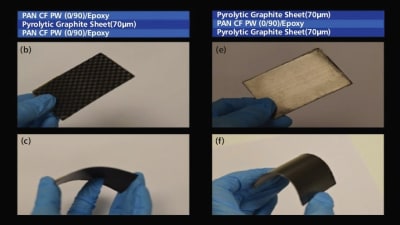
Inventors from NASA Langley and NASA Ames have created a new type of carbon fiber polymer composite that has a high thermal conductivity.
Briefs: Energy
Combination of Stressors Key to Testing Perovskite Solar Cells
Solar cells must endure a set of harsh conditions — often with variable combinations of changing stress factors — to judge their stability, but most researchers conduct these tests indoors with a few fixed stressing conditions.
Articles: Semiconductors & ICs
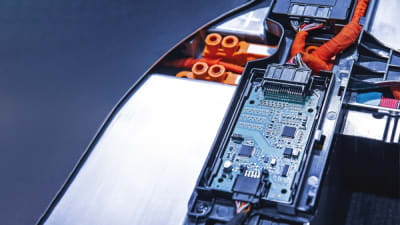
Currently, researchers are exploring the use of adhesives in combination with laser-cut gasket materials to deliver maximum energy density, miniaturization, and while maintaining a high degree of hermetic integrity to assure long-lived operation and efficiency.
Articles: Manufacturing & Prototyping
The Red Sea, historically renowned as a vital sea route connecting the East and the West, finds itself at the center of a complex crisis triggered by escalating geopolitical tensions.

Articles: Robotics, Automation & Control
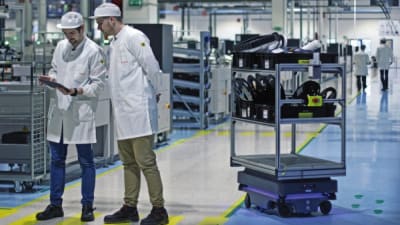
Material transport workflows for production and assembly lines are time-consuming, non-value-adding tasks for most manufacturers. AMRs provide a simple, efficient, and cost-effective way to automate material handling and in-house transportation tasks in nearly any situation where employees would previously have been required to push carts around the facility.
Products: Mechanical & Fluid Systems
See the new products, including ABB Robotics' expanded SCARA robot portfolio, Bodine's gearmotors, the C6675 control cabinet Industrial PC from Beckhoff, and KEB America's DL4 series of brushless servo motors.

Briefs: Robotics, Automation & Control
Reporting on their work in the proceedings of the IEEE Robotics and Automation Society’s International Conference on Intelligent Robots and Systems, the mini-bug weighs in at eight milligrams, while the water strider weighs 55 milligrams. Both can move at about six millimeters a second.

Briefs: Imaging
Robots and cameras of the future could be made of liquid crystals, thanks to a new discovery that significantly expands the potential of the chemicals already common in computer displays and digital watches. The findings are a simple and inexpensive way to manipulate the molecular properties of liquid crystals with light exposure.
Briefs: Design
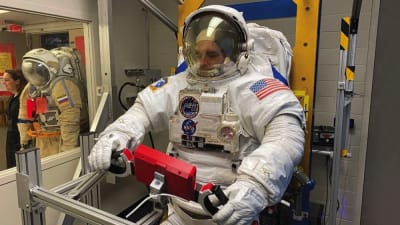
Innovators at NASA Johnson Space Center have developed a programmable steering wheel called the Tri-Rotor, which allows an astronaut the ability to easily operate a vehicle on the surface of a planet or Moon despite the limited dexterity of their spacesuit. This technology was originally conceived for the operation of a lunar terrain vehicle (LTV) to improve upon previous Apolloera hand controllers.
Briefs: Robotics, Automation & Control
In the future, the researchers want to derive simple, rule-based insights from their neural model, since the decisions of the neural network can be opaque and difficult to interpret. Simpler, rule-based methods could also be easier to implement and maintain in actual robotic warehouse settings.

Top Stories
 Blog: Power

My Opinion: We Need More Power Soon — Is Nuclear the Answer?
 Blog: AR/AI

Aerial Microrobots That Can Match a Bumblebee's Speed
 News: Energy

 Blog: Electronics & Computers

Turning Edible Fungi into Organic Memristors
 Blog: Robotics, Automation & Control

Microscopic Swimming Machines that Can Sense, Respond to Surroundings
 INSIDER: Sensors/Data Acquisition

Webcasts
 Upcoming Webinars: Transportation

Hydrogen Engines Are Heating Up for Heavy Duty
 Upcoming Webinars: Automotive

Advantages of Smart Power Distribution Unit Design for Automotive...
 Upcoming Webinars: Automotive

Quiet, Please: NVH Improvement Opportunities in the Early Design...
 Upcoming Webinars: Test & Measurement

From Spreadsheets to Insights: Fast Data Analysis Without Complex...
 Upcoming Webinars: Automotive

Battery Abuse Testing: Pushing to Failure
 Upcoming Webinars: Connectivity