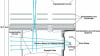
Time-of flight mass spectrometers are commonly used in analytical chemistry and many other applications. They contain a region where ions travel toward a detector. A new geometry was developed that has improved performance over existing designs.
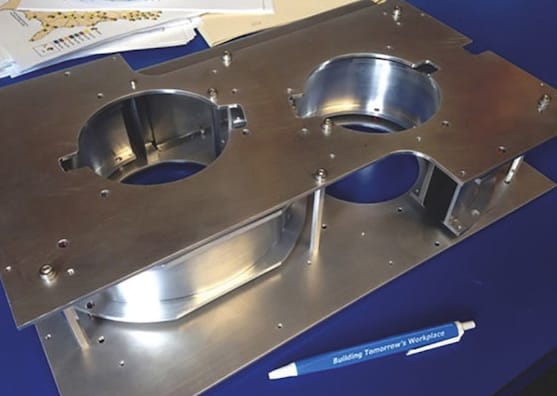
The new innovation uses two successive sectors, with the second one reversed, in a geometry resembling an “s.” The result is that the output ion beam is parallel to the input ion beam, and the entire geometry folds into a very compact volume. A second benefit of the design is that certain higher-order aberrations cancel when the ion beam makes two identical but opposed turns (e.g. a right-hand turn followed by a left-hand turn).
For more information, contact the NOAA Technology Partnerships Office at 301-713-3565; weblink here .