

ADAS/Connected Car - December 2019
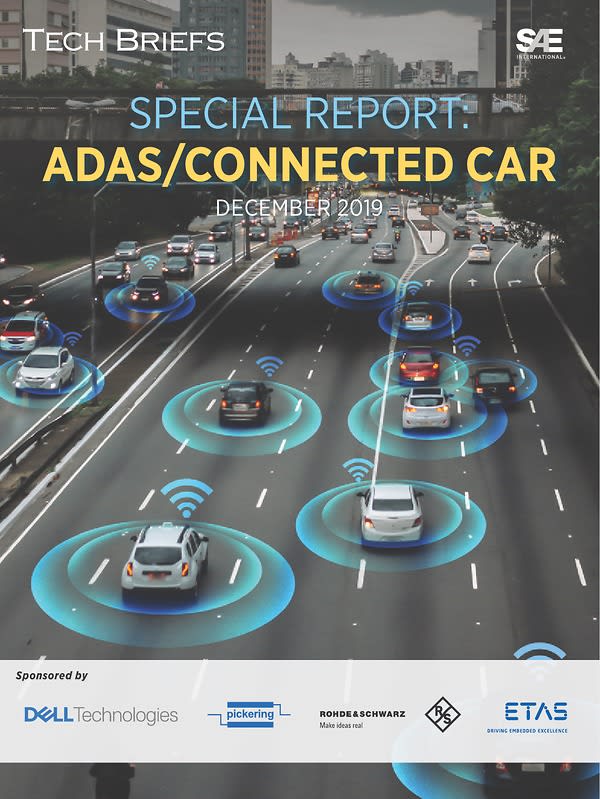
Today's Advanced Driver Assistance Systems (ADAS) and connected cars are paving the way for tomorrow's automated vehicles. To help you keep pace with the latest technology developments, we present this compendium of recent articles from the editors of Automotive Engineering, Autonomous Vehicle Engineering, and Truck & Off-Highway Engineering.
Don't have an account?
Overview
The December 2019 Special Report on Advanced Driver-Assistance Systems (ADAS) and connected cars delves into the transformative potential of these technologies in the automotive industry. It highlights the significant advancements and challenges associated with fully connected autonomous vehicles, emphasizing the need for robust connectivity solutions.
A central theme of the report is the anticipated impact of 5G technology, which is expected to revolutionize vehicle connectivity and autonomy. With its promise of higher bandwidths and lower latencies, 5G will enable automakers to gather and utilize vast amounts of data, facilitating vehicle-to-everything (V2X) communication. This capability is seen as a key enabler for automated driving functionalities and offers new revenue streams for car manufacturers through data monetization and cloud-based services.
The report also discusses the importance of user experience in the context of connected vehicles. It highlights efforts by companies like Harman to develop human-machine interfaces that prioritize user needs, ensuring that the interaction between drivers and vehicles is intuitive and engaging. As vehicles become more like personal mobile devices, the report stresses the necessity of maintaining data protection and security to safeguard against digital threats.
Another significant topic covered is the legal and regulatory implications of emerging features such as Tesla's Smart Summon. This feature raises questions about liability and the definition of autonomy, prompting discussions among legal and design professionals about what constitutes a truly autonomous system.
The report also addresses the environmental concerns driving manufacturers to adopt more comprehensive testing for volatile emissions in vehicle cabins. It suggests that advancements in analytical solutions, such as Selected Ion Flow Tube Mass Spectrometry, are essential for ensuring compliance with increasingly stringent regulations.
Additionally, the report explores the use of innovative materials in automotive design, particularly specialized thermoplastics that enhance sensor performance and reduce costs. This shift in materials is crucial for improving the overall functionality and efficiency of connected vehicles.
Finally, the report touches on the growing trend of firmware over-the-air (FOTA) updates, which allow for remote software and firmware updates in commercial vehicles. This capability not only facilitates maintenance but also enables the addition of new features, enhancing the overall user experience and security of connected cars.
In summary, the Special Report provides a comprehensive overview of the current landscape of ADAS and connected vehicles, highlighting the critical role of connectivity, user experience, data security, and regulatory considerations in shaping the future of the automotive industry. As these technologies continue to evolve, they promise to redefine transportation, making it safer, more efficient, and more integrated into the digital world.











