Roger Wiens began his space career at age 11 when he and his brother built their own telescope and placed it on a fence post — just in time to see Mars approach Earth.
"We started to sketch the features of Mars that we could see through this telescope," Wiens said in this episode of Here's an Idea, our exclusive Tech Briefs podcast series.
Learn how Wiens' space journey began, from drawing Mars in the neighborhood to designing the instruments that will launch to Mars itself.
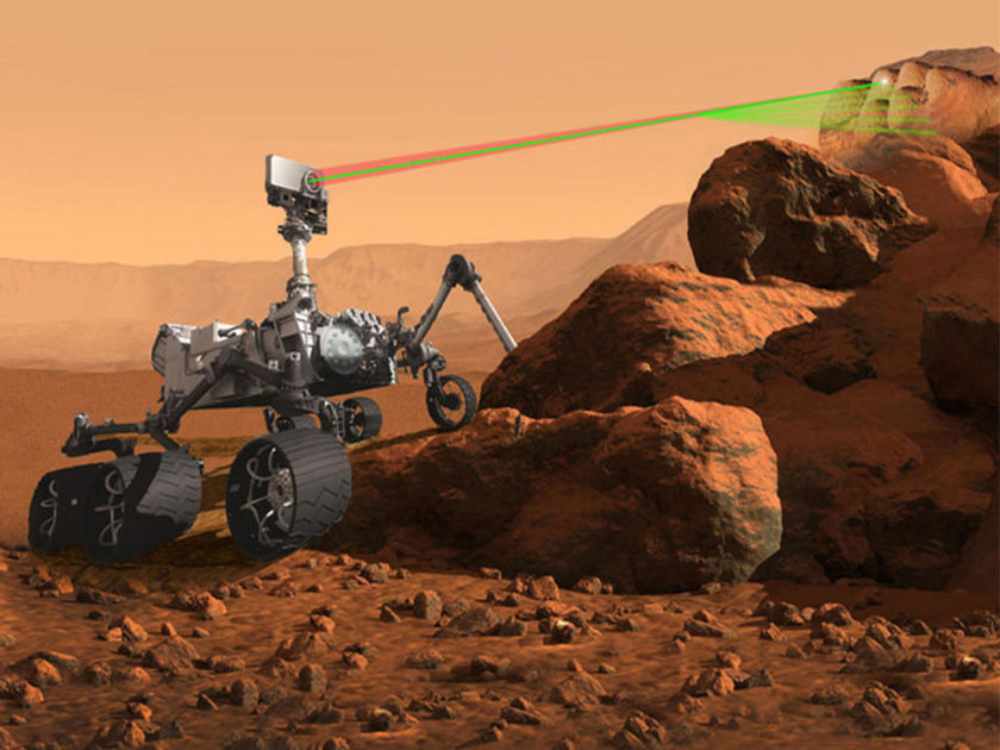
In this special edition of Here's an Idea, Wiens, a fellow at Los Alamos National Laboratory, explains how he and his team created the SuperCam. The "Super" instrument will be aboard the 2020 Mars rover, ready to find and vaporize rocks.
By studying Martian soil, and bringing samples back to Earth, we'll have a better understanding of past life on the Red Planet.
Subscribe or listen via your preferred podcast provider here.
Episode Highlights:
- (1:13) What is the SuperCam? “It looks out at targets up to 25 feet away from the rover...or even way out to infinity.”
- (6:30) How the Idea Began: “We thought we were really proposing too much. NASA’s not going to believe that we can pull this off.”
- (13:45) Testing the SuperCam: “We often talk about that as ’shake and bake.’ We vibrate the instrument as it would experience during a launch.”
- (15:58) Why is the SuperCam so Important? “This will be the first rover to return samples to Earth.”
- (18:22) What kinds of advice would you give aspiring engineers? “Be creative."
- (24:23) The Beginning of a Journey to Mars: “I actually had the opportunity in graduate school to study pieces of Mars…”
- (26:13) Learning from a Failed Landing: “We watched that capsule falling from space down to Earth for a full 5 minutes.”
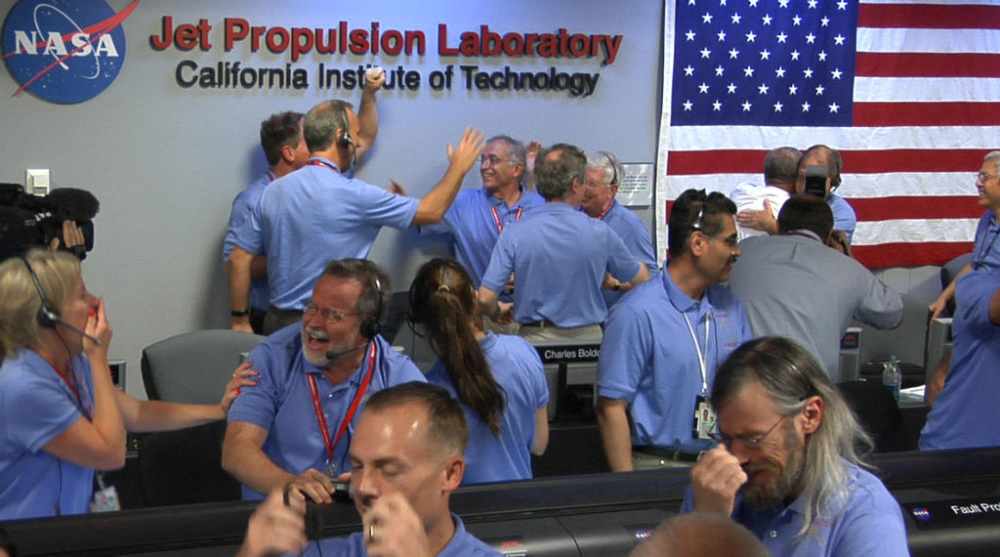
- (28:00) The Day Curiosity Landed: “Personally, I had a pit in my stomach…”
- (29:13) The Best Part of the Job: “I love creating new things that we can use to study the universe, to study the planets…”
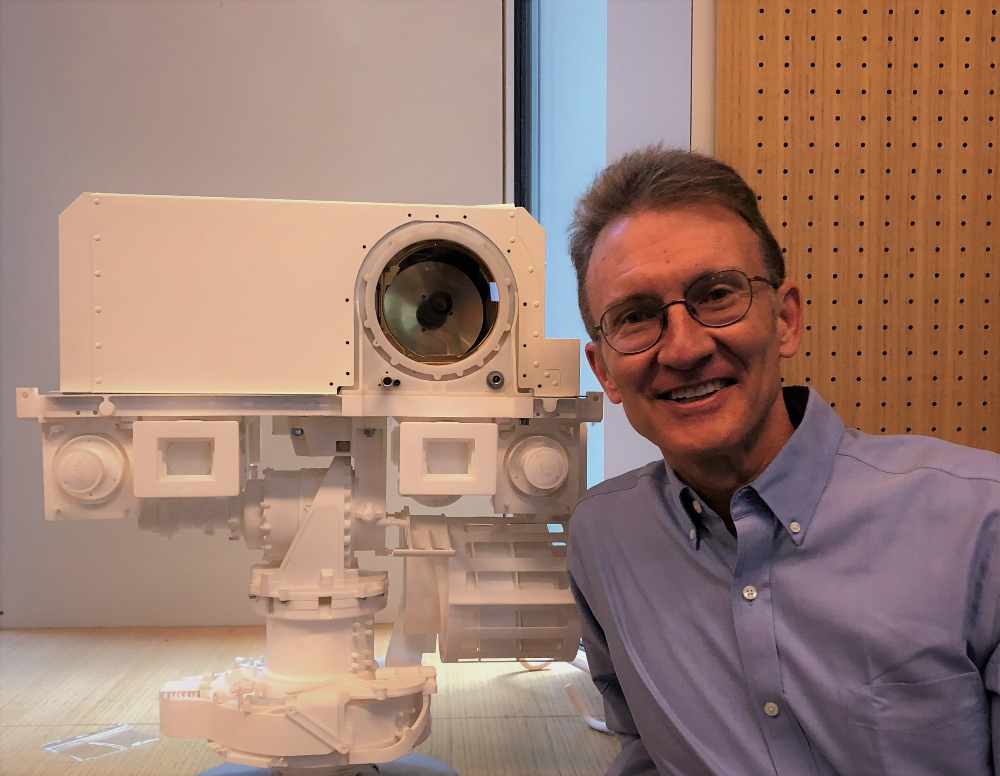
Want to see the SuperCam? Scroll down the page to see episode highlights, videos, and images.
Watch the above Los Alamos National Laboratory video, where Roger Wiens explains the components of the SuperCam.
SuperCam Images:


What did you think of this episode? Send your comments to
To learn more about the Mars 2020 mission, read our Special Series: Mars 2020 – Perseverance to the Red Planet.
Transcript
00:00:04 Roger Wiens: SuperCam is basically a geological observatory on the Mars 2020 rover. We have a telescope that sits on the mast of the rover and out of that telescope we fire laser pulses to interrogate rocks and soils, and using that we actually have several techniques this instrument, observatory uses to understand the composition of the rocks both chemically and mineralogically, and physical properties like their hardness. We were chosen to build this instrument from the ground up following, to some extent the successful ChemCam instrument that has been exploring Mars since 2012 on the Curiosity rover. We have been developing this instrument in partnership with the French Space Agency and an organization, IRAP, in Toulouse France and with some Spanish colleagues as well, and do the whole consortium is led by Los Alamos. (sound of shock test)
00:01:07 To make sure the spacecraft instruments survive, we have to give them a barrage of tests, environmental tests, as well as performance tests. Some of the environmental tests are vibration tests to make sure they survive the launch. (sound of vibration test) Thermal tests to make sure they will work well in cold and hot temperatures, or in a vacuum, or in this case the Mars atmosphere. After all the environmental tests then we give it the performance testing to understand how well to the spectra work, how well does the imaging work. The microphone? Does it work? So we've tested that as well.
00:01:50 This is the voice of Roger Wiens speaking to you through the Mars microphone on SuperCam. And so we've completed that testing and we're ready to send this instrument off to Jet Propulsion Laboratory to get bolted onto the rover. This launch will take place in late July of 2020. It then takes about nine months to get to Mars, so we're heading for a landing on February 18, 2021.