The International Space Station is full of spare parts, components that can be pulled in quickly to replace any faulty or broken ones.
NASA's Tracie Prater wants astronauts to not have to bring up so much clutter, and to print out the tools that they need.

In this episode of our podcast series Here's an Idea, you'll learn about everything NASA is trying build "on demand," from plastic ratchets and sophisticated sensors to entire lunar habitats and personal back scratchers.
Prater, a materials engineer at NASA's Marshall Space Flight Center in Alabama, tells us about NASA's efforts to bring 3D printing to space.
Also: Learn how this process of additive manufacturing will play an especially intriguing role in long-duration missions to the Moon and Mars, where going back for spare parts is not an option.
In our conversation, Prater reveals the kinds of unexpected materials that can be fed into a 3D printer, from leftover plastic packaging to the lunar soil.
Listen to the episode.
Subscribe or listen via your preferred podcast provider here.
Episode Highlights
- (3:49) What kinds of parts are best suited for 3D printing?
- (5:30) What has been the reaction from astronauts who are using these 3D printed parts?
- (8:15) What role will 3D printing play in long-duration Moon missions?
- (10:14) How do know that a 3D-printed part is a “good,” certified part?
- (15:35) What is the coolest thing you've seen 3D-printed?
- (22:39) How did you first get involved with 3D printing?
- (28:38) What is most exciting to you about 3D printing and the role it might play in space exploration?
More Resources: NASA and 3D Printing
- Astronaut Butch Wilmore and His 3D Printer
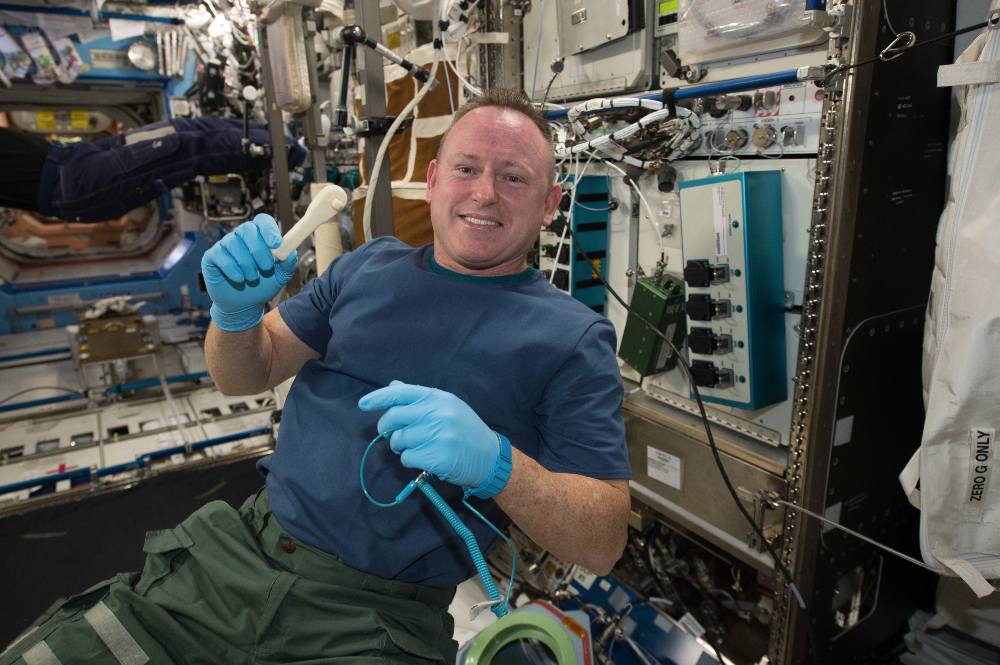
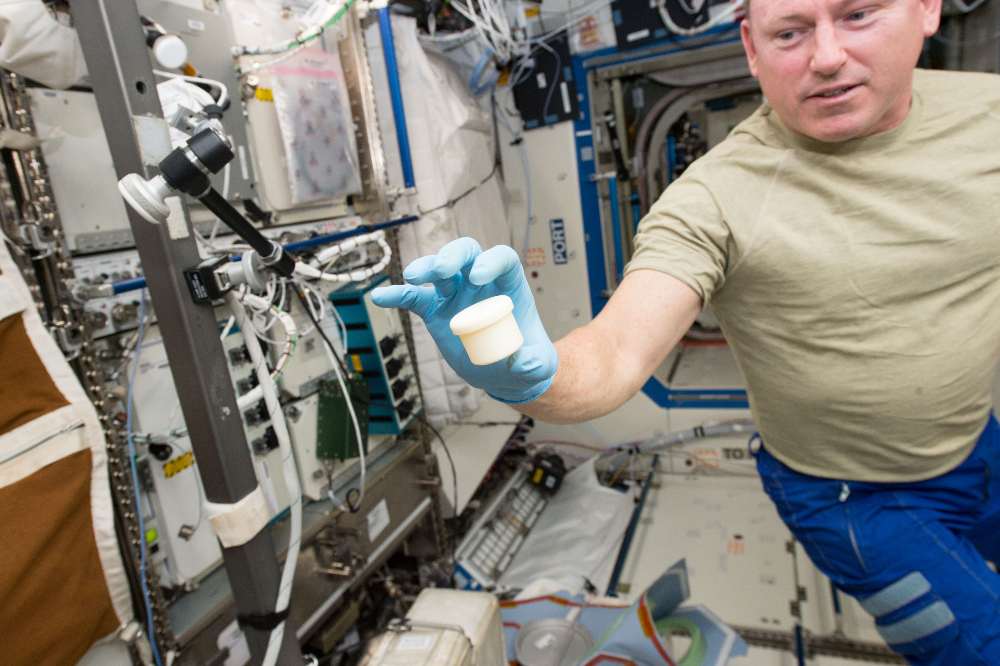
Given the dry air on the ISS, one of the first objects that astronaut Butch Wilmore wanted to print was a back scratcher. Though he never received the plastic itch-reliever until he got back down to Earth, NASA teams were able to uplink design files that allowed the ISS crew to 3D-print ratchets, structural clips, and sample containers .

- A Home on Mars, 3D-Printed
What's the coolest thing Tracie has seen 3D-printed? Entire habitats, it turns out. As part of NASA's 3D-Printed Habitat Challenge , teams competed to create sustainable shelters for deep space exploration, including the agency’s journey to Mars.
In the video below, see the winner of NASA’s 3D-Printed Habitat Challenge.

Learn who won the final phase of the 3D-Printed Habitat Challenge .
- Rockets!
NASA's Artemis program will astronauts to the Moon and prepare crew for human exploration of Mars. Experts from NASA, industry, and academia are looking to 3D-printing to build the rocket parts that could power the Artemis trips.
Complex designs – such as engine nozzles with integrated channels walls – can be fabricated using a metal additive-manufacturing technique called blown powder directed energy deposition.

These initiatives mentioned above are only a few of the examples of NASA's additive manufacturing efforts.
Learn more about NASA's 3D-printing efforts by reading our 2020 feature: 3D Printing and Space Exploration: How NASA Will Use Additive Manufacturing.
What do you think? Share your questions and comments below.
Subscribe to the Here's an Idea newsletter.
Transcript
00:00:03 Mars desolate Kord unable to sustain human life on its surface until now introducing the first Martian habitat for humans inspired by biology found on earth built using state-of-the-art 3d printing technology and advanced autonomous robotics modular and made from the Martian surface without human hands here's the process overview the landing a lander scans its
00:00:53 surroundings and selects optimum print area Rover robots deploy for material gathering the lander seals to the ground and provides a protected pressurized print environment mixed materials and prepare for print the print begins place airlocks continue print the walking Lander robot moves to create the next structure repeat process
00:01:31 materials most of the zou phorus habitat will be printed with materials found from the Martian surface Martian concrete made from ice calcium oxide and Martian aggregate are collected by Rovers to be fed into the lander for mixing precision components manufactured on earth are stored inside the print chamber for transport to Mars these parts will be placed into the
00:01:54 active print as needed providing structure access points breathtaking views and lighting to the interior method of construction after the lander has selected the printing location it will provide a controlled and pressurized environment for the print even in temperature extremes storms and other environmental variables the print will continue without interference in
00:02:16 its contained environment once astronauts arrive the printer will be available to create additional prints or can act as a mobile emergency pressure vessel using two separate print heads the printer will create structure pressure chambers without the use of removable support material the first material HDPE will provide environmental enclosure and reinforcing this material
00:02:40 will print two point five centimeters ahead of the Martian mix to allow printing of overhangs without removable support material the Martian concrete provides primary structural strength and radiation absorption the finished print the communal cell structure provides a space for activities including exercise recreation meal preparation and social interaction it also serves as the
00:03:05 connecting point for the Mars rover and a walkout airlock with suit airlocks for maximum operational flexibility the center beams provide extra structural support and stairs to the upper mezzanine the mezzanine level boasts the largest window in the habitat providing expansive views of the Martian landscape in addition it gives sunlight for a small hydroponic garden for growth of
00:03:28 vegetation and production of oxygen along the back wall are built-in shelving units supplying the necessary storage for food and water the crew quarters contained four bedrooms for the residents of the habitat each providing a secluded area for rest and personal time every room has storage under the bed and a viewport the sanitation room is nearby equipped
00:03:52 with a toilet sink and shower the shell also has a ladder for upper access to storage adding increased radiation absorption for the crew below the laboratory is complete with countertops for experiments storage for tools equipment and communication systems the middle desk has under counter storage and an integrated hookup for a water supply the lab also has a second Rover
00:04:18 hatch for easy unloading of field samples the zou phorus habitat is easily expandable the unique hexagonal shape will provide interlocking abilities for future residents and additions the zou fir is habitat building a new way forward for space exploration and human habitation you