

Vehicle Electrification - July 2020
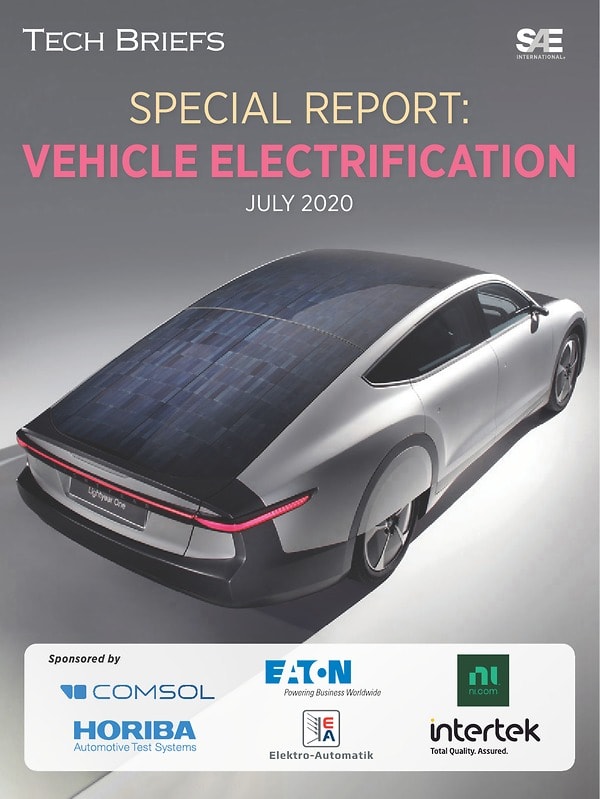
The global transition to electric vehicles presents new design, manufacturing, and infrastructure challenges. To help you keep pace with the rapid changes in vehicle electrification technology, we present this compendium of recent articles from the editors of Automotive Engineering and Truck & Off-Highway Engineering magazines.
Don't have an account?
Overview
The July 2020 Special Report on Vehicle Electrification provides a comprehensive overview of the advancements and challenges in the electric vehicle (EV) sector. It highlights key developments in battery technology, thermal management, and the transition to battery-electric vehicles (BEVs) across various manufacturers.
One of the standout features of the report is the introduction of the Lightyear One, a solar electric vehicle that boasts four propulsion motors, ultra-lightweight materials, and advanced aerodynamics. With approximately 1,000 photovoltaic cells on its roof, the Lightyear One can generate a peak output of 1.25 kW, enabling it to achieve an average range of 20 miles per day solely from solar energy. This innovative approach exemplifies the potential of integrating renewable energy sources into EV design.
The report also discusses the ongoing efforts in battery materials testing, emphasizing the importance of reliable methodologies for the development of electric vehicle batteries. As the demand for EVs grows, the need for efficient and effective testing processes becomes critical to ensure safety and performance.
In terms of thermal management, the report outlines new technologies that are emerging to address the unique challenges posed by electric vehicles. These include advancements in cabin heating, ultra-fast battery charging, and the use of secondary-loop heat pumps, which are essential for optimizing the performance and comfort of EVs.
A significant focus of the report is on Volvo's LIGHTS project, a pilot initiative in California aimed at introducing battery-electric semi tractors to the U.S. market. The project is progressing at a mixed pace, with the first five trucks already in use by partners NFI Transportation and Dependable Supply Chain Services. However, the report notes that while there are rapid advancements, challenges remain in terms of battery technology and infrastructure development.
General Motors (GM) is also highlighted for its commitment to a fully battery-electric future, marking a significant shift in its long-term strategy after years of hybrid development. This transition reflects a broader industry trend as manufacturers increasingly prioritize BEV technology and vertically integrated production processes.
The report concludes by acknowledging the various challenges that still need to be addressed, such as the need for improved battery technology and the establishment of adequate charging infrastructure. These factors are crucial for the widespread adoption of electric trucks and vehicles in general.
Overall, the Special Report on Vehicle Electrification serves as a valuable resource for understanding the current landscape of electric vehicles, the innovations driving the industry forward, and the hurdles that must be overcome to achieve a sustainable and electrified transportation future.










