

Medical Manufacturing and Outsourcing - October 2020
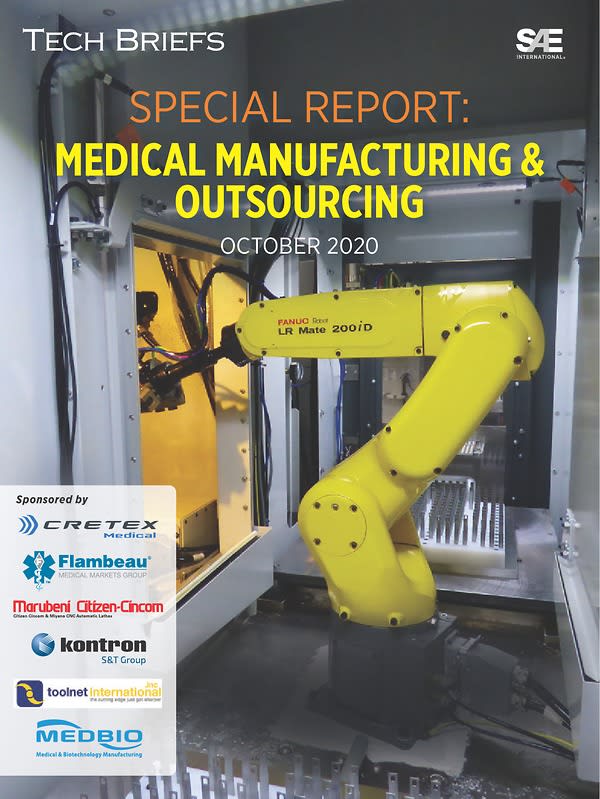
Discover how advances in factory automation, robotics, 3D printing and other fabrication technologies are shaping the future of medical device manufacturing in this Special Report – a compilation of recent articles from the editors of Medical Design Briefs and Tech Briefs magazines. Plus, get expert insights on success outsourcing of product design through production.
Don't have an account?
Overview
The Special Report on Medical Manufacturing & Outsourcing from October 2020 provides a comprehensive overview of the medical device industry's landscape, particularly in the context of the COVID-19 pandemic and its aftermath. The report highlights the challenges and opportunities faced by manufacturers, emphasizing the need for innovation and adaptation in a rapidly changing environment.
Initially, the report notes that prior to the pandemic, the medical device market was projected to grow at an average rate of 5% annually, with expectations of reaching an $800 billion global market by 2030. However, the onset of COVID-19 drastically altered this trajectory, leading to significant revenue shortfalls for most manufacturers, except those producing essential equipment like ventilators. The pandemic resulted in halted trials, frozen budgets, and a significant decline in elective surgeries, which are crucial for many medical device companies.
As hospitals and health systems began to recover, particularly in Asia and Europe, the report discusses the gradual resumption of elective procedures and technology trials. This recovery is accompanied by a shift in focus towards capital conservation and innovation, as healthcare providers seek to attract patients in a more consumer-driven market. The report suggests that this new landscape will necessitate changes in buying processes, emphasizing the evaluation of clinical efficacy, revenue impact, and return on investment for medical devices.
The report also addresses the importance of regulatory knowledge and the role of outsourcing in navigating the complexities of medical device testing and compliance. It highlights the necessity for manufacturers to partner with testing experts who are well-versed in current regulatory requirements, as deficiencies in this area can lead to significant setbacks. Outsourcing to established laboratories with extensive chemical databases and a reputation for credibility can enhance the chances of successful submissions to regulatory bodies.
Furthermore, the report discusses the concept of low latency manufacturing, which emphasizes efficiency and agility in the production process. It outlines a threefold foundation for best practices in this approach, including the establishment of a time framework to streamline technical parameters, the importance of collaboration with suppliers, and the need for a sustainable manufacturing culture that prioritizes green and lean practices.
In terms of technological advancements, the report highlights the integration of new technologies such as surgical robots, 3D printing, telehealth, and predictive analytics as key drivers of future growth. These innovations are expected to play a crucial role in improving clinical outcomes while also addressing the need for cost-effective solutions in a post-pandemic market.
Overall, the Special Report underscores the resilience of the medical device industry and its capacity to adapt to new challenges. It calls for a proactive approach to innovation, collaboration, and regulatory compliance as manufacturers navigate the evolving landscape of healthcare. The insights provided in this report serve as a valuable resource for industry stakeholders looking to thrive in a transformed market.











