

Medical Robotics - November 2020
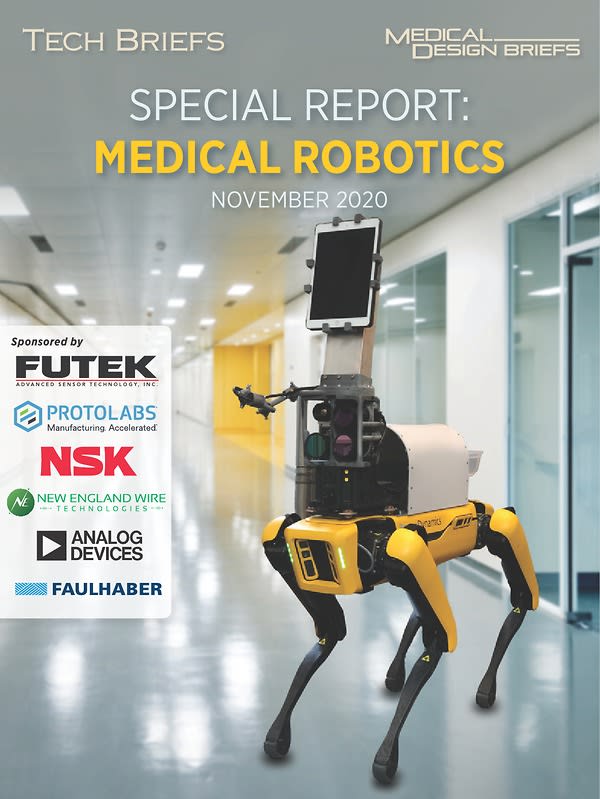
From the operating room to the assembly line, robots are changing the medical industry. Check out the latest advances and amazing applications in this compendium of recent articles from the editors of Medical Design Briefs and Tech Briefs magazines.
Don't have an account?
Overview
The November 2020 Special Report on Medical Robotics delves into the transformative impact of robotic technology in the healthcare sector, particularly in the context of the COVID-19 pandemic. It highlights the critical role that healthcare plays in the global economy, accounting for nearly 18% of the U.S. gross domestic product and employing 16 million professionals. The report emphasizes that elective and critical surgeries are resuming despite the pandemic, underscoring the economic significance of surgical procedures and the healthcare workforce involved in patient care.
One of the key innovations discussed is the use of robots developed at MIT, which are employed to remotely measure patients' vital signs. This technology minimizes the risk to healthcare workers by allowing them to assess patients without being physically present, thereby enhancing safety during the pandemic. The report also features various advancements in medical robotics, including robotic arms designed for delicate surgeries, smart artificial hands for amputees, and prosthetic arms that can both move and provide sensory feedback.
The report outlines several features and innovations in medical robotics, including:
-
Maximizing Throughput and Efficiency: The report discusses strategies for improving speed and efficiency in medical device manufacturing through robotics, which is crucial for meeting the increasing demand for medical devices.
-
Innovative Surgical Tools: It highlights the development of a mechanical controller design for robot-assisted surgery, which enhances precision and control during surgical procedures.
-
Automated Testing Devices: The report mentions an automated robotic device that accelerates blood testing, showcasing how robotics can streamline diagnostic processes.
-
Collaborative Robotics: It introduces the concept of tiny vibration-powered robots that can work together, potentially revolutionizing tasks that require coordination and teamwork in medical applications.
-
Brain-Controlled Robotics: An EEG-based technique for controlling a robotic arm with brain signals is also discussed, illustrating the intersection of neuroscience and robotics.
-
Upper Body Exoskeletons: The report features upper body robotic exoskeletons designed to assist individuals with mobility impairments, highlighting the potential for robotics to enhance quality of life.
Overall, the Special Report on Medical Robotics presents a comprehensive overview of how robotic technologies are reshaping the healthcare landscape. It emphasizes the importance of these innovations in improving patient care, enhancing surgical precision, and ensuring the safety of healthcare workers, especially during challenging times like the COVID-19 pandemic. The report serves as a testament to the ongoing advancements in medical robotics and their potential to significantly impact the future of healthcare.







