Unmanned Systems - March 2021
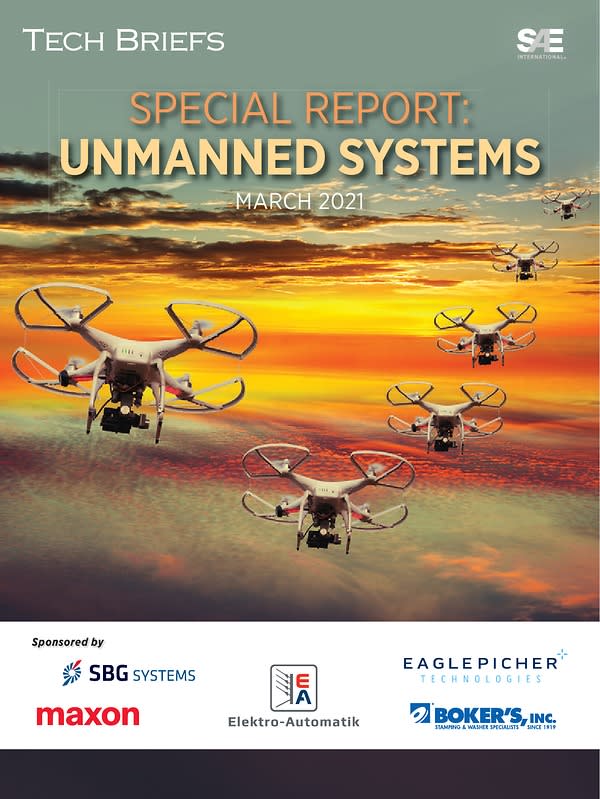
Drones that swarm and change shape mid-flight... autonomous combat vehicles on the battlefield...the latest in counter-UAS technology. Read about new advances in air and ground unmanned systems in this report from the editors of Aerospace & Defense Technology and Tech Briefs magazines.
Don't have an account?
Overview
The March 2021 Special Report on Unmanned Systems provides a comprehensive overview of the latest advancements and challenges in the field of unmanned vehicles, particularly focusing on unmanned aerial vehicles (UAVs) and their applications in defense and security.
The report begins with an exploration of the role of autonomous unmanned ground vehicles in defense applications, highlighting their potential to enhance operational efficiency and effectiveness in various military scenarios. These vehicles are designed to operate independently or in coordination with human operators, offering significant advantages in terms of safety and mission success.
A key feature of the report is the discussion on drone swarms, which represent a transformational technology in military operations. Swarms of low-cost autonomous drones can work collectively to perform complex tasks, making them difficult to counteract. This section emphasizes the strategic advantages of deploying drone swarms, including their ability to adapt to changing environments and respond to threats in real-time.
The report also addresses the challenges posed by counter-UAS (Unmanned Aerial Systems) regulations. It notes that while there is a growing need for effective countermeasures against rogue drones, regulatory frameworks are still evolving. The article discusses the legal implications of counter-drone technologies, including the authority to seize or neutralize drones deemed a threat, which may face legal challenges.
In terms of technology, the report highlights advancements in connectors that reduce size, weight, and power (SWaP) burdens in UAV and MUMT (Manned-Unmanned Teaming) aircraft electronics. These innovations are crucial for enhancing the performance and efficiency of unmanned systems.
The report also includes application briefs on various systems, such as encapsulated drone systems and anti-drone remote weapon systems, showcasing the practical implementations of these technologies. Additionally, it discusses UAV fuel management systems, which are essential for optimizing the operational range and endurance of drones.
Technical briefs delve into the effectiveness of inter-vehicle communications and on-board processing for close UAV flight formations, as well as advancements in learning capabilities for drone swarms. The report highlights how these technologies are improving the coordination and functionality of unmanned systems in complex environments.
Moreover, the report touches on bio-inspired designs, such as wing designs for small drones, which aim to enhance flight efficiency and maneuverability. It also discusses algorithms that improve navigation for autonomous driving robots, showcasing the ongoing research and development in the field.
Overall, the Special Report on Unmanned Systems provides valuable insights into the current state and future directions of unmanned vehicle technologies. It underscores the importance of innovation in addressing both operational needs and regulatory challenges, while also highlighting the transformative potential of these systems in defense and security applications. As the landscape of unmanned systems continues to evolve, the report serves as a critical resource for understanding the implications of these advancements on military strategy and operations.