

Vehicle Electrification - January 2022
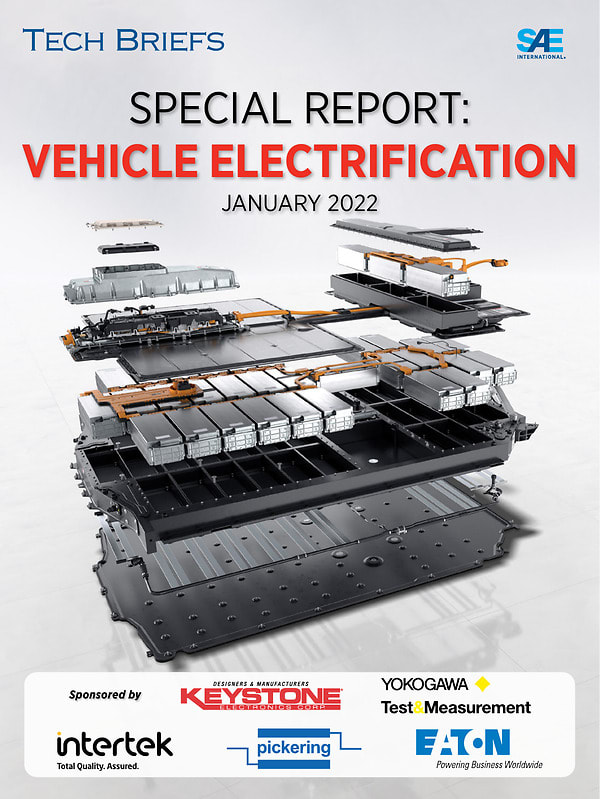
Innovation is happening at a rapid pace in the e-mobility space. Read this compendium of recent articles from the editors of Automotive Engineering and Truck & Off-Highway Engineering to learn about the latest advances in battery and fuel cell technology, EV manufacturing and testing, and much more.
Don't have an account?
Overview
The "Vehicle Electrification Special Report," published in January 2022, provides a comprehensive overview of the current state and future prospects of electric vehicles (EVs) and related technologies. The report highlights significant investments, innovations, and challenges faced by the automotive industry as it transitions towards electrification.
One of the key features of the report is Toyota's commitment to battery development and carbon-neutrality measures. Toyota's Chief Technology Officer, Masahiko Maeda, announced a substantial investment of 1.5 trillion yen (approximately $13.7 billion) in battery research and manufacturing by 2030. Despite this investment, Toyota remains cautious about fully committing to an all-electric vehicle lineup, emphasizing the complexities of electrifying larger vehicles like pickup trucks, which are popular in markets such as the U.S. Maeda noted that while there is a strong push for EVs in regions like the U.S. and Europe, electrification may not be the solution for all markets. He also provided a measured outlook on the development of solid-state batteries, which are seen as a potential game-changer in battery technology, focusing on safety and longevity as primary goals.
The report also covers advancements in battery and fuel-cell electric trucks, showcased at the Advanced Clean Transportation (ACT) Expo in Long Beach, California. Various original equipment manufacturers (OEMs) presented their latest prototypes and production models, reflecting the growing interest and investment in electric and hydrogen-powered commercial vehicles.
In addition to vehicle manufacturers, the report discusses the broader implications of the electrification trend on traditional automotive suppliers. These suppliers are adapting their strategies and investments to meet the increasing demand for EV components and systems, indicating a significant shift in the automotive supply chain.
Another notable topic in the report is the ongoing research to address noise issues associated with EV fast chargers. Engineering specialists are exploring thermal management solutions to mitigate excessive noise generated during DC fast-charging cycles, which is crucial for enhancing the user experience and public acceptance of EVs.
The report also features various articles on emerging technologies and trends in the EV sector. For instance, Schaeffler is highlighted for its efforts in building a robust e-motor powerhouse, while BYD's innovative Blade Battery technology is discussed for its potential to improve battery safety and performance. Additionally, the report touches on the increasing trend of outsourcing EV testing, which allows manufacturers to focus on core competencies while leveraging specialized expertise.
Overall, the "Vehicle Electrification Special Report" encapsulates the dynamic landscape of the automotive industry as it embraces electrification. It underscores the importance of innovation, investment, and collaboration among manufacturers and suppliers to navigate the challenges and opportunities presented by the shift towards electric mobility. As the industry evolves, the report serves as a valuable resource for understanding the current trends and future directions in vehicle electrification.










