

Test & Measurement - February 2022
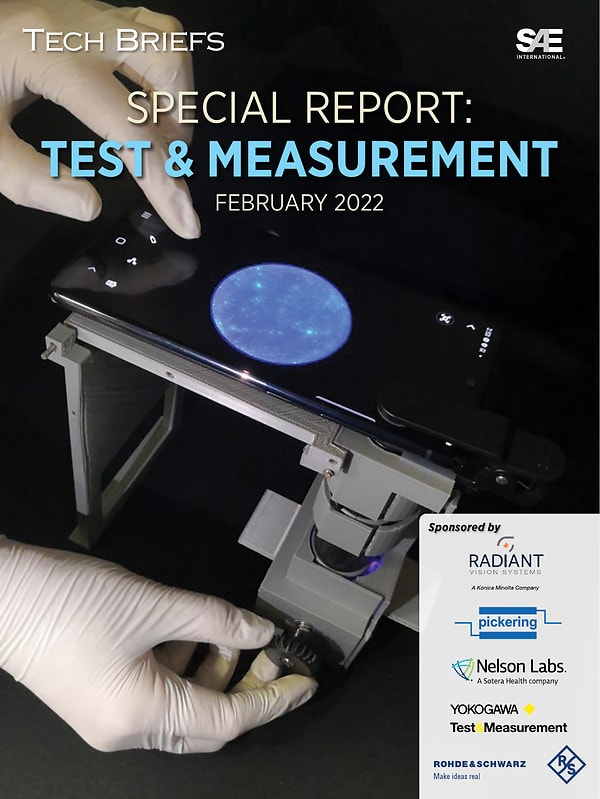
From space vehicles to the modern battlefield to the human body, test innovations are improving device and system reliability while speeding time to market. Read about the latest advances – including the smartphone-based COVID-19 test pictured on the cover – in this compendium of recent articles from the editors of Tech Briefs, Aerospace & Defense Technology, and Medical Design Briefs magazines.
Don't have an account?
Overview
The February 2022 Special Report on Test & Measurement presents a comprehensive overview of the latest advancements and challenges in various testing methodologies across multiple industries, particularly focusing on aerospace, defense, and healthcare.
One of the key highlights is the discussion on the space industry, which has seen significant transformations due to the involvement of private companies like SpaceX. The report emphasizes how innovations such as reusable launch vehicles and smaller, cost-effective communication satellites have led to an increase in the frequency of space launches and improved payload delivery. This shift has necessitated more sophisticated testing approaches to ensure the reliability and performance of spacecraft, especially as civilian participation in space travel becomes more common.
In the realm of aerospace and defense electronics, the report outlines the critical testing requirements for component parts, which include temperature ranges, mechanical performance, fuel resistance, and frequency range performance. It stresses the importance of a holistic approach to testing, particularly for electromagnetic interference (EMI) materials, to predict their performance over time and enhance the reliability of mission-critical electronics.
The report also features a section on mechanical testing for electric vehicle batteries, highlighting the growing importance of rigorous testing methodologies as the demand for electric vehicles increases. This includes assessing battery performance under various conditions to ensure safety and efficiency.
Another significant innovation discussed is a new COVID-19 testing method developed by researchers at the University of Arizona. This method utilizes a smartphone microscope to analyze saliva samples, delivering results in approximately 10 minutes. It combines the rapidity of nasal swab antigen tests with the accuracy of PCR tests, showcasing the potential for mobile technology to enhance public health responses.
Additionally, the report includes various tech briefs that cover a range of topics, such as non-destructive evaluation techniques, calibration systems for automated fiber placement, and chemical detection systems for low concentration levels. These briefs provide insights into the latest tools and technologies that are being developed to improve testing accuracy and efficiency across different applications.
Overall, the Special Report underscores the importance of innovation in testing methodologies to meet the evolving demands of various industries. It highlights the need for engineers and researchers to adopt comprehensive testing strategies that not only address current challenges but also anticipate future requirements. The integration of advanced technologies and a focus on automation are pivotal in driving progress in testing and measurement, ultimately leading to enhanced performance and safety in critical applications.











