

Rugged Computing & Electronics - June 2022
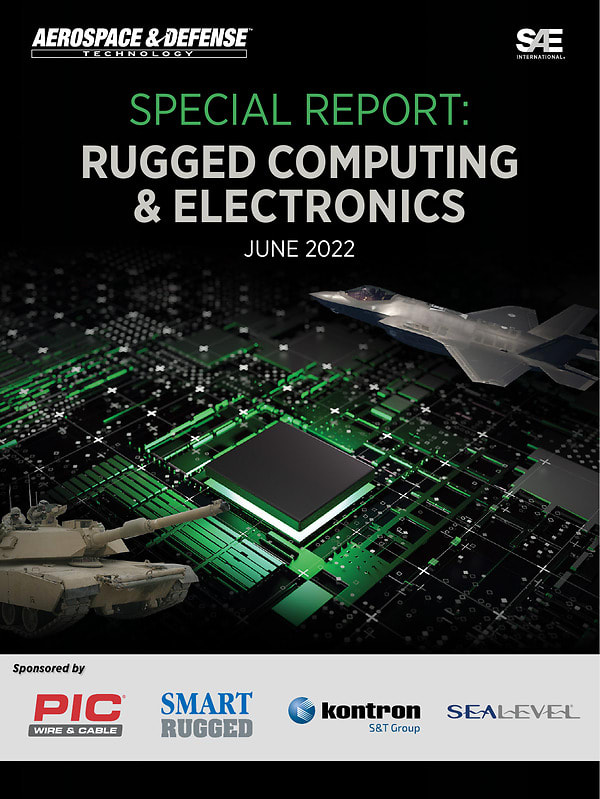
From the battlefield to the extremes of space, electronics and computing advances enable missions in the harshest conditions. Keep pace with the latest developments in this compendium of recent articles from the editors of Tech Briefs and Aerospace & Defense Technology.
Don't have an account?
Overview
The Special Report on Rugged Computing & Electronics, published in June 2022, focuses on the evolving landscape of military and aerospace technologies, particularly emphasizing the importance of rugged printed circuit boards (PCBs) and advanced connectivity solutions for modern warfighters. As operational demands increase and funding priorities shift, soldier modernization programs are becoming more urgent, necessitating innovative approaches to enhance decision-making capabilities in challenging environments.
The report highlights the critical role of four key technologies that are transforming military operations: artificial intelligence, augmented reality, miniaturized sensors, and efficient wearable power supplies. These technologies are essential for optimizing information sharing and processing among soldiers and small units, particularly in high-intensity conflict scenarios characterized by dense urban terrain and electronically degraded environments. The U.S. Army's Integrated Visual Augmentation System (IVAS) exemplifies the integration of these technologies, requiring effective modular solutions to maximize its capabilities.
A significant focus of the report is the Department of Defense's (DoD) Modular Open Systems Approach (MOSA), which mandates a modular design philosophy for procurement across the Army, Air Force, and Navy. This approach aims to lower integration costs and accelerate the deployment of new capabilities to address rapidly evolving threats. The adoption of open system standards, such as the Army's Command, Control, Communications, Computers, Intelligence, Surveillance, and Reconnaissance (C4ISR) Modular Open Suite of Standards (CMOSS) and the Sensor Open Systems Architecture (SOSA) Technical Standard, is crucial for ensuring interoperability and flexibility in defense systems.
The report also addresses the challenges faced by system designers in understanding the interrelationships between the MOSA mandate and the leading open standards that support it. It provides an overview of important MOSA-aligned standards, including CMOSS, SOSA, FACE, HOST, MORA, OpenVPX, and VICTORY, which are essential for developing effective system solutions.
In addition to discussing the technological advancements and procurement strategies, the report includes design guidelines for military and aerospace PCBs, emphasizing the need for compliance with strict regulatory requirements from organizations such as the IPC, DoD, NASA, and the FAA. It also covers testing methodologies for electromagnetic interference (EMI) materials, which are critical for ensuring the reliability and performance of electronic systems in battlefield applications.
Overall, the Special Report serves as a comprehensive resource for defense system integrators, engineers, and military planners, providing insights into the latest trends in rugged computing and electronics. It underscores the importance of adopting innovative technologies and modular design principles to enhance the capabilities of modern warfighters in an increasingly complex and dynamic operational environment. By leveraging these advancements, military forces can improve their responsiveness to emerging threats and maintain a strategic advantage on the battlefield.










