Power Electronics - August 2022
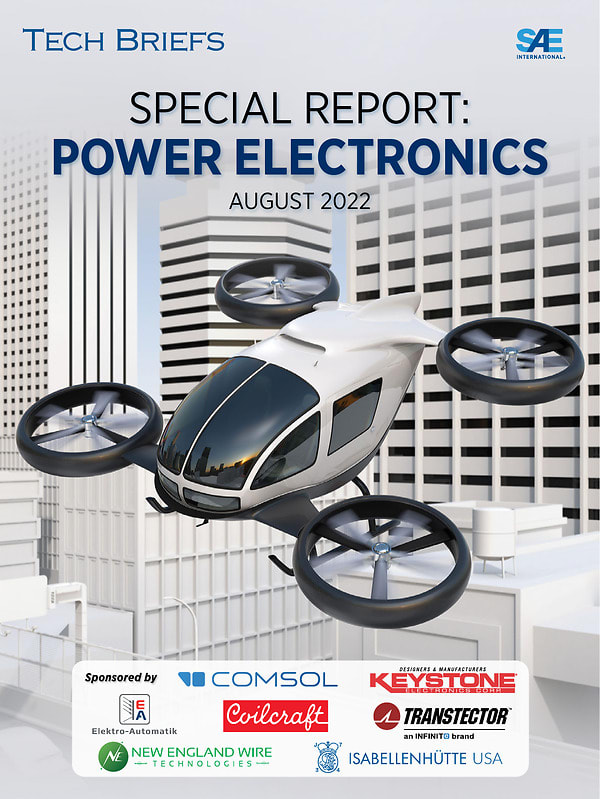
This compendium of recent articles from the editors of Tech Briefs and Aerospace & Defense Technology looks at the latest advances in power electronics and energy storage for a range of applications including electric aircraft, wireless smart devices, and energy harvesting.
Don't have an account?
Overview
The August 2022 Special Report on Power Electronics presents a comprehensive overview of the advancements and challenges in the field, particularly in relation to electrification and energy storage technologies. The report emphasizes the critical role of power electronics in facilitating the transition to electric vehicles (EVs) and other electrified transportation systems, which are essential for achieving global decarbonization goals.
One of the key highlights is the significant increase in electric vehicle (EV) adoption, driven by the urgent need for sustainable transportation solutions. The report notes that major automotive manufacturers, including Bosch, are pivoting towards electric powertrains and components to meet the rising demand for electric cars. This shift is not only crucial for reducing carbon emissions but also for enhancing energy resilience in the transportation sector.
The report also discusses the development of high-power fuel cells, which are expected to play a vital role in the electrification of various modes of transport, including cars, trucks, boats, and airplanes. These fuel cells can operate independently or in conjunction with batteries, providing a flexible and efficient energy solution for the future of transportation.
In addition to automotive applications, the report highlights innovations in energy storage technologies. For instance, researchers have made strides in enhancing the conductivity of cobalt oxide structures through partial substitution with tin, leading to promising applications in next-generation energy storage devices. The development of a flexible capacitor using a unique graphene film is also mentioned, which aims to improve conductivity and performance in supercapacitors—key components in energy storage systems.
The report further explores the potential of near-field thermophotovoltaics (TPVs) as compact and efficient power sources, particularly for military applications. These devices can operate at lower temperatures than traditional TPVs, making them suitable for various portable power needs.
Moreover, the report addresses the multidimensional challenges faced by the power electronics sector, including the need for advanced connectivity solutions to manage the increasing voltage and current requirements of modern electric systems. As the demand for electrification grows, the industry must innovate to ensure reliable and efficient power delivery.
Overall, the Special Report on Power Electronics underscores the importance of continued research and development in this field to support the electrification of transportation and other sectors. It highlights the collaborative efforts of academia and industry in driving technological advancements that will shape the future of energy and environmental resilience. The insights provided in this report serve as a valuable resource for stakeholders looking to navigate the evolving landscape of power electronics and its applications in a sustainable future.