

Unmanned Systems - February 2023
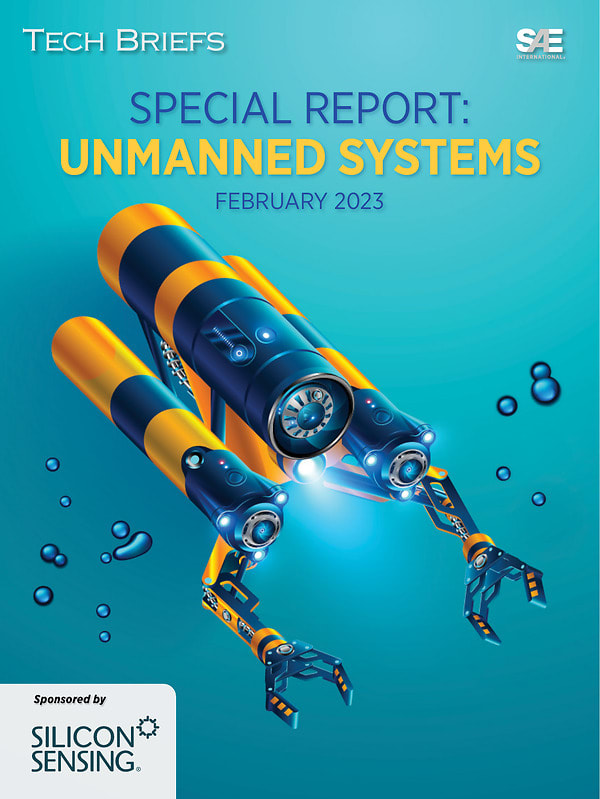
Unmanned helicopters take off...AI-powered machines tackle dangerous missions...autonomous robots become curious...rogue drones meet their match. Read about these and other advances in air, ground, and underwater unmanned vehicles in this report from the editors of Aerospace & Defense Technology and Tech Briefs.
Don't have an account?
Overview
The February 2023 Special Report on Unmanned Systems highlights the rapid advancements and diverse applications of unmanned aerial systems (UAS) and other unmanned vehicles across various sectors. The report emphasizes the growing importance of these technologies in military operations, environmental monitoring, and commercial applications, showcasing how they are reshaping industries and enhancing operational capabilities.
One of the key themes of the report is the evolution of UAS technology, which is characterized by increased reliability, lower costs, and improved performance. The report notes that small unmanned aircraft systems (SUAS) are becoming more prevalent in the market, driven by advancements in miniaturization and durability. Despite the abundance of UAS available, the report points out that many potential applications remain unexplored, indicating a significant opportunity for innovation and development.
The report also discusses the integration of advanced technologies such as artificial intelligence (AI), additive manufacturing, and enhanced power cell density, which are positioning UAS to play a critical role in military operations. These advancements enable better human-machine teaming, allowing a single pilot to control multiple drones simultaneously, thereby increasing operational efficiency and effectiveness.
Several companies are highlighted for their contributions to the unmanned systems landscape. Red Cat Holdings, Inc. is noted for its drone-based products and services across military, enterprise, and consumer markets. Teal Drones, a subsidiary, has developed the Golden Eagle, one of the few drones approved by the Department of Defense for various applications, including reconnaissance and public safety. Skypersonic is recognized for its technology that allows drones to perform inspections in GPS-denied environments, showcasing the versatility of unmanned systems.
The report also covers the collaboration between Roboteam and SMARTSHOOTER, which has resulted in a tactical ground robot equipped with advanced fire control systems. This integrated solution enhances the capabilities of tactical forces, allowing them to engage targets from a safe distance while maintaining high accuracy.
In addition to military applications, the report highlights the environmental applications of UAS, particularly in chemical, biological, radiological, and nuclear reconnaissance and surveillance. These systems are becoming essential tools for monitoring and responding to environmental threats, demonstrating their versatility beyond traditional uses.
The report concludes by addressing the challenges posed by the rapid development of unmanned systems, including the need for updated terminology, legal frameworks, and operational guidelines. As technology continues to advance, the language and regulations surrounding unmanned systems must evolve to keep pace with their capabilities and applications.
Overall, the February 2023 Special Report on Unmanned Systems provides a comprehensive overview of the current state and future potential of unmanned technologies, emphasizing their transformative impact across various industries and the ongoing need for innovation and adaptation in this rapidly changing field.










