

Automotive Test & Simulation - May 2023
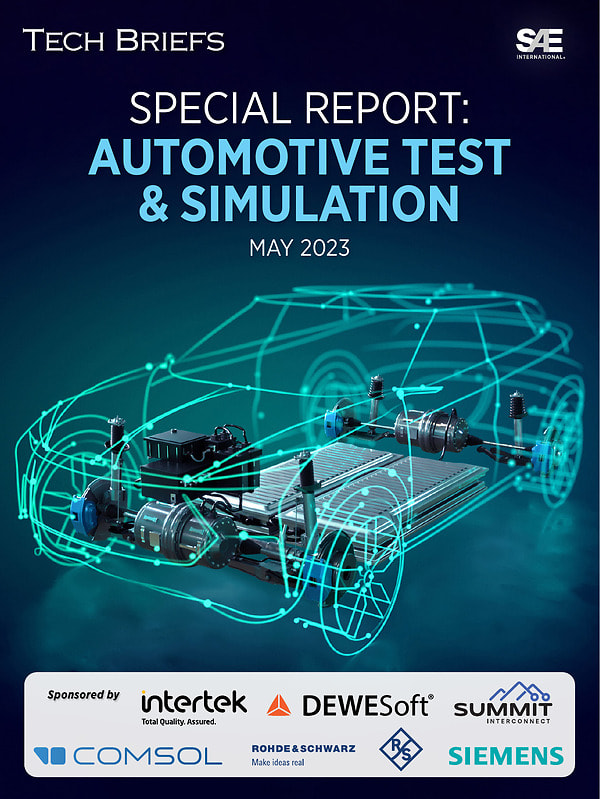
In this compendium of articles from the editors of Automotive Engineering and Tech Briefs magazines, learn about the latest simulation and test technologies for ADAS, autonomous vehicles, EV batteries, automotive part inspection, and other critical applications.
Don't have an account?
Overview
The Automotive Test & Simulation Special Report from May 2023 explores the significant transformations occurring in the automotive industry, driven by advancements in technology, societal demands, and environmental regulations. The report emphasizes the growing importance of electrification and the development of autonomous vehicles (AVs) as automakers strive to create sustainable, safe, and smart vehicles.
As competition intensifies, automakers are focusing on integrating advanced features and functions into their vehicles. This shift necessitates overcoming complex design challenges, particularly in the realm of AVs, where engineers must innovate to meet the demands of automated driving technologies. The report highlights that the development of AVs involves intricate software systems that utilize machine learning and artificial intelligence to process sensor data and make real-time decisions. This complexity requires seamless interaction among various subsystems, including electronics, software, and mechanical components.
One of the key challenges identified is the integration of AV technologies into all-electric vehicle platforms while maintaining performance and drive range. The report notes that the electrical power demands of AV systems can lead to a drive range penalty of approximately 15%. Additionally, the design must accommodate the placement of sensors and cameras in a way that is both functional and aesthetically pleasing.
To address these challenges, the report advocates for the digitalization of the automotive design process. By integrating requirements with the product lifecycle, companies can create a structured and traceable approach to decomposing design needs. This process allows engineering teams to develop specific targets and constraints for each component and subsystem, ensuring that the overall vehicle meets its performance metrics.
For instance, a high-level requirement for an AV might involve the ability to detect objects in a 360-degree radius. Decomposing this requirement would lead to identifying the necessary sensors, their quantities, and optimal placements on the vehicle. This methodical approach facilitates collaboration among various engineering teams, enhancing the flow of information and enabling more efficient design processes.
The report also highlights the role of simulation technology in accelerating vehicle development. Companies like Ford have reported significant reductions in development cycles by utilizing simulation tools, which allow for tasks that traditionally took weeks to be completed in a fraction of the time. Simulation serves as an enhanced method of testing and validating designs before physical prototypes are built, ultimately saving time and resources.
In conclusion, the Automotive Test & Simulation Special Report underscores the critical need for automakers to embrace digital transformation and advanced simulation techniques to navigate the complexities of modern vehicle design, particularly in the context of autonomous vehicles. By leveraging these tools, companies can better meet the demands of the evolving automotive landscape, ensuring they remain competitive while delivering innovative and sustainable solutions to consumers.











