

Robotics - July 2023
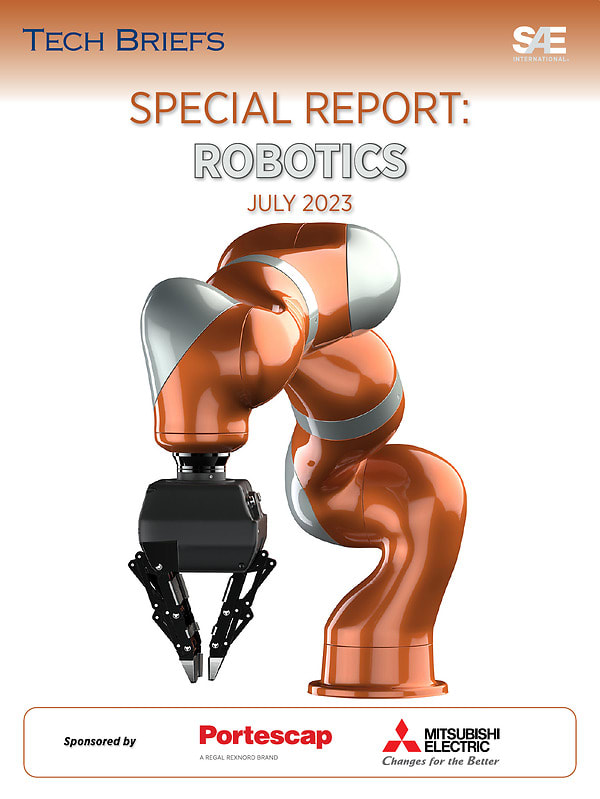
Read about the latest advances in robots for space exploration, healthcare, manufacturing, and more in this compendium of recent articles from the editors of Tech Briefs, Medical Design Briefs, and Aerospace & Defense Technology.
Don't have an account?
Overview
The July 2023 Robotics Special Report delves into the latest advancements in robotics, emphasizing the transformative role of artificial intelligence (AI) and innovative technologies in enhancing robotic capabilities. The report is structured around several key features and tech briefs that highlight current trends and breakthroughs in the field.
One of the central themes is the integration of AI in collaborative robots (cobots), which are designed to work alongside humans. The report outlines four significant ways AI boosts cobot performance, making automation more intelligent and user-friendly. This integration simplifies the engineering process for developers while providing end users with efficient and adaptable automation solutions. The shift from traditional methods, such as staging unmachined parts in structured grids, to more flexible systems that allow robots to pick items from bins is highlighted as a major advancement. This change not only enhances manufacturing efficiency but also optimizes labor utilization.
The report also discusses the development of modular and reconfigurable robots, which are essential for the assembly of complex structures. These robots can adapt to various tasks, making them invaluable in dynamic environments. Additionally, the introduction of flexible sensors for robotic sensing and health monitoring is explored, showcasing how these technologies can improve the functionality and reliability of robotic systems.
Another innovative area covered is the creation of soft robots that can perform complex motions, enabled by new approaches to viscosity. This advancement allows for greater dexterity and adaptability in soft robotic applications, which are increasingly being used in fields such as bionics and surgical robotics. The report emphasizes the importance of these developments in enhancing the capabilities of robots to interact safely and effectively with their environments.
The tech briefs section features a variety of cutting-edge topics, including stretchable pressure sensors that could lead to improvements in robotics and prosthetics, rapidly configurable robots designed for lunar exploration, and gecko-inspired climbing robots that mimic the natural abilities of these creatures. These innovations reflect the ongoing research and development efforts aimed at expanding the functional range of robotic systems.
Additionally, the report highlights the emergence of chip-free, autonomous OrigaMechs made from conductive materials, which represent a novel approach to creating robots that can operate without traditional electronic components. This could pave the way for more sustainable and versatile robotic designs.
The report concludes with a focus on the importance of teaching robots to predict human preferences in assembly tasks, which is crucial for enhancing human-robot collaboration. A notable example includes a robotic hand capable of identifying objects with just one grasp, showcasing advancements in tactile sensing and object recognition.
Overall, the July 2023 Robotics Special Report provides a comprehensive overview of the latest trends and innovations in robotics, underscoring the significant impact of AI and new technologies on the future of automation. As these advancements continue to evolve, they promise to reshape industries and improve the efficiency and effectiveness of robotic systems across various applications.







