

Simulation & Digital Twins - March 2024
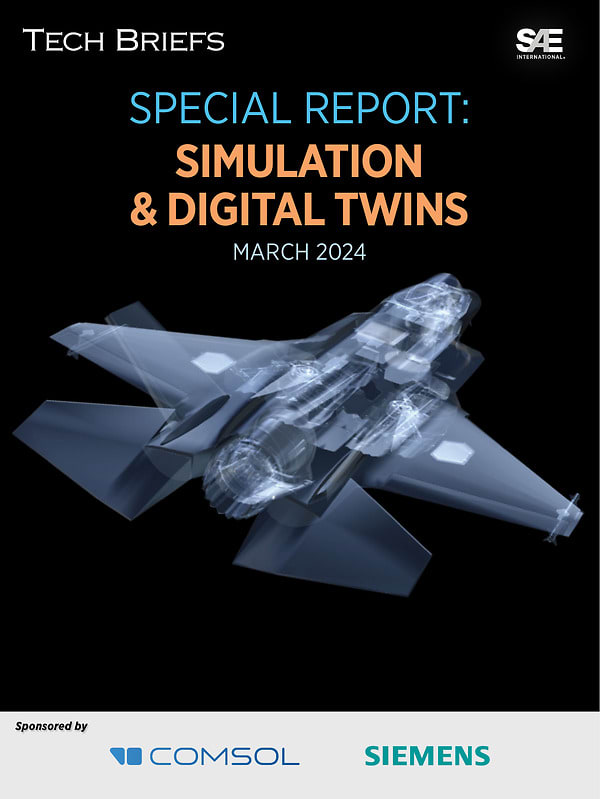
In this compendium of articles from the editors of Tech Briefs and Aerospace & Defense Technology, discover how new digital tools are advancing product design in the aviation, automotive, and power & energy industries, and enabling automation of manufacturing processes such as coating, welding, and metalworking.
Don't have an account?
Overview
The "Simulation & Digital Twins Special Report" from March 2024 delves into the transformative impact of simulation technologies and digital twins across various industries, particularly in manufacturing and automotive sectors. As the complexity of modern systems increases, the need for advanced simulation tools becomes critical for optimizing design processes and enhancing operational efficiency.
One of the key highlights of the report is the role of virtual twins in achieving manufacturing excellence. Virtual twins are digital replicas of physical systems that allow manufacturers to simulate and analyze performance in real-time. This technology enables companies to identify potential issues early in the design process, reducing errors and improving product quality. By leveraging these digital tools, manufacturers can streamline their operations, minimize costs, and accelerate time-to-market.
The report also emphasizes the significance of multiphysics simulation in driving smart city technology. As urban environments become more complex, the integration of various systems—such as transportation, energy, and communication—requires sophisticated modeling techniques. Multiphysics simulation allows engineers to evaluate the interactions between different physical phenomena, leading to more effective designs and solutions for smart city infrastructure.
In the automotive sector, the report discusses the challenges posed by the increasing complexity of vehicles, particularly with the rise of advanced driver assistance systems (ADAS) and electric vehicles. Engineers are tasked with integrating a multitude of sensors, actuators, and software systems to enhance vehicle performance and safety. The report highlights that the standardization of ADAS is driving a significant shift in the automotive market, necessitating a transformation in how automakers approach design and engineering.
Furthermore, the report addresses the advancements in RF simulation, which are crucial for managing the growing complexity of radio frequency systems. As these systems become more intricate, the ability to accurately simulate their behavior is essential for reducing costs and mitigating schedule risks in the design process. The report underscores the importance of leveraging the latest RF simulation software to enhance design accuracy and efficiency.
Another focal point is the refinement of automotive battery management systems through lumped-approach thermal modeling. As electric mobility gains traction, effective battery management is vital for ensuring performance, safety, and longevity of electric vehicles. The report discusses how advanced modeling techniques can optimize battery design and management, contributing to the overall success of electric mobility initiatives.
Overall, the "Simulation & Digital Twins Special Report" provides valuable insights into how simulation technologies are reshaping industries by enabling more efficient design processes, reducing errors, and fostering innovation. As companies continue to navigate the evolving technology landscape, the adoption of digital twins and advanced simulation methods will be crucial for maintaining competitiveness and meeting the demands of the future. The report serves as a comprehensive resource for understanding the current trends and challenges in simulation and digital twin applications across various sectors.











