

Rugged Computing & Electronics - June 2024
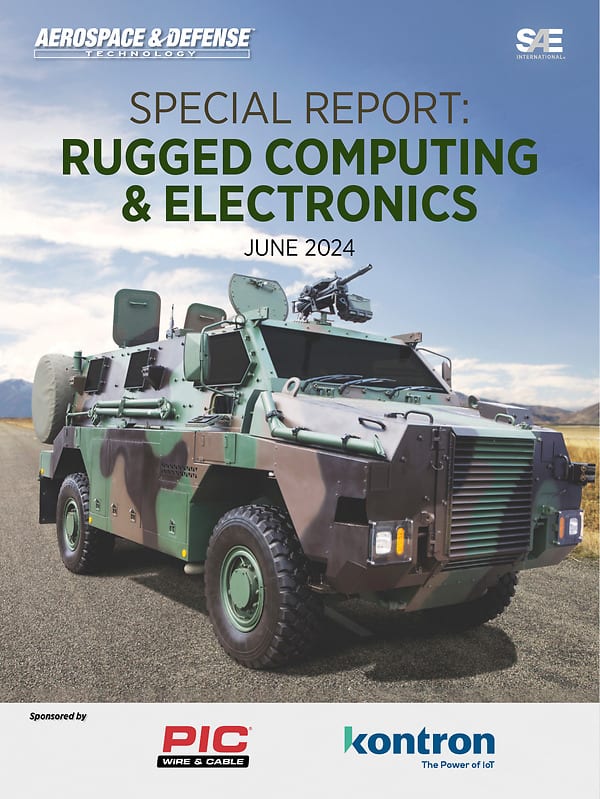
From hypersonic missiles to warships to Army robotic vehicles, electronics and computing advances enable missions in the harshest conditions. Keep pace with the latest developments in this compendium of recent articles from the editors of Tech Briefs and Aerospace & Defense Technology.
Don't have an account?
Overview
The "Rugged Computing & Electronics Special Report" from June 2024 presents a comprehensive overview of advancements in technology tailored for military and aerospace applications. The report emphasizes the critical need for robust and reliable electronic systems that can withstand the rigors of modern warfare, particularly in environments involving aircraft and naval vessels.
One of the key themes of the report is the importance of high-speed signal transmission systems. Modern military operations rely heavily on the ability to transmit and receive data at radio frequency (RF) and millimeter wave (mmWave) frequencies. The report highlights that mission success, aircraft survivability, and troop safety are contingent upon the performance of these critical defense systems. It discusses the necessity for innovative testing solutions that ensure accurate and repeatable measurements, as system interference can arise from both intentional and unintentional sources.
The report also delves into the challenges posed by the development of hypersonic missiles, which are defined as traveling at speeds greater than Mach 5. These advanced weapon systems require sophisticated communications interconnects that must fit within confined spaces while maintaining lightweight and rugged construction. The engineering solutions discussed aim to address the unique demands of hypersonic technology, ensuring reliability under extreme conditions.
Another significant topic covered is the Modular Open Systems Approach (MOSA), which facilitates collaboration among industry members and the U.S. Government (USG). This approach allows for the integration of new technologies and addresses concerns regarding proprietary design patterns, ultimately enhancing the capabilities of military systems.
The report features a section on the COM Express architecture, which has emerged as a preferred solution for the redesign of deployed systems. This architecture supports the integration of a diverse range of input/output (I/O) requirements, including Gigabit Ethernet, USB 3.0, and various video formats, while adhering to size, weight, and power constraints (SWaP-C2). The emphasis on modularity and flexibility in design is crucial for meeting the evolving needs of military applications.
Overall, the "Rugged Computing & Electronics Special Report" underscores the ongoing evolution of technology in defense sectors, highlighting the need for systems that can adapt to the complexities of modern warfare. It showcases the innovative engineering solutions that are being developed to ensure that military forces can maintain operational effectiveness and situational awareness in increasingly challenging environments. The report serves as a valuable resource for stakeholders in the defense industry, providing insights into the latest trends and technologies that are shaping the future of rugged computing and electronics.











