

Test & Measurement - August 2024
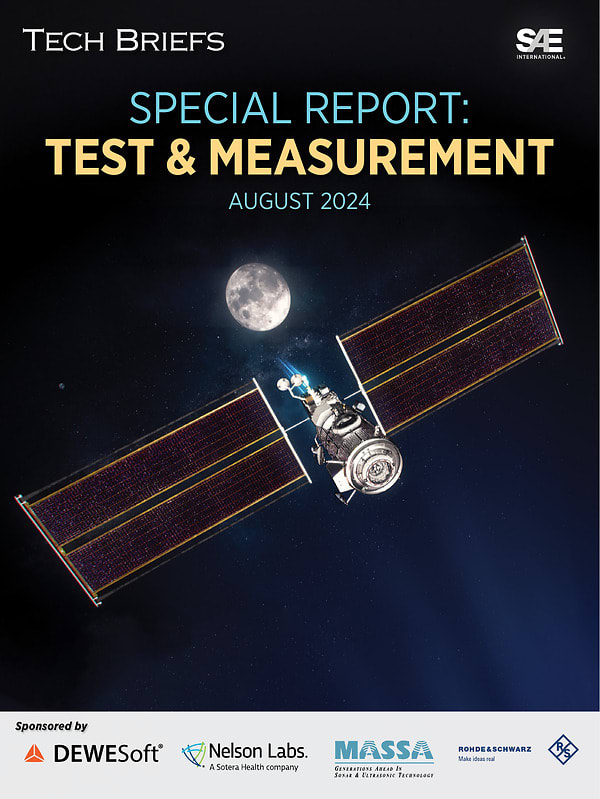
From fighter jets to NASA moon missions to next‐gen electric vehicles, innovative test technologies are enabling major performance, quality, and cost improvements. Read about these and other applications in a new report from the editors of Tech Briefs and Aerospace & Defense Technology magazines.
Don't have an account?
Overview
The August 2024 Special Report on Test & Measurement presents a comprehensive overview of recent advancements in technology, particularly in the fields of solar energy, artificial intelligence, and electric vertical takeoff and landing (eVTOL) systems. The report highlights several key features and design briefs that showcase innovative research and applications.
One of the standout features discusses the testing of solar simulator technology for space applications, particularly in support of NASA's Artemis program. This technology is crucial for evaluating solar cell performance under conditions that mimic the harsh environment of space, ensuring that solar energy systems can effectively power future missions.
Another significant topic covered is the exploration of artificial intelligence (AI) in predictive maintenance. The report examines how AI can enhance the performance of electric vehicles (EVs) by analyzing data to predict maintenance needs, thereby improving reliability and efficiency. This application of AI is poised to revolutionize the automotive industry by reducing downtime and maintenance costs.
The report also delves into the performance of perovskite solar cells, which have shown promising results in operational stability. Testing revealed that these cells retained over 93% of their maximum efficiency after approximately 5,030 hours of continuous operation. However, the research emphasizes the importance of understanding the combined effects of various stressors, such as light and heat, on solar cell performance in real-world conditions. The findings indicate that high temperatures and illumination are critical factors affecting the longevity and efficiency of these solar cells.
In the realm of eVTOL technology, the report discusses the varying power requirements during different operating phases, such as takeoff, climb, cruise, and descent. Researchers from Oak Ridge National Laboratory (ORNL) highlight the need for engineering advancements in battery systems to accommodate the high current demands during these phases, which can impact the overall range of the vehicle.
Additionally, the report addresses the implications of wind on uncrewed aircraft systems (UAS). Accurate wind measurements are essential for understanding atmospheric conditions, air quality, and even predicting wildfire growth patterns. This information is vital for emergency response efforts and improving the safety and efficiency of drone operations.
The report also features innovative testing methods, such as a lab-on-a-chip genetic test device capable of identifying viruses within three minutes, and advancements in ice detection using microwave sensors. These technologies represent significant strides in rapid diagnostics and environmental monitoring.
Overall, the August 2024 Special Report on Test & Measurement encapsulates the latest developments in technology that are shaping the future of various industries, from space exploration to urban air mobility. The integration of advanced testing methods, AI, and innovative materials like perovskite solar cells underscores the ongoing commitment to enhancing performance, efficiency, and sustainability in technology. As these advancements continue to evolve, they hold the potential to transform how we approach energy, transportation, and environmental challenges.










