Electric Vehicles - October 2024
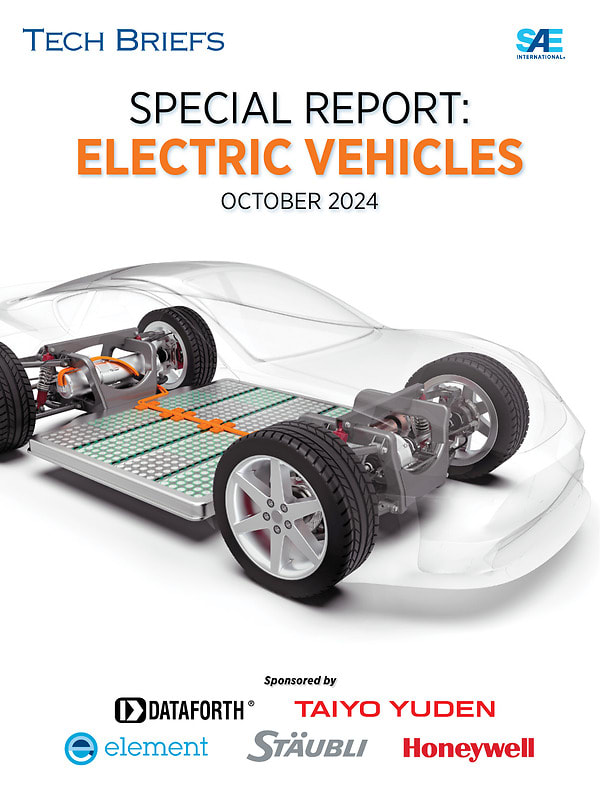
In this collection of articles from the editors of Automotive Engineering and Battery & Electrification Technology, learn about the latest developments in EV fast charging, battery design and thermal management, truck and off‐highway electric powertrain, and much more.
Don't have an account?
Overview
The Electric Vehicles Special Report from October 2024 provides a comprehensive overview of the latest advancements and challenges in the electric vehicle (EV) industry. It highlights key technological innovations, market trends, and the evolving landscape of EV infrastructure.
One of the central themes of the report is the importance of battery thermal management. As EVs become more prevalent, effective thermal management strategies are crucial for ensuring battery performance and safety. The report discusses how multiphysics simulation can be utilized to evaluate and improve battery designs, helping engineers identify potential issues related to heat distribution and management. This is particularly relevant as fast charging technology becomes more common, necessitating precise temperature sensing across the charging chain to prevent overheating and ensure reliability.
The report also examines the impact of fast DC charging on alleviating range anxiety, a significant barrier to EV adoption. By enhancing charging speed, manufacturers aim to make EVs more convenient for consumers, thereby increasing their market share. However, the report notes that a single temperature sensor may not suffice for monitoring battery health during fast charging, emphasizing the need for multiple sensors to detect hot zones within battery cells.
In terms of market dynamics, the report highlights that EVs are gaining traction in specific segments such as transit buses, school buses, and materials handling. This growth is attributed to various incentives and the economic sustainability of battery electric vehicles (BEVs) in these applications. However, it also points out that infrastructure development is lagging in some areas, which could hinder broader adoption.
The report features notable advancements from major manufacturers, including GM's Blazer EV, which showcases innovative use of press-hardened steels in its body and battery structures. This design not only enhances structural integrity but also optimizes impact performance. The Blazer EV employs a unique load management strategy that balances the distribution of forces between the battery and the vehicle body during collisions, demonstrating a sophisticated approach to safety.
Additionally, the report discusses collaborations in the industry, such as the partnership between Eaton and BAE Systems to develop an electric powertrain for trucks. This collaboration aims to integrate advanced electronics and transmission systems, showcasing the trend towards modular and serviceable components in EV design.
The report also touches on the milestones achieved by Volvo in the realm of autonomous trucks and electrified off-highway machines, indicating a shift towards automation in the EV sector. Furthermore, it mentions GM's plans to enable vehicle-to-home (V2H) backup power capabilities during blackouts, highlighting the growing versatility of EVs beyond transportation.
In conclusion, the Electric Vehicles Special Report provides valuable insights into the current state and future direction of the EV industry. It emphasizes the critical role of thermal management, the importance of fast charging infrastructure, and the ongoing innovations in vehicle design and technology. As the market continues to evolve, these factors will play a significant role in shaping the future of electric mobility.