

Electric Vehicles - January 2025
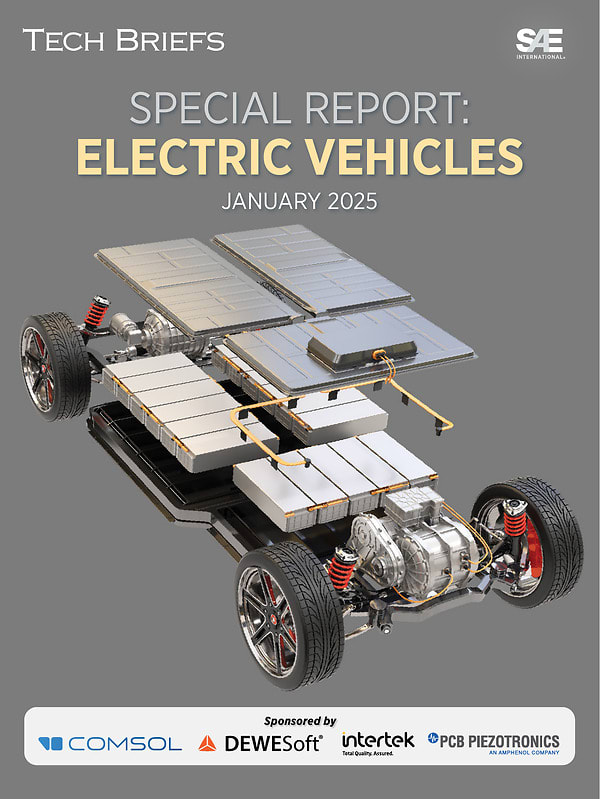
In this collection of articles from the editors of Automotive Engineering and Battery & Electrification Technology, learn about the latest materials innovations, thermal management advances, battery recycling solutions, and much more.
Don't have an account?
Overview
The Electric Vehicles Special Report from January 2025 provides an in-depth look at the latest advancements in electric vehicle (EV) technology, focusing on battery design, materials, and infrastructure challenges. The report highlights how modern EV batteries incorporate a range of innovative technologies that many consumers may not be aware of, including advanced materials and thermal management systems.
One of the key features discussed is the Blazer EV, which showcases the use of press-hardened steels (PHS) in its body and battery structures. PHS contributes significantly to the vehicle's structural integrity and impact performance, making up 11% of the total vehicle weight. The report details how the Blazer EV employs a unique approach to manage the weight of its battery systems, utilizing specially designed stamped-steel front rails to optimize mass distribution and enhance safety during frontal and side impacts.
The report also addresses the critical issue of what happens to EV batteries at the end of their life cycle. It notes that many batteries are sent to recycling centers, such as Cox Automotive’s facility in Oklahoma City, where they are processed for reuse. Additionally, partnerships with companies like Redwood Materials are highlighted, emphasizing the industry's commitment to sustainable practices in battery recycling.
Another significant topic covered is battery thermal management. The report explains how multiphysics simulations are used to evaluate and improve battery designs, focusing on potential thermal issues that could affect performance and safety. This technology allows engineers to identify and mitigate pain points in battery systems, ensuring better reliability and efficiency.
The report also discusses the challenges facing the electrification of commercial vehicles, particularly in long-haul trucking. It cites a study indicating that, given current economic and operational constraints, long-haul trucking is not yet well-suited for electrification. However, it suggests that with substantial investments in charging infrastructure and advancements in vehicle technology, opportunities exist for medium-duty vehicles and last-mile logistics to transition to battery-electric systems.
Infrastructure investment is a recurring theme, with the report detailing the significant costs associated with establishing the necessary charging networks. It mentions the need for 500 kW on-route chargers and 1-MW chargers, estimating the total investment required to be in the billions. The report emphasizes that a coordinated effort between government and private sectors is essential to accelerate the deployment of reliable zero-emission medium and heavy-duty vehicle (ZE-MHDV) infrastructure.
In summary, the Electric Vehicles Special Report provides a comprehensive overview of the current state of electric vehicle technology, focusing on innovations in battery design, recycling practices, and the infrastructure challenges that must be addressed to facilitate the widespread adoption of electric vehicles. It underscores the importance of collaboration across sectors to drive advancements and ensure a sustainable future for transportation.









