

Rugged/Hi‐Rel Electronics - June 2025
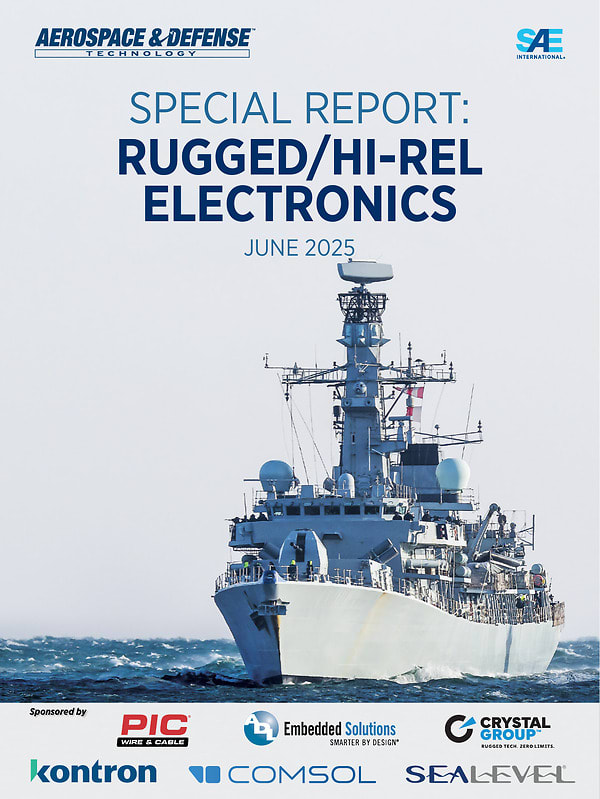
How advanced packaging is transforming mission‐critical electronics…a new era of high‐speed data transmission in defense…fully rugged PCs provide a decisive edge on the battlefield. Read about these and other advances in this compendium of articles from the editors of Tech Briefs and Aerospace & Defense Technology.
Don't have an account?
Overview
The Special Report on Rugged/Hi-Rel Electronics, published in June 2025, delves into the critical advancements and considerations in the design and implementation of electronic systems for military and defense applications. The report emphasizes the importance of robust and reliable electronics that can withstand harsh environments, including naval and aerospace settings.
One of the key features discussed is the design of shipboard cabinets and consoles that house naval mission electronics. These enclosures must protect sensitive equipment from various challenges such as shock, vibration, electromagnetic interference (EMI), and environmental factors like saltwater and moisture. The report highlights the need for suppliers who specialize in these integrated enclosures, offering a "one-stop-shop" approach that encompasses everything from system specifications to the delivery of fully qualified equipment. This approach allows for the leveraging of the best available commercial technologies tailored to meet the specific needs of the defense industry.
The report also addresses the evolution of military aviation, particularly the transition from fifth to sixth-generation fighter jets. This shift presents significant challenges for component suppliers, as the complexity and performance requirements of subsystems increase. Advanced technologies, including augmented reality (AR) and artificial intelligence (AI), are becoming integral to target acquisition systems, enhancing pilots' situational awareness even in combat scenarios. The report underscores the necessity for aerospace components to be resilient against mechanical stresses, eavesdropping, and jamming, while also managing extreme environmental conditions.
A notable advancement discussed is the transition from conventional copper-based cabling to fiber optic systems. This shift is crucial for meeting the high data transmission rates required by modern military applications while reducing weight and enhancing security. Fiber optic interconnects are positioned as a game-changer in achieving high-speed data transmission in defense systems.
The report also explores the realm of mission-critical microelectronics, emphasizing the U.S. efforts to regain leadership in semiconductor technology. Investments are being made to onshore semiconductor supply chains and support defense contractors in producing essential microelectronics. Advanced packaging techniques, such as System-in-Package (SiP) designs and Through-Silicon Vias (TSVs), are highlighted as key innovations that enable miniaturization and improved performance of defense systems.
Overall, the Special Report provides a comprehensive overview of the current state and future directions of rugged and high-reliability electronics in defense applications. It emphasizes the importance of integrating advanced technologies to enhance the performance, reliability, and efficiency of military systems while addressing the unique challenges posed by their operational environments. The insights presented in this report are vital for stakeholders in the defense industry, including engineers, manufacturers, and policymakers, as they navigate the complexities of modern military technology.











