

WHO
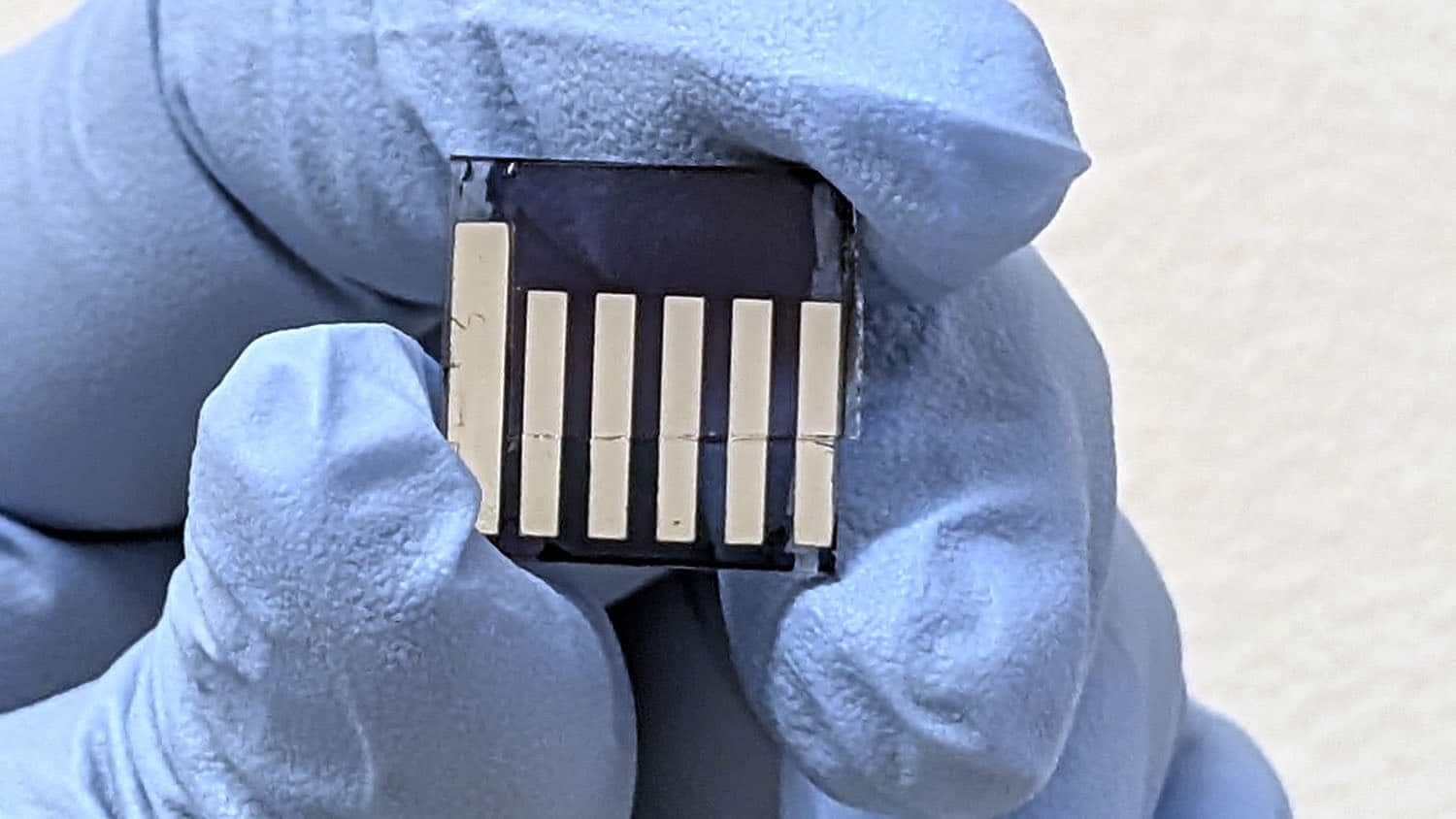
North Carolina State University engineers have built a tiny spectrometer that is orders of magnitude smaller than current technologies and can accurately measure wavelengths of light from ultraviolet to the near infrared.
WHAT
With applications ranging from manufacturing to biomedical diagnostics, spectrometers help us understand the chemical and physical properties of various materials based on how light changes when it interacts with those materials. However, the smallest spectrometers on the market are still bulky. The NCSU team has created a spectrometer that operates quickly, at low voltage, and that is sensitive to a wide spectrum of light. “Our demonstration prototype is only a few square millimeters in size — it could fit on your phone. You could make it as small as a pixel, if you wanted to,” said Brendan O’Connor, Professor of Mechanical and Aerospace Engineering at North Carolina State University. The technology makes use of a tiny photodetector capable of sensing wavelengths of light after the light interacts with a target material. By applying different voltages to the photodetector, you can manipulate which wavelengths of light the photodetector is most sensitive to. In proof-of-concept testing, the researchers found their pixel-sized spectrometer was as accurate as a conventional spectrometer and had sensitivity comparable to commercial photodetection devices.
WHERE
North Carolina State University, Raleigh, NC
WHY
The technology makes it possible to create hand-held spectroscopy devices and holds promise for the development of devices that incorporate an array of the new sensors to serve as next-generation imaging spectrometers.
WHEN
The team aims to bring spectrometers to the consumer market. “The size and energy demand of the technology make it feasible to incorporate into a smartphone, and we think this makes some exciting applications possible,” said O’Connor.
For more information, contact Brendan O’Connor at











