

John C. Stennis Space Center (SSC) provides rocket engine propulsion testing for NASA’s space programs. Since the development of the space shuttle, every Space Shuttle Main Engine (SSME) has undergone acceptance testing at SSC before going to Kennedy Space Center (KSC) for integration into the space shuttle. The SSME is a large cryogenic rocket engine that uses Liquid Hydrogen (LH2) as the fuel. As NASA moves to the new ARES V launch system, the main engines on the new vehicle, as well as the upper stage engine, are currently baselined to be cryogenic rocket engines that will also use LH2. The main rocket engines for the ARES V will be larger than the SSME, while the upper-stage engine will be approximately half that size. As a result, significant quantities of hydrogen will be required during the development, testing, and operation of these rocket engines.
Technology Needs
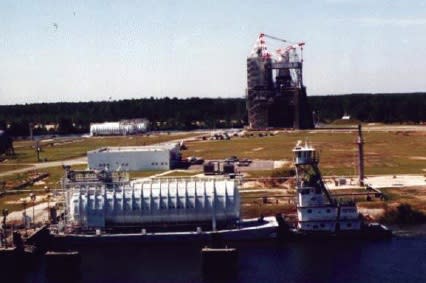

Innovative solutions are needed for efficient, cost-effective, in-situ methods to recapture, reclean, repressurize, and store hydrogen boiloff for reuse. Research into technologies in these areas, demonstration of the technology capability, and conceptual design for the technology installation at Stennis are desired to assist in the hydrogen recovery and reuse.
Technology Challenges
The primary challenge will be to safely capture, process, and store the large amounts of gaseous hydrogen released during test operations. Gaseous hydrogen used in rocket engine test operations must meet very specific cleanliness standards. Another challenge will be to develop an on-site system capable of recycling the captured hydrogen to the cleanliness standards requirements. An additional challenge will be to determine the appropriate utilization of the recaptured hydrogen for test operations or alternative energy uses.
The technologies developed to capture and clean the hydrogen must be cost-effective and able to perform the recycling process in an in-situ rocket engine test area environment. It will be required to comply with all safety and quality standards required in this environment.
More Information
For additional information, or to discuss ideas about this concept, contact John Lansaw at Stennis Space Center at 228-688- 1962, or visit











