


Last September, NASA deployed its first test mission for planetary defense, the Double Asteroid Redirection Test (DART). The aim was to test and validate a method to protect Earth in case of an asteroid impact threat.
The DART mission, of course, succeeded and shifted an asteroid’s orbit through kinetic impact.
Here is a Tech Briefs interview, edited for clarity and length, with DART team member Dr. Saverio Cambioni.
1) Tech Briefs: What was going through your mind as DART was approaching the asteroids? I presume the team was together during impact; what was the mood/atmosphere like before/during/after?
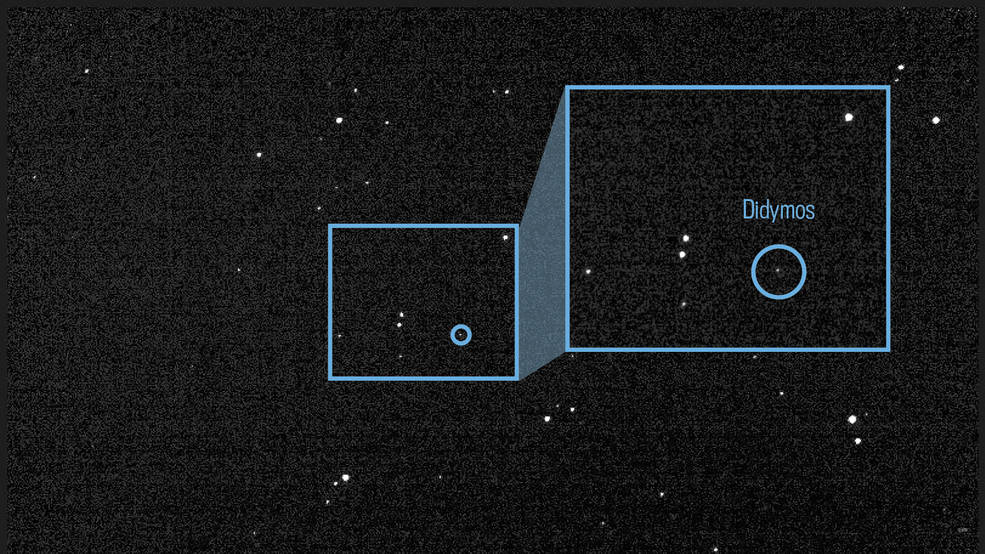
Dr. Saverio Cambioni: It was extremely exciting! We were watching the impact on the NASA TV channel, and I could not wait for the Didymos system to grow from a blurred pixel to a spatially resolved asteroid pair. The most thrilling moment was when the last five-and-a-half minutes of images were streamed to Earth . Didymos was well-resolved, and the spacecraft was closing in on its moonlet Dimorphos for its intentional collision.
While watching the collision, I started to realize the importance of what the DART mission was accomplishing, not only for the planetary science community, but also for us all. NASA was on the cusp of demonstrating that a kinetic impact is a viable mitigation technique for protecting the planet from an Earth-bound asteroid or comet, if one were discovered.
After the impact occurred and was successful, perhaps strangely, I thought about the dinosaurs. They did not have the technology to protect themselves and their planet from the impactor that wiped them out. After DART, humankind is now a step closer to creating a planetary defense system.
2) Tech Briefs: What did you learn from the images and the mission in general? How will that help in future similar missions?
Cambioni: DART’s impact was observed by several telescopes around the world and in space. The telescopes revealed that the impact shortened Dimorphos’ orbit, remarkably, by about 33 minutes — more than 25 times the minimum benchmark for mission success. At the same time, the impact liberated at least 1 million kilograms of rock from Dimorphos’s 4.3-billion-kilogram mass and formed a tail stretching more than 1,500 kilometers. The team observed the tail with the Hubble Space Telescope for about three weeks and found that its morphology is similar to “active asteroids” that have an asteroid-like orbit and comet-like tail. What this means is that impacts can “activate” asteroids, as we discuss here .
From a technological perspective, DART showed that it is technologically possible to intercept and impact a sub-kilometer asteroid, with limited prior knowledge of its shape and surface properties. This is great as it means that we do not need a mission to characterize a hazardous asteroid before sending another mission to deflect its trajectory.
3)Tech Briefs: Do you think we’ll need to use such technology again?
Cambioni: Dimorphos and Didymos are not a hazard to Earth, and no known asteroid poses a threat to Earth for at least the next century. However, it is important to note that the catalog of near-Earth asteroids is incomplete for objects whose impacts would produce regional devastation, as we discuss here . To fill the gaps in our catalog of hazardous asteroids, it is paramount that we develop planetary defense systems that include Earth-based survey systems too, as we discuss here .
4)Tech Briefs: You’re quoted as saying, “To find all the hazardous asteroids before they find us, in 2026 NASA will launch the NEOSurveyor mission…” Please talk about that (any info you can divulge).
Cambioni: As described here , NEO Surveyor is a planetary defense mission aimed at meeting the U.S. Congress’ mandate to find more than 90 percent of all near-Earth objects (NEOs) larger than 140 meters in diameter. Objects of this size could cause significant regional damage, although they are not likely capable of causing global extinction. To find these objects, NEO Surveyor will scan near-Earth space with a telescope in two heat-sensing infrared wavelengths. As described in this cartoon , infrared wavelengths are sensitive to the warmth of objects allowing for a more accurate determination of an asteroid's size and, relatedly, its potential hazardousness.
The NEO Surveyor mission is led by Survey Director Prof. Amy Mainzer of the University of Arizona. University of Arizona has a long history of discovering NEOs, as the SPACEWATCH® project and the Catalina Sky Survey have detected nearly 50 percent of all known NEOs to date. In addition to NEOs, the expectation is that the NEO Surveyor will likely detect more than one million asteroids in the Main Belt between Mars and Jupiter and about a thousand new comets. This will be a goldmine for planetary scientists who can use those data to advance our understanding of how asteroids formed and evolved.
5)Tech Briefs: Is there anything else you’d like to add?
Cambioni: I wanted to share an interesting bit of information about the importance of the surface of an asteroid and how it can yield information about the way it formed over time. We haven’t seen many small bodies like Dimorphos and Didymos, and, every time we visit one, we learn a lot about asteroid science and the diversity of their surfaces.
The DART images revealed that Dimorphos’ surface is covered in rocks, with boulders as large as shipping containers near the impact site. Such a boulder-strewn surface suggests that Dimorphos is a rubble-pile asteroid similar to other asteroids that we have recently visited such as Bennu, Ryugu, and Itokawa. What this suggests is that these asteroids formed through re-accumulation of fragments of larger asteroids that got destroyed by collisions. This confirms the importance of collisions in shaping the formation and evolution of celestial bodies. I am really looking forward to the rendezvous of Dydimos and Dimorphos by the European Space Agency’s Hera mission in late 2026 to learn more about this fascinating pair!
Johns Hopkins Applied Physics Lab built and operated the DART spacecraft and manages the DART mission for NASA’s Planetary Defense Coordination Office as a project of the agency’s Planetary Missions Program Office. For more information about the DART mission, please visit www.nasa.gov/dart or https://dart.jhuapl.edu/ .
Transcript
00:00:00 foreign [Applause] thank you live from Laurel Maryland this is NASA's coverage of the double asteroid redirection test planned impact with asteroid dimorphos
00:01:32 in a Galaxy where asteroids have humbled planets for billions of years now one planet strikes back for the first time in our planet's history NASA will test an asteroid deflection technique it's the first planetary defense method of its kind NASA's double asteroid redirection test will intentionally Ram itself into an
00:01:58 asteroid and alter its orbits forever at the crossroads of Science Fiction and reality Dart is part of our plan to defend planet Earth against potential future impacts the test to protect the future of our planet takes place today welcome and thank you for joining us from Johns Hopkins Applied Physics laboratory home to the dart Mission
00:02:33 operations center I'm your host Tahira Allen with NASA Communications and tonight we're following the real-time journey of the dart spacecraft and its planned collision with asteroid dimorphos the double asteroid redirection test also known as Dart is the world's first planetary defense test mission of its kind at 7 14 PM Eastern it will demonstrate an asteroid
00:02:59 deflection technique known as kinetic impact rest assured this is only a test the asteroid Dart intends to impact is not a threat to earth now nor will it be after the Collision we have live views of the action from space so keep an eye on the dart cam in the lower left hand corner of your screen right now you're only seeing a black screen with a single point of light that point contains two
00:03:25 asteroids in it didimos with a smaller asteroid named dimorphos orbiting around it as long as we continue to receive these live views from Dart we're going to keep that feed up on your screen as we get closer to impact the asteroid will begin to take shape and eventually dimorphos will fill your entire screen you'll also notice a countdown clock indicating how close we are to impact
00:03:48 and a progress bar that will check off key Milestones along the way now as we follow pre-impact operations we invite you to join us as we check in with mission control for live updates and track dart's final Milestones we'll see two astronauts demonstrate what kinetic impact looks like in space and will go behind the scenes at one of the observatory's following dart's impact
00:04:12 from Earth you can participate in today's show tonight by submitting questions for our experts to answer live on air drop them into the stream wherever you're watching or use the hashtag planetarydefender on social media now we're a little over 70 minutes out from Impact at 7 14 PM let's now meet your co-host Samson Rainey joining us live from the mission
00:04:34 operations center Samson it's good to see you how does it feel to be in the middle of the action tonight hey Tahira I am feeling great it is awesome to be backer after co-hosting darts launched just tens short months ago how's the energy over there wow that's amazing Samson you know everybody's super excited I've been talking to some scientists and Engineers before the show
00:04:56 and it's really just anticipation about what's going to happen tonight so with that could you give us an update on how things are going with Mission operations I'm glad you're enjoying it there this is going to be fun so I mentioned launch right it was a huge event NASA launches have become a staple of life for space aficionados but there's never been anything like what we're about to see
00:05:17 tonight an attempt to impact an asteroid in near real time be first attempt to change the motion of a Celestial body just wow if we hit that asteroid to Hero I think we're going to see a whole new side of this team that we've never seen before because let me tell you since launch these engineers and scientists have been eating sleeping and breathing this Mission this Center has been like a
00:05:40 second home for them as they've been monitoring the spacecraft's health and managing everything from propulsion to the power supply guidance and navigation the list goes on and on they've run countless simulations and have rehearsed for this moment time and time again preparing for anything and I mean anything that could possibly happen a quick recap of the last 24 hours no
00:06:02 surprise here they've been busy last night they performed the sixth and last of what are called trajectory correction Maneuvers to aim darts within 200 meters of didimos then they work straight through to this morning to make sure that all went smoothly then they soldiered on to get us ready for tonight and here we are about an hour and 10 minutes from Impact and we're now in
00:06:23 What's called the terminal phase meaning that smart now the autonomous navigation system is actively guiding the spacecraft as it was designed to do for its final four hours I also received word minutes ago that Dart has reached another critical Milestone Draco the eyes of smartnav is able to detect dimorphos this is a major goal post I have to remind you because up until now
00:06:45 Draco has only been able to detect dynamos the much larger asteroid orbits the next major Milestone we're waiting for is for smart enough to be locked on or targeting dimorphos we'll get more into what that means later lots more to come as we draw closer to impact back to you Tahira all right thank you Samson it feels good to know that we are detecting dimorphos
00:07:07 now before we get any closer to impact let's get to know our spacecraft and its mission after a beautiful launch from bindenburg space force base on November 24 2021 Dart has traveled over 400 million miles and now in just over an hour we'll witness the spacecraft collide with asteroid dimorphos in an attempt to change its orbit forever the dart
00:07:33 spacecraft is about the size of a vending machine and uses hydrazine thrusters for propulsion and roll out solar arrays for power it's traveling at about 14 000 miles per hour and will complete the last four miles of its journey in just one second Dart is on a collision course with asteroid dimorphos which is about the height of the Washington Monument and
00:07:55 more importantly poses no threat to Earth dimorphos sits within a double asteroid system and as the smaller moonlit asteroid orbiting its larger companion didimos Dart has just one instrument on board and that's a draco camera which is feeding images to its autonomous navigation system steering it straight into the asteroid
00:08:16 Now teams from around the world have worked hard to get us to this moment Samson is standing by with NASA's head of Science and Johns Hopkins apl's head of space exploration let's check in to hear more about the journey thanks to Hera to help give us some insight into what it takes to imagine much less attempt a mission this ambitious add with me Thomas rhuben
00:08:40 associate administrator for NASA science Mission directorate and Bobby Brown's space exploration sector head at Johns Hopkins ETL gentlemen thanks so much for being here thank you Thomas I'll start with you the mission this team has been through an intense Journey years in the making and they're now on the cusp of doing a seemingly impossible um impacting a tiny asteroid 7 million
00:08:59 miles away from Earth with a spacecraft traveling 14 000 miles per hour why is it important for us to continue to push the boundaries up as possible in space you know what I always think is the world is made out of a box those are things we know we can use and a large space of things that are unknown in that large space are solutions for problems of the future there's new research new
00:09:23 understanding of Nature and we at Nasa were all about moving that boundary back moving it back to make more things useful for us like Dart but also understanding nature in a new fashion it's incredible Thomas well based on what we know tonight heading into this Main Event you know what uh what are you thinking about our chances of impact wow I'm betting on the team betting on the
00:09:45 team is always the right thing to do when it comes to NASA missions whether it's this one or other teams we've had the thing you just announced you know that kind of seeing that little bump there in uh in the image of that new kind of celestial body we knew was there but now we've uh have it on the camera it's just uh just a step in that direction I'm very optimistic that's
00:10:05 awesome what the team has planned for months years ago is coming to fruition and we're watching it live absolutely just exciting awesome thank you Thomas Bobby you've been through so many White Knuckle experiences um with space missions most recently with the landing of the Mars perseverance Rover just last year um what is the mindset of the team
00:10:26 coming to such a major moment in their career with the stakes being so high well teams like this prepare for the worst but celebrate the best and I think we're going to have one of those best nights tonight there are of course many things that could go wrong in space flight but so far this team's been on top of every possible problem they've been ahead of it and they just need to
00:10:46 focus and and push through and go for success that's awesome I think from what we're hearing the cheers coming out of the mock on the for this broadcast I feel like we're on the right track oh yeah absolutely any pep talk or advice for the team heading into tonight that you gave them well I've been in the mock several times today talking with the team they're calm they're cool they're
00:11:06 collected I basically told them just follow the Data Trust in each other trust in themselves you know they've prepared for this moment for years and so they know this better than anybody and as a team they're going to get through this successfully so awesome thank you both that's great words of wisdom for moving forward in space and seems like the team is in good hands
00:11:26 with themselves all right Tahira we're attempting the once Unthinkable but the team has prepared for this moment now to keep a steady course on this last mission defining leg back to you all right thanks Samson I mean it is incredible what the teams are pulling off tonight this is a first of its kind Mission testing a way to one day save
00:11:49 our planet from a hazardous asteroid now we asked astronauts aboard the International Space Station to show us how this technique Works in microgravity and they had some fun with it now before we get to the video I urge you to keep a close eye on Shane he's going to be in the blue shirt and standing in for asteroid dimorphos a white object is about to come crashing into him that's
00:12:12 our spacecraft you'll notice how the impact of the crash moves Shane's position in space this demo much like dart's test relies on the energy transfer from a collision to change the motion of an object the method which is called kinetics impact deflection is the technique Dart will test at 7 14 PM Eastern let's take a look foreign
00:12:39 and I'm going to be the NASA dark Mission while this CTV more exactly is going to be a spacecraft I'm going to try to throw it and we look at the effect of that mask coming at him and the kinetic energy transfer from the CTB to Shane to Shane will be perfectly stable it's not an easy test you ready
00:13:06 all right here it comes I've redirected Shane successfully pretty good all right now back on Earth we're taking your questions live in just a few minutes send them in using the hashtag planetarydefender and stand by it's time now for our first status poll update let's head to Samson to check in on
00:13:41 dart's progress Samson how are we looking hey it's a hero we are entering the 60-minute mark until impact and as you noted the team is about to conduct a poll which is essentially a status update to check that key systems are in working order we're talking Draco image quality smart nav guidance and navigation ground systems performance
00:14:00 everything that's anything to do with getting us to impact all right I think the poll is about to get underway let's start to listen in we are waiting for that poll to begin any second now waiting on that first poll of the evening there will be two polls when it's 60 minutes which is now and one at 30 minutes
00:15:29 afterward we should be hearing from Elena Adams the mission systems engineer to give us a summary of what we'll have just heard all right folks we're an hour prior to impact [Applause] we're seeing dimorphous so wonderful wonderful all right let's do our poll um
00:16:05 image quality let's start with you images are looking great uh tamorphos is coming in at about the same relative dimness as didamouse so very consistent brightness between the two and it's a stable track that's awesome [Applause] all right uh smart nav
00:16:32 smart nav is looking good we're sitting at about 30 meters of uh projected Miss distance there is no movement right now on the bars for doing a maneuver but we do expect that when we transition uh in about 10 minutes that we'll see a maneuver at that point yeah that's great and at this point because we have a stable track we do expect to transition over at that time
00:16:54 so that's really good that's good all right GNC GNC is nominal we're we're ready to burn [Laughter] that that sounds good too and maneuver all right um let's see autonomy autonomy is nominal here's our cycling and no more fault rules all right DSN looks good and we don't see any sign of
00:17:26 rain and Esa looks good as well that's good and then ground system ground system is nominal and we have a clear vision of dimorphous on the image display now yes it looks great thank you guys all right um one more poll after this but in the meantime we're going to hopefully transition at 50 minutes to locking so
00:17:51 stand by all right we're going to hear from Lena ourselves to give us a update hey Elena how's it going how are you good that sounded like a great poll any words about what we just heard oh um we're very excited uh we are starting to see dimorphous for the first time it is uh looking great
00:18:20 um it is um just about the same dimness as didimos as we expected and so we are getting ready to transition we have a stable track at this point it's about um seven pixels in size and uh yeah we're ready to go great news Elena thanks so much I'll let you get back to it thank you wow that that was that's a great update joining me in
00:18:47 reacting to that bit of news is Angela stickle planetary geologist and a dart investigation team lead Angela you just heard the poll they're going really well what are you feeling what are you thinking I'm so excited this is fantastic we can see dimorphos and we're on our way okay second we just gotta keep humming
00:19:09 along right right that's awesome heading in gosh well let's quickly talk about the next major Milestone that's ahead of us Walking On Target with dimorphos which could happen as early as 10 or so minutes from now right now smart nav is still targeting dynamos right but locking onto dimorphous means all right dimorphous you are bright you are consistently bright enough and ready to
00:19:31 start targeting you dive into what that means a little bit more yeah exactly so smart nav is looking for bright parts of the image and so as dimorphous gets closer and it's brighter and bigger smartnav will just Target onto it as opposed to dynamos and we'll be on our way um to impact that is awesome thank you Angela has very cool stuff
00:19:53 good luck with the rest of the evening thank you great and while we wait we want to invite you to celebrate the life of an important member of our dart team pulling off extraordinary events requires extraordinary people and Ray Harvey was just that a leader an engineer a friend Ray devoted his life to making the impossible possible tonight we pay
00:20:15 tribute to dart's former Mission operations manager Ray Harvey was our mission operations manager for Dart but I've known Rave since I've been at the lab which is about 14 years as a young engineer having people like Ray was actually extremely important because he could go ask for a question he would tell you a joke but he would also give you an
00:20:36 answer so you didn't feel awkward asking questions you would just feel good coming out with more knowledge but also you had fun in the process I've known Ray probably since I started working here almost 25 years ago and he was always like a good Mentor and a sounding board for anything we were doing I think everybody learned something from Rey his leadership skills
00:20:58 how to treat people how to work as a team Ray was a pretty amazing person even though he was fighting this terrible disease he made it a point to be involved in all the rehearsals and all the activities going on on Dart he led the mission operations team to the last few days of his life
00:21:23 he was really hoping to make it to the end of this Mission he meant so much to this team and to getting us to this point it represents so many years of hard work of him and also the team but him leading that team and so the dart spacecraft is a tribute to Rey we are hoping that this experience it kind of goes out to write and to his
00:21:47 family we will we will really miss him and we already miss him Ray has touched so many lives even in the short time that I knew him he was so generous with his knowledge and he made you feel like you belonged Ray you will be greatly missed this one's for you Tahira thank you Samson for that beautiful
00:22:17 dedication now if you're just joining us we're under an hour away from the dart spacecraft's head-on collision with asteroid dimorphos dart's mission is a test of a planetary defense technique that could one day save Humanity rest assured the test poses no threat to Earth the spacecraft is almost 7 million miles away from us right now and you're watching a live stream of its approach
00:22:43 to dimorphos it takes about 45 seconds for the images you're seeing in the dark cam to make their way back to Earth any moment now we should learn if Dart is ready to commit to impact while we wait I'm here with Andy Rifkin Dart science investigation lead and Mallory decoster Dart impact modeler Andy Mallory while we wait to learn if Dart is ready to commit to dimorphos I can't help but
00:23:08 wonder why this asteroid that's a great question the way that the double asteroid redirection test was designed it was uh to to measure the period change in a binary asteroid system so we needed a binary asteroid so that eliminates some number of objects we needed something uh with a moon that was small enough that we could move it with a strike from a from a spacecraft
00:23:32 um but not so small that we wrecked the uh the moon so when you kind of tick off all the possibilities dynamos really ended up as the best choice and really the only choice that would provide a mission in this time period see I want to go back to that you mentioned having a moon that we could push but not destroy could you now in pop culture a lot we see that you know
00:23:54 oftentimes the idea is to just totally try to demolish the asteroid why have we chosen to not test that technique this time yeah the conventional wisdom for planetary defense is that you don't want to disrupt an object and blow it into a zillion pieces but you want to keep it intact and just move it all as one piece because if you move it all in one piece then you can keep track of it a lot
00:24:16 easier if you blow it into a million pieces then some of them might still Earth and you don't want to miss a thing yeah we might have more issues then so we know that we have the perfect test subject Mallory now can you help us understand how if Mission success um dart's mission tonight can help improve models for mitigating hazardous asteroids in the future that's exactly
00:24:38 right so we stand to learn a lot from this dark impact Dart is both a technology demonstration as well as a really big science experiment so from a technology standpoint we're going to see if we have what it takes to autonomously navigate a spacecraft into a relatively small Celestial body something the size of a football stadium that's pretty far away from Earth from a science
00:25:05 perspective we get to perform one of the largest and fastest impact experiments that man has done ever something that could never be accomplished in a laboratory here on Earth so we're going to learn how these large sizes these fast impact velocities and also these sort of extraterrestrial asteroid materials respond to deflection wow I mean there's so much about tonight that
00:25:30 we don't know and it seems like you're fun is just getting started right until after impact so Mallory Andy thank you so much and tonight ground-based telescopes aren't the only one watching the action a small cube satellite built by the attack Italian space agency was deployed by Dart 15 days ago and has been in the area to give us a bird's eye view of impact here's more on lychia
00:25:54 Cube is a six year cubesat of the Italian space agency participating in the dark Mission and it's also the first Italian satellite operating in deep space it is mission objectives is to support the dart in the documentation of the impact effects in particular in terms of the objective of materials that will be released from the asteroid Surface after
00:26:17 the impact and also Imaging the non-visible side of the asteroid during its flyby Bishop will acquire images using its two different cameras RGB camera therefore we can better understand the nature of the asteroid dimorphous impacted by dark by means of our scientific Operation Center in ssdc RC we will distribute and process the images in order to make the them
00:26:50 available to the entire team we are here in agrotech's Mission Control Center in Turin from where together with us he will monitor the status of leisure Cube the batteries of charge radio is communicating correctly and the navigation aptitude is on the right trajectory everything is ready for the most important part of the dark Mission impact with the asteroid
00:27:12 Dart is a global effort to prepare Humanity for the unthinkable before the spacecraft can complete its Mission the autonomous navigation system must first confirm a lock on Target this is a key Milestone that we should be hearing about soon so let's go back to Samson for the latest for Mission operations hey Tahira we are less than 50 minutes out and we just heard big news we have
00:27:40 reached the point where smartnav is now Target locked onto dimorphos uh that progress bar should move to your right that much further closer to impact very exciting uh in the meantime joining me is someone who worked on the instrument playing a starring role with this major Milestone and basically all the way up to impact Lisa Wu mechanical engineer who helped install the Draco camera and
00:28:04 built its cover Lisa thank you for joining me thank you for having me so we just heard big news we hit this target lock it could have come fairly later than this yeah it is very it is we are we're in a good spot exactly how are you feeling I am so excited I'm sure the entire team is ecstatic this is what we've been working so hard for in these very last moments and we just heard we
00:28:29 got Target lock so could not be feeling any better very exciting I mean we are we are humming along so a quick recap smart and have this darts autonomous navigation system it's been called the brains of the spacecraft and right now it's essentially maneuvering that spacecraft on its own as it will be for the last four hours a draco imager is providing smartness with that
00:28:51 unflinching view of the morphos about an image per second it is the eyes of the spacecraft based on what makes this camera perfect for this Mission yeah of course so the Draco instrument is a very very high resolution narrow field of view telescope um the image quality let's go back at Draco is a descendant of the Lorry color self which might sound familiar because
00:29:16 it took the very first pictures of Pluto on the New Horizons Mission which also might sound very familiar because that is an APL LED Mission so if you've ever seen the first pictures of Pluto that is the amazing quality that we have on Dart that's incredible Heritage and yeah anyone who saw those images of Pluto those were made amazing and they're kind of upstanding for what we're going to
00:29:38 see with these pictures of the muscles right oh yeah so we all know about a lot of us have smartphones with you know cameras we have practice smudges how do your team make sure that this camera made it in pristine condition to get to this point of course so our flight Hardware including this instrument was made in the clean room very very high clean
00:30:00 facility in order to make sure that the telescope works we had to put it through a lot of electrical testing Optical testing alignment testing we have to make sure it performs as we intended and then not only that you have to take this instrument and put it through all the environments that it will see through space so we put it through vibration testing thermal vacuum chamber testing
00:30:23 all to make sure that it performs and it will survive through space amazing test test and test again right yes this is how we get to a stage like this that is exactly that is great thanks so much Lisa the number of astounding technologies that are on board this spacecraft is amazing but doing the impossible requires nothing less than the astounding right all right
00:30:47 so here we have the technology clearly we have the talent now we wait for history back to you all right thanks Samson it feels good to know that we have locked on target dimorphos now earlier we asked you to send in your questions by using the hashtag planetarydefender and I am joined Now by two real life planetary Defenders we have Kelly fast and Lucas
00:31:11 Paganini both from NASA's planetary defense coordination office let's dive into what you want to know so Kelly Lucas before I get to social media questions we actually have a special question from a familiar face especially if you're into football so let's take a moment and hear from him what's up I'm Joshua Dobbs quarterback for the Cleveland Browns now the
00:31:33 question for NASA's dart team on the field I have to use Precision passing in order to get the football in the hands of my teammates and at least I can see where they are for NASA Star Team how are you able to aim a spacecraft at an object so far away but that's a really good question Kelly and I mean we haven't really done this before how can we aim right but I have
00:31:57 to say Joshua does in a few seconds what we've taken you know years to do um just because he has to throw it where he knows that the player will be throw his football where the player will be Dart needs to end up where uh dynamos and dimorphos will be and so that that was learned from astronomy looking at through telescopes calculating the orbit and then the people who launched uh Dart
00:32:19 his destination navigated there so it's there's just a lot more calculations involved which Joshua does in his head yeah and then there's this autonomous navigation it would be like he had a football that could navigate itself so so we we have that to lean on that that he doesn't and so that's what helps get to that destination all right nice I mean it's very impressive and so we have
00:32:42 another question from it from Jonathan on Facebook who wants to know how can a small satellite like Dart be able to impact something as big and heavy as an asteroid and actually move it right and it's all about momentum right we have these tiny uh well asteroid of about 160 meters the size of a football field and then you have this spacecraft which is about 500 Kilograms so it's all about
00:33:09 momentum right we have this massive Astrid and this tiny spacecraft and how do you move it it's all about mass and velocity since we don't have enough mass in that spacecraft we have to really impact it hard and that's why we're impacting it at four miles a second which is outstanding which is amazing and I mean we're actually gonna get to watch impact live take place and so that
00:33:35 gets me to my next question we have metal money on Twitter who asks what is the size of the blast on the asteroid Kelly could you explain a little bit about that well and that's something that we're hoping to find out from this Mission because you know there's there's physics but and calculations but actually when you're dealing with a real asteroid that we haven't seen close up
00:33:55 before and what type of material might be on the surface what the structure is this is something that like a lychia cube we hope to see as the two Cube flies by to see what that blast was how large it was which will help those who are doing the modeling of how effective the uh impact was and in changing the orbit what all figures in what Lucas just talked about the mass and the
00:34:17 velocity but then also maybe that blast that is seen afterwards the plume of material that we're hoping to see from the Chia Cube so how does tonight's Mission play into the work that y'all do in NASA's planetary defense coordination office Lucas yeah I would start by saying that this is a very important test we're going to know if this kinetic impact is an effective technique to use
00:34:41 in the case that there will be any potential asteroid on road to Earth so definitely for me that's the most important thing about this test but then on top of that there's finding the asteroids because you can't go out and mitigate a possible threat if you don't even know it's there and so NASA is very focused also on finding nearest asteroids with telescopes that survey
00:35:04 the skies every night looking for near thasteroids getting the orbits calculated figuring out where they're going to be in the future to see if we even need something by Dart and then working to speed that up NASA's working on the near-earth object surveyor Space Telescope that would look in the infrared and have a different perspective complement the ground-based
00:35:21 telescopes to accelerate things just so that we know is there a threat out there that we're facing that we do not yet know about wow I mean it's incredible just to know the work that is already being done it's good to know that we're building off of it but it's good to know we've already got some people watching this guys um and so I have our next question from
00:35:40 Alan on Twitter who asks how long does it take for pictures to reach Earth well the uh the light the time it takes light and then a radio signal from the spacecraft uh to come to Earth is 38 seconds but then there's also the time needed to process the images so a few more seconds on on top of that so under a minute but still it's uh it's not instantaneous because it's it's a ways
00:36:03 out there well that makes sense I mean but under a minute to get something back from space I'd say we're doing pretty good right there so Lucas Kelly thank you so much for everything that y'all are doing to keep our planet safe thanks and so it's important to note that tonight we're attempting something that's never been done and what that presents many challenges to overcome
00:36:26 here's what makes Dart a first of its kind mission foreign mission is a very difficult Mission because we are trying to do something that hasn't been done before this is the first time we're going to an asteroid that is this small this dark and we're actually going to attempt an impact the dart mission is really something that
00:36:48 the whole world can get behind we're doing this mission to prove that we can deflect an asteroid if we find one that is on an impact course for Earth we are trying to hit an asteroid 163 meters wide which is about the size of the Washington Monument while flying at six kilometers per second which is like going from New York to DC in about a minute there is no chance that this
00:37:19 asteroid could ever hit earth it's a very small asteroid it's only about the size of a small football stadium and it's almost 7 million miles away from the earth that's uh 28 times the distance between the Earth and the moon there's kind of a limit on how much mass you can launch in space Rockets are only so big so our spacecraft is only the size of a
00:37:43 golf cart Draco is the primary instrument on the dart spacecraft it is the camera that is going to be Imaging the dirimo system as we approach when we first see the asteroid through Draco it's just gonna look like a pixel there's a star tracker on board that takes images of the stars and Compares them to a known catalog to determine which way it's pointing in space it
00:38:07 poses the biggest risk because very very small errors in this measurement can spell the difference between success and failure and those measurements are going to be fed into the smart nav algorithm that's going to be making the autonomous course correction uh commands that will put us on an intercept course there is a very small probability that we don't hit the asteroid even if we do everything
00:38:29 right our sensors work well our spacecraft is doing well we are looking we're finding the asteroid even then we might still miss we're trying to teach a computer how to recognize an object we've never seen before and the way it does that is by taking pictures of the asteroid and then interpreting where it is in space and guiding itself to it the spacecraft
00:38:54 is controlling itself smart enough is guiding spacecraft and we have very limited ability to respond in that time so it has to do it all by itself and at about two and a half minutes out we cease all maneuvering and we Coast until we hit the asteroid it is going very very fast towards the asteroid traveling at six kilometers per second 200 times faster than a car on
00:39:26 the freeway so when we hit all of that mass all of that momentum pushes the asteroid even giving it a small nudge will allow it to change its course but if we did see an asteroid on track for Earth this would be enough of a deflection it's like a Bittersweet moment yeah all this hard work just got destroyed but that was exactly why we
00:39:49 put it all together of all the Endeavors that we do for space and in space this is probably one of the ones that one day will be the most important thing that we've ever done in the future I hope that Dart can teach us what ways work and what ways don't work for planetary defense because it is humankind's first demonstration that we have gained the
00:40:15 knowledge and the technology to be able to protect the Earth from an asteroid impact pushing past boundaries remember tonight is a test and we hope to make impact now that you've learned of the challenges today's test let's head back to Mission operations and get a status update on dart's real-time progress Samson how are we looking
00:40:45 hero we have 30 minutes to go until impact as we heard earlier so far so good smart nav is now targeting dimorphos thrusters are firing maneuvering the spacecraft Draco dar's eye playing Paparazzi with dimorphos providing smart enough of about an image per second and this is a good time to remind you that what we're seeing on the Draco feed is delayed by about 45
00:41:06 seconds on a ton of signal delay and image processing and coming up we're about to see the team conduct a final poll one last scheduled confab to make sure that all systems are go and as we head to that I have someone with me who knows a thing or two about ensuring spacecraft Readiness and integrity Betsy Congdon darts mechanical systems engineer Betsy thank you so much for
00:41:29 joining me thank you so you led the team that literally put Dart together is that right let's see yeah so the my job is to make sure that engineers and the technicians all physically put all these boxes that you've been hearing bolts and all all onto a spacecraft altogether I gotta ask with uh Mission so ambitious how many hours how many years how many people do you have any idea at this
00:41:52 point oh man so I mean Dart has been thought about for a long time but really started in Earnest about five years ago we started building up the spacecraft and you know in that assembly that I was talking about about two two and a half years ago um and so it's been hundreds of hours you know to make something like this possible people with all sorts of
00:42:09 talents you've seen a lot of them uh today that's incredible and so we're heading up toward another feed as I said earlier and as we all know space is a unique and challenging environment when you're ascending Dart what were the key boxes you're checking off of that very long quality assurance list to get the spacecraft to where it is right now and
00:42:28 hopefully till impact so space is very hard and so what we do is each individual component Lisa was talking about this earlier goes through its own individual testing and then we put the whole spacecraft together and we will check out the electrical systems making sure all the boxes are working and talking to each other we put it into a vacuum chamber make sure it's going to
00:42:45 work in space put it through all the different temperatures it's going to see and then put it on a Shaker table and actually mimic launch and so it actually goes through all of that as a full spacecraft as well as individual components so we go through a lot of testing Mission operations uh mission simulations to get to this point that's incredible I mean I don't know if you
00:43:03 included you mentioned so much Ray is that also accounting for the temperature fluctuations in space or some other people yeah so the we have Chambers here at APL they're specially built to take these spacecraft put them into the vacuum space and run them through the temperature spaces that we're going to actually see it's incredible how many times do you check is it like one test
00:43:22 number done or are you sometimes testing and testing lots and lots of testing and that's what makes it you know so perfect we're seeing these great images coming in uh because of all that testing and all that work so you know you don't do anything once you're doing it many times because once it's in space there's not a lot of ways to fix it right well do you ever you know think about that one panel
00:43:42 that one component that gave you a little bit of heartburn in the clean room and you're up and I thinking I think that thing is gonna hold true Up Until the End everything everything is looking really good I will say you know we had a lot of new technologies which are really exciting the Rosa solar rays had never been integrated onto a spacecraft before and so that was like a
00:44:01 challenge but one the team was up for and now it's all ready and working perfectly all these new technology demonstrations I mean it only adds to the complexity of this Mission and to you know testing things I want to say even more so but it's it's just as critical the new technology everything has to be so to make sure it comes yeah I mean all of this new technologies
00:44:21 requires extra testing but that just gains confidence you know you're seeing the team working through that working through all these Mission Sims so um that's really what makes it exciting you don't want to just do the same thing over and over this is what makes the APL a special place we build these special spacecraft that you know have never been done before the last quick question for
00:44:38 you it's got to be a little Bittersweet that a spacecraft you poured heart and soul into is about to careen into an asteroid how are you feeling about that I'm feeling great about it you know it was designed to create an industry it's meeting its Destiny so it's really exciting to see um and I can't wait for impact well it is serving a purpose I guess that's why
00:44:57 it's easier to let it go exactly very much so that is awesome well I think we are about to get into that final poll in the mock very shortly so we're gonna hear that final 30 minute poll and then we're going to hear from Lena Adams again darts mission systems engineer to give us that summary of what we just heard how she's feeling
00:45:18 how they're feeling in their uh very exciting stuff this will be the final poll of the evening we are awaiting that final poll this is dark MSC on DT mock it is time for the last status poll yes we're about what 7 000 miles from dimorphous at this point so yay all right um image quality
00:46:37 how are we doing still looking very good uh dimorphos still tracking along that same brightness predict as didimos that's great all right [Laughter] [Applause] smartness smart nav is looking nominal we are at under 30 meters of projected Miss
00:47:06 distance right yeah it's looking really good look at that that's that's looking fantastic very excited all right uh GNC yeah GNC also looking good we've been very excited to do those Burns so we've been waiting a long time oh this is great autonomy
00:47:30 autonomy is green the heaters are cycling nominally and we've had no new uh fault rules firing okay wonderful DSN is green and Issa is green got plenty of margin looks good all right ground systems ground system has been helping a few users manage clients but everything is going fine there and we are green yes wonderful thank you guys completes the poll
00:48:01 [Applause] um last one last one all right so dynamos is looking like itself let's see what dimorphous is looking like soon uh in the meantime we're going to transition to Precision lock at 20 minutes that's our next Milestone so thanks all all right robots here from Lena Adams from the mission operations center
00:48:33 hi Samson hi Elena that sounded very positive how's it going in there oh it's going great it's going great we've locked on uh dimorphous we're when you're wearing towards it and uh yeah everything is looking really good we are um we were at the time of the poll within just a few meters of projected Miss distance which means we were hitting uh towards the center and at
00:48:56 this point we're you know coming back there about 30 meters off the center of the lit portion of dimorphous as of right now we've executed two Burns and everything's looking on track oh that sounds wonderful Anna thanks so much for that and good luck on the final stretch thank you thank you have a good one all right Betsy we had that very
00:49:18 positive poll lots of fantastic lots of clapping we heard Lena in a very positive mode how are you feeling I'm feeling great it's amazing to see like the actual dots on the screen for real coming down from the spacecraft very exciting any any words of encouragement for the team I mean obviously they're doing a great job they practice a ton and uh we're ready go dark
00:49:39 you've heard it all loud and clear Tahira all systems are gone we remain on track for impact and like Betsy just said go Dart back to you all right what an exciting update Samson you just heard it all systems are go Mission operations confirm the spacecraft is on track for impact but in order to hit the mark the test must first locate its Target that's why Johns Hopkins APL engineer Michelle
00:50:08 Chen helped develop new autonomous navigation techniques that will ensure a bullseye let's take a look foreign my life would I have thought I would take a couple hundred million dollars spacecraft and crash that into an asteroid my name is Michelle Chen and I lead the team that is responsible for the autonomous navigation of dark spacecraft to his and asteroid the dart
00:50:34 mission is the first planetary defense test mission our goal is to hit an impact an asteroid to understand and study the momentum transfer so that we could potentially later down the road if we need to deflect an ashtray on its way to Earth I am the smart nav lead smartness stands for small body maneuvering autonomous real-time navigation so right now I always
00:50:55 consider it sort of like the brains and so the camera Draco is essentially the eyes the algorithm has to identify and hit the target in the field of view of the camera we're flying at over six kilometers a second it essentially occupies a pixel up until possibly 30 minutes prior to impact and then that's where everything it's really exciting and so you could just imagine if it was
00:51:19 a human being joysticking this because we don't know for sure what the asteroids look like our simulation gives us the capability to use different asteroid shapes and asteroid objects to see that our smart nav algorithm performs against all these unknowns we're super excited and nervous as well I love pushing the boundaries and I love the application of math into real world
00:51:44 problems you know and then seeing it actually doing its thing to me there's nothing cooler than that if you're just joining us we're about 24 minutes away from dart's Impact with asteroid dimorphos the spacecraft is flying at four miles per second guidance only by its autonomous navigation system I'm here now with Tom Statler DART program scientist and
00:52:08 Don graninger Dart impact modeler Tom Dunn thank you for being here with us tonight we have some good news happening but we did just hear about the challenges that Dart is facing tonight so don could you tell us a little bit about what kind of uncertainty exists with a mission like this yeah sure so what's really interesting is that until just you know even a few minutes ago I
00:52:29 feel like we're just getting our first looks at dimorphos and so we have absolutely no idea what we're going to be impacting into it could be covered in rubble pile it could be just a completely different shape we don't know until we really right up on that impact and that's probably one of our biggest uncertainties on this I mean but that's what really makes tonight so exciting
00:52:46 and so Tom could you expand a little bit more on how we will use this information in the future if all goes successfully well this test is really important to understand how we might be able to deflect asteroids in the future and when we when we measure the change in the binary period of dimorphos and we will understand how the asteroid reacted to our kinetic impact and then as we get
00:53:10 deeper understanding into exactly what the geology was of that asteroid that's the basic information that's going to help us refine our physics understanding of asteroids and our ability to compute and predict like Don does runs these fantastic codes and extend this knowledge to really have a good plan for how we might react if we ever do discover a dangerous asteroid that is
00:53:33 different from dimorphos well hey I mean it's better to be safe than sorry so it sounds like y'all's party is really just getting started after impact so congratulations on your success so far it has been a pleasure thank you so much now any second we should be learning if Dart has a Precision lock on its Target dimorphos this is a key Milestone critical to ignite success Samson
00:53:59 Mission operations must be buzzing how are things going hey Tahira the energy is indeed electric and the team is hyper focused you could hear a pin drop right now as we're coming up on the critical 20-minute mark from Impact and expecting to hear from the team that smartnav is now Precision locked onto the amorphos which means that smart nav will be tracking only
00:54:21 dimorphos from here on out why smart have a smart nap has full confidence that we're in fact tracking dimorphos and so we want to remove any confusion by continuing to track didimos because what could happen with ditamos is that its shape could be such that there's a lot of shadowing which could make it seem in the Draco imagery like multiple blobs as the team likes to call them and
00:54:42 we don't want smart and optimistic any of those blobs for dimorphos so we're doing away with tracking did almost all together we are waiting for that announcement as of precision lock um all right we're about to hear from the team actually we have some time until we hear that and now let's listen in for that
00:55:27 confirmation of precision block all right we expect to be in Precision lock soon we are waiting for a confirmation of precision block MSC this is sn5 go ahead sn5 we are Precision locked and still tracking dimorphous yes [Applause] we are soon gonna hear again from Elena
00:56:46 Adams this is DT Mark so this was our last Milestone at this point we're going to be uh working towards dimorphous I expect we're going to do some Burns we're about 4 500 miles away from dinamos and amorphous so let's see what happens ground stuff for one of C2 price joining me now to react to that bit of good news is Lindley Johnson NASA's planetary
00:57:20 defense officer Lindley you heard Lena we are now Precision locked a lot of Applause things are looking good and we are now headed for the moment of truth how are you holding up oh I'm doing great uh you know the team's been doing great the spacecraft's doing great uh it's uh this Precision lock you know is is absolute uh milestone for the terminal phase here we've got a good
00:57:44 signature on dimorphous uh so the spacecraft has what it needs to guide itself in uh for the impact uh here in uh 17 almost 18 18 minutes so we're doing great yep so close um very exciting moments ahead now we can't say this enough and I know you've said it so many times but it's worth repeating for viewers that dimorphos is not a threat to Earth
00:58:11 nor will it be after impact right no that's right uh this uh asteroid system is still almost seven million miles away from the earth uh it's at its closest point in the order right now too or so from this point forward is going to be moving away uh from Earth so there's no chance of uh anything uh anything here we've got to look for all the other unknown asteroids out there still that's
00:58:36 not to find what the uh Hazard really is thanks so much Lindley I'll catch you on the other side of impact oh okay yeah if you can back to you tiara all right thanks Samson it is amazing to know that we have a Precision lock on Target dimorphos now we have a fun way for you to join our mission and it is by signing up to be a planetary Defender
00:58:59 visit bity.com forward slash planetary Defender take the quiz and receive a certificate like this one now once it's official show us on social media using the hashtag planetarydefender now telescopes from around the world are observing tonight's impact to ensure that how successful we are at changing the asteroids orbit they'll be measuring
00:59:25 this success and you may be wondering how does that happen let's go behind the scenes with astronomer Nick moskovitz at Lowell Observatory home to the telescope that discovered Pluto to see what's in store for Dart foreign this is Lowell Observatory Lowell is one of many observatories around the world that will be observing the dark impact
00:59:51 NASA's first ever planetary defense test mission to see how much a spacecraft impact can deflect an asteroid in its orbit this is where Pluto was discovered and we are still doing research in all areas of astronomy today so let's go check it out this is the Pluto telescope the telescope that was used to discover
01:00:14 Pluto almost 100 years ago so here we are at the Clark telescope this is reversible is at to observe Mars let's head on over to the Lowell Discovery telescope about an hour south of Flagstaff which is where we are going to be collecting data for the dart Mission the reason we're all the way out here in the middle of this Forest is that we
01:00:33 have really dark skies here and this is the lull Discovery telescope this is what a 4.3 meter telescope looks like this is what we will be using to study didimos and dimorphos in the days and weeks after dark impact the dark spacecraft will be hitting an asteroid called dimorphos a special because it's a binary asteroid which means a
01:01:01 satellite around a larger asteroid called dinimos and dart will actually be hitting dimorphos and what we will be measuring is how much Dart changes the orbit of dimorphos around didimos so this is an important test for planetary defense mitigation strategies in case we ever have to do this for real the Lowell Discovery telescope is one of many telescopes around the world which will
01:01:22 be used to study didimos and dimorphos it's really a global coordinated effort and what we're looking at here is a large 4.3 meter primary mirror that's in the middle of the telescope tube here up at the top is a secondary mirror the secondary mirror up top there is what is focusing the light down onto the instruments and allows us to take images with the camera that's located down at
01:01:42 the bottom this is maybe one of my favorite hidden rooms at the telescope we're like standing inside the telescope underneath the telescope 100 times above your head held up by this let's just go is this sort of as you can see the highest peak around here it's just over 8 000 feet come up here for Sunset because we have sun setting right there
01:02:03 it's perfect for Dart we're going to be collecting images of the night sky and typically an observer would be here in front of one of these consoles controlling the instrument and taking images like these as they're coming in off the telescope Dart is really a sort of before and after experiment we need to understand the system before the spacecraft intentionally impacts and
01:02:22 then we have to understand what the outcome of that impact event is as we watch from the Earth dimorphos will pass in front of dinimos and behind what we will be doing with those images is measuring the brightness of didimosa in those images and looking at how that brightness changes and those dips in brightness allow us to measure when these eclipse happen and measure
01:02:43 the orbit period of dimorphos and so you have essentially a fixed star field here all the white dots or stars of different brightness and moving through this field is did emotion dimorphos which again we can't distinguish them as discrete points of light but we have a small object moving through the field of view so after impact we will then be able to go back and start observing intensely
01:03:05 looking for those neutral events in those Eclipse events of dimorphos passing in front of and behind didimos and on each one of these frames we're measuring the brightness to assess whether or not it's undergoing one of these events where dimorphosis is passing in front of or behind and using those to determine the orbit period of dimorphous around the demos this is such
01:03:27 a cool experience government of such a singular experiment using the ground-based telescopes like this one and others around the world to to watch the systems and see how it's affected by this impact event because that's really what's going to give us the answer to what did Dart do at the time of impact and that will be exciting to see how that evolves over the days and weeks
01:03:46 following that impact all right after a 10-month 470 million mile Journey Dart is just minutes away from making history a truly Global effort this Mission has brought together people from around the world United under one goal to find a way to protect Humanity from a hazardous asteroid if one were ever discovered now usually NASA spacecraft are intended to
01:04:16 operate for many years or even decades but not Dart Dart was built to be destroyed Dart is a mission of Firsts proving that a spacecraft can autonomously seek find and approach a Target in space that's so far away we don't even know what it looks like it also marks the first time humanity will have moved a planetary body in the universe I said that correctly now at
01:04:43 this point the spacecraft is controlling itself making small Maneuvers to ensure it's lined up with its Target Dart is speeding through space and we'll cover the last four miles of its journey in just one second coming up we'll hear the final updates from Mission operators and witness the big moment Live from Space Samson you have the best seat in the house how are we looking
01:05:09 you're right Sahara front row tickets to the biggest event in town and things are looking good we are T minus 10 minutes to impact and dart is precision locked onto dimorphos and zooming down the home stretch now we have a lot to cover in the time we have left and I'm thrilled to have with me Lori glaze director of NASA's planetary science division with me for the ride Lori such a pleasure to
01:05:34 have you oh my gosh I am so excited to be here and really happy that we are here in this final 10 minutes we are almost there while you are just in the thick of it with the team up until a few minutes ago what is the atmosphere like in there I can only imagine it's really it's great I mean they're excited every time there's a marker that we we meet a milestone everyone is
01:06:00 cheering and very excited but there's also almost a sense of a calm confidence that with every Milestone everything's going you know as planned uh We've we're found and we locked on the the target as planned pretty much at the right time they're looking at the brightness and the reflectivity of the object and and it's more or less what they expected um everything is performing as expected
01:06:25 and so there's a lot of cheering and happiness but just kind of a sense hey you know we've been planning for this a long time and we've got it we've got this we've been planning for this we can hear Applause left and right throughout this evening all good signs what are they focused on at this critical juncture Lori it is basically years of planning 10 months on making
01:06:47 sure we get to this point after launch and they've been juggling a lot is there anything in particular that they are glued on as we enter this moment as Ruth yeah so the main thing they've been watching is you know getting to that point where we could do the Precision lock where we had good enough signal coming back and enough confidence in where we are relative to dimorphous that
01:07:09 we could really do that Precision lock onto the Target and we it's hands off now right we're not you know the the spacecraft is going to drive itself and really focused on that uh you know that point where they could be Precision locked and they're also thinking about looking at and reassessing continuously what's the probability of Miss right as you get closer and closer that probably
01:07:32 should get smaller and smaller and it is it's getting it looks really really good right now wow it sounds like the game of thinking of what wondering really doesn't end until that last second comes to pass so they can do a lot of great up into this point we just have to see this through to these last few minutes well in a few minutes speaking of that all the years of thinking of doing
01:07:54 planning reacting is finally coming to an end from five minutes to impact there will be no more opportunity to send any commands to Smart nav in the mission operations center the team will be purely Spectators the data coming in and they are just wetting it out like the rest of us for the first time Lori this is huge both from an
01:08:15 operational perspective and also an emotional one isn't it yeah it is I mean you can imagine um you know I've you've been I'm really excited about it and I've been engaged with this mission for you know the last four and a half years that I've been in my current role but this team has been working so hard on this for so many years and they've put so much of their
01:08:36 energy and their time into this and so much planning and rehearsing and you know it's uh it's a it's a really big event for them to like you say just counting down and watching at this point there's not much else they can do but watch and see the fruits of all their work yeah I've gotten to know many members of this team over the past few months and you know there's a lot of
01:08:58 alpha individuals on there right you need a good mix of alpha people to make sure we get to this point I can imagine I can only imagine what they're feeling perhaps like you said a little bit of relief a little bit of can I let this go I've worked for this one so long and now we can no longer do anything that moment is just coming up yeah but I think they're ready I think
01:09:19 they're they're at that point you know I was you're you're getting some shots of Elena Adams the uh the systems engineer and you can see the excitement in her voice she's so ready to to show the success of this Mission this is awesome five minutes out which we're coming up on now the team will be hands off two and a half minutes from Impact smart now which has been guiding the spacecraft
01:09:42 autonomously for four hours we'll also step away stop any Maneuvers Dart will simply be coasting to its fate this is Blockbuster stuff Lorraine oh yeah oh yeah are there yeah I have front row tickets and we are very soon about to open up these Airwaves in the mission operations center we'll stay plugged in all the way
01:10:05 through impact remember at this point five minutes out no more commands see smart nav will be possible the team is watching it just like you and me and the rest of us foreign all right we've reached five minutes from Impact the final command opportunity to smartness has passed and the team is
01:10:43 simply watching that data streaming just like we are also remember there is a 30 second 38 second leg for the data to travel to earth and also an additional few more seconds for image processing important to note that you should be hearing the chatter in the mission operations center momentarily
01:11:14 this is Dart MSC NDT MOG five minutes still impact five minutes till impact we are at 1100 miles away [Applause] also our window for sending any commands to the spacecraft is done contingency is done [Applause] this is a great vibe in that machine
01:11:47 recreation center right now Lori it really is um they are so excited and this is I'm honing and looking at these images as we get closer and closer and you look at didimos and just you're starting to see the this physical body appear there it's incredible just incredible still having a hard time believing this is
01:12:10 real energy coming in near real time yeah yeah but you've been watching it over the last you know 30 45 minutes go from just being a collection of individual pixels and now you can actually see the shape and the the shading and texture of of didimos and we're going to see that same thing with dimorphous as we get closer and closer this is so cool
01:12:33 never before super images of the Morpheus will be come into Stark relief it's amazing all right the team is standing just recognizing this moment years in the making it is really nice to see them relax a little bit get off from those computers that they've been glued to and just appreciate this moment that's coming
01:13:02 yeah and they've earned this um it's just great to see him there so cool Lori we hit another major Milestone we are now two minutes and a half from Impact and smart nav has stopped maneuvering the spacecraft Dart is now coasting toward dimorphos and we hope into the history books absolutely this will be I'm sure you've heard it many times tonight Humanity's
01:13:28 first ever ever attempt at trying to move another Celestial body and also our first attempt ever to execute a mission in your sole purpose of planetary defense so what an exciting exciting time yeah and I'm starting to see dimorphous start to come into view there you can see it's starting to take shape I'm starting to see individual Boulders on didymos
01:13:51 um unbelievable unbelievable Clarity of images distance is going to be about 17 meters all right [Applause] all honors on this event space telescopes ground telescopes from every continent on Earth yeah yeah two minutes out
01:14:19 does not look like one single Rock tonight oh boy we're getting close 14 000 miles per hour Laurie 14 000 miles per hour and remember you know uh 45 minutes ago 55 minutes ago we couldn't even resolve this this object in space and now we are you can see us zeroing in right on Target and we're now dropping the clock and we'll go by loss of signal to confirm impact right
01:14:48 yes imagine we'll get that loss of signal and then we'll hear from Lena Adams again letting us know like I'll be a crystal clear signal I think so I think we're starting to see more uh more resolution in fact look at that didymos has even gone out of the view
01:15:11 we're now just seeing dimorphous this is remarkable stuff oh my goodness look at that looks like control systems settling down angular rates look really good I think we're going to get the investigation team some good pictures wow no no come on we can do better than that starting to see those individual
01:15:37 Boulders there you can see Shadows um it's amazing guys oh my goodness look at that unbelievable yeah looks to me like we're headed straight in oh my gosh oh wow yeah oh my goodness yeah seven and six wow four
01:16:11 three two one oh my gosh oh wow you're getting visual confirmation [Applause] in the name of planetary defense fantastic oh fantastic oh
01:16:49 what a moment very few words can really capture this moment this is beautiful to watch um what a team one team and what an accomplishment team a few weeks ago they had their last dress rehearsal they were getting emotional at the dresser or something like this is this is crazy we're getting emotional this is not the real thing I can only imagine
01:17:17 what they are feeling right now yes well you can see them there on screen they're all pretty excited wow [Applause] hearing impact the curtains close on Draco feed that raw Joy from the team years of hard work and the weight of expectation lifted off their shoulders
01:17:39 this is this is amazing this is beautiful and Lori really this is a huge moment for the mission lots more work needs to happen in the days absolutely now you know as I always say it's one of my favorite missions now is when the science starts it just starts now now that we've impacted now we're going to see for real how effective we were we're
01:18:14 going to train all of those ground-based telescopes on the Diddy most dimorphous system and we're gonna make measurements that will help us determine just how what its orbit looks like now relative to what it was before so gonna be great very cool all right this is when science engineering and a great purpose planetary defense come
01:18:38 together and you know it makes a magical Moment Like This yeah absolutely and you can see so many people there that have made this happen the team of APL Engineers that have really poured their souls into this mission Lori any last words to mark this historic moment
01:19:00 oh we're we're embarking on a new era of humankind an Aaron which we potentially have the capability to protect ourselves from something like a dangerous hazardous asteroid impact what an amazing thing we've never had that capability before thank you so much Larry those are poignant Last Words Tahira history has been made back to you
01:19:31 wow I mean what an exciting day for the dart team and in in case you're keeping score Humanity one asteroids zero now I'm here with Nancy Chabot Dart coordination lead Nancy talk about a moment to catch on camera what is going through your head right now I mean I'm just thinking wow that was amazing wasn't it I mean those images you just got closer and closer and sort of we've
01:19:58 been planning for this moment we've been talking about it for years at APL here we've been working on this since 2015. and I knew I've been talking this is the images that we're going to see and they're going to be spectacular and I think even then they exceeded my expectations of just zooming in like that and uh you know it really is just such the team accomplishment and to get
01:20:17 to this moment over so many years and I don't have to talk about it as coming anymore it's happened now we haven't done this it's happened and it is just incredible that as humans like we have done this we did this and Nancy do you have anything you'd like to say to the teams who made tonight possible oh I mean I don't need to say anything to the teams because I know everybody
01:20:38 like me is really proud to be part of this right proud of this thing that we've been working on for years you know and even before 2015 internationally people wanted to do this people wanted to take this first test and then we finally did Partners across the United States we have actually uh 28 countries represented on our investigation team of scientists telescopes on all seven
01:20:58 continents everybody doing their part to make this moment happen um I know I'm uh I'm really honored to be on this team and I know other people on the team feel the same way as you should Nancy and I mean there's a lot to celebrate here tonight and so now that we have confirmed impact can you let us know what's next for this mission well I mean I think um I'm still taking
01:21:22 a moment yeah uh and we and this was a really hard technology demonstration to hit a small asteroid we've never seen before and do it in such spectacular fashion um but I know other scientists on the team like me are already pointing at those images being like did you see that Boulder did you see that smooth area did you see the shape what does that mean
01:21:44 and lychee cube is like flying by right about now they're close approach like taking images and they're storing them and we'll get those in the next days telescopes here and in space are looking they're looking at the brightening of the rock that's thrown off from that spectacular Collision that we saw and this is going to go on for weeks and so there's still a lot of excitement to
01:22:03 come but uh nothing to take away from this moment yeah this is just the beginning it looks like everybody is celebrating here in Mission operations I think I just saw Bill Nye there and so it is a huge day for this team but also for Humanity you know Nancy you mentioned earlier about about some of the international collaborations and Could you
01:22:24 um give us an idea on kind of the scope of dart's mission right it's not just us in the United States that's focusing on this so can you expand a little on that yeah I mean planetary defense is really an international issue we are all on this planet together right yeah so and I think it's been so great for this mission to really support and embrace that planetary planetary International
01:22:46 cooperation for planetary defense so that we can maximize what we learn and uh this idea came about from International scientists talking to each other working together you know in order to make this moment happen for NASA's planetary defense coordination office building the spacecraft here at APL but really uh scientists around the world are ready to get studied what could we
01:23:08 do to dimorphos and but more importantly what does that mean for potentially applying this in the future I mean Dart really is just the start it's just the first planetary defense test mission it was spectacular and it's accomplished and will figure out how effective it was that's really what we're going to learn in the next weeks to come all right we hit this asteroid now how effective was
01:23:26 that at deflecting it and what would that mean for using it yeah there's still so much to unpackage here and so we have a special guest who is wondering you know more of what's next for this big mission so let's hear from her now hey everyone I'm Danny Hanson American paralympic grower and hydro athlete and first I would like to congratulate the entire dart team on crossing the finish
01:23:52 line so congratulations and with that here's my question now the dart has impacted how will you know if the spacecraft has actually changed the asteroid's orbit it's a good question yeah I mean so this is a double asteroid system so all we've done here actually is uh is changed slightly how dimorphos goes around dynamos right and the the telescopes on
01:24:16 the earth have studied this for years so we knew it used to be 11 hours and 55 minutes what is it going to be now and so the telescopes are going to measure that period change and they're so good at this they've done it for decades already to get us to that point and they're going to work for the next weeks and make that measurement and when we have it we're going to be sure to share
01:24:34 it with everybody to see how much we did deflect this asteroid with the dart Collision wow well Nancy I mean it's time for you to celebrate so congratulations on everything tonight and go dark oh go dark this was spectacular yes and so we have Samson standing by in Mission operations with two very special guests let's hop over there and see what's going on
01:24:56 thanks Tahira I have the pleasure of introducing NASA administrator Bill Nelson who has a special message for us hey congratulations boy the dart team you really did this one very well it's been a successful completion of the first part of the world's first planetary defense test and there were years of hard work there was a lot of innovation and creativity
01:25:25 that went into this mission and I believe it's going to teach us how one day to protect our own planet from an incoming asteroid I really look forward to learning all about what's happening from the observatories so they can tell us about the changes in this asteroid's orbit so thank you to this international team we are showing that planetary defense is
01:25:56 a global Endeavor and it is very possible to save our planet all right that was eloquently put administrator Nelson joining me right now are Deputy NASA administrator Pam melroy an APL director Ralph Semel thank you both for being with me Pam I'll start with you um how are you feeling having witnessed this historic event up close oh I was
01:26:26 absolutely elated especially as we saw the camera getting closer and just realizing all the science that we're going to learn but the best part was seeing at the end that there was no question there was going to be an impact and to see the team Overjoyed with their success what does this mean for NASA what does this mean for planetary defense
01:26:48 NASA works for the benefit of humanity so for us it's the ultimate fulfillment of our mission to do something like this a technology demonstration that who knows someday could save our home very powerful thank you Pam Ralph you're in that mock for the moment of impact we have seen a lot of major milestones in apl's history in space
01:27:13 we're talking the first flyby of Pluto the first mission to orbit Mercury and now the first spacecraft to impact an asteroid what was the moment like for you in there it it was it was incredible to think to see how so many years of hard work and creativity resulted in a direct hit of dimorphos was just an adrenaline rush
01:27:41 I'll add that I've been at the lab now for quite a few years and I've been involved in a lot of missions and achievements and never before have I been so excited to see a signal go away and of image to stop Ralph I'm going to give you both a tree right now we're going to play that replay of impact on our screens right now so we can enjoy it again
01:28:11 rough what is this achina mean for Johns Hopkins EPL huge right oh it it is huge uh in fact if you'll excuse the the pun-like statement here the impact on APL as it was on dimorphous is immense um this is exactly the kind of mission that APL seeks to do a never before done Mission I'd like to thank NASA for
01:28:40 entrusting us with this Mission and I'd like to tell everyone how proud I am of the entire dart team and APL for this game-changing achievement incredible thank you Ralph and we are watching that replay right now on our screens and just admiring that remarkable achievement once again and now they are real objects to us which is amazing
01:29:13 never before seen up until today that is amazing you know it's just as good the second and third time there's that drop off knowingly made impact fantastic well there you have it a lot of Pride here tonight along with the promise of
01:29:37 big things to come and with a successful Dart impact that will do it for us today at the mission operations center back to you Tahira amazing I mean today is a fantastic day and dart is just the beginning of a global planetary defense effort in 2024 the European space agency's Hera Mission will conduct follow-up observations of Astro dimorphos and measure in great
01:30:03 detail dart's kinetic impactor test let's take a look the third theme park is going to be an incredible moment something we've been looking for for over 17 years foreign and I'm leading the era mission for the European Space Agency the deflection by Dart will be
01:30:38 measurable from ground with telescopes however only with hair are coming up close and inspecting the aster will unveil although those parameters that will allow us to plan for a deflection Mission if one day we need one this is the propulsion module of the aerospacecraft that will take us to Australia dimorphos and will allow us to study the results of the dark impact the
01:30:59 propulsion module is being built here in Italy and then will be sent to Germany will be mated with the instruments and the rest of the spacecraft to be ready for launch in October 2024. we started designing and conceiving the whole mission at the spacecraft about two years ago and we have a launch date to meet there is a fixed date in October 2024 so it's challenging but we're
01:31:21 making it possible you could say that Hera is really three space missions in one we have one the main spacecraft that we are currently building at OHP in Germany but we also have two smaller missions that are spacecraft in their own right those are the two cubesats Juventus and Milani what's up I'm working on is Milani which
01:31:47 will perform spectral measurements and dust detection following the dark impacts my name is Margarita cardi from tabac International in Italy we will work alongside the other cubesat Juventus which will perform kind of an x-ray of the asteroid to understand the internal structure this is going to be the first time that we have cubesats on board and Isa a spacecraft once we
01:32:09 arrive there we will be deploying the cubesat in order to complement it's a scientific observations taking more risk while also trying to have higher rewards the cube sales will be installed on two panels that will be mounted on each side of the structure of header thank you they are just the size of shoe box however they contain complex technology
01:32:33 which will really allow to bring added value to the header Mission here in dark represents a fantastic International collaboration between NASA and Isa the two missions complement each other and will validate illustrate deflection technique that we could use in the future to protect planet Earth there you have it tonight we've ushered in a new era in planetary defense
01:33:03 at 7 14 PM Eastern the dart spacecraft targeted and collided with dimorphos showcasing a technique that we could use if a hazardous asteroid is ever on a collision course with Earth even though impact is over the process of moving the asteroid is still going on as we speak over the next days and weeks we'll be monitoring dimorphos from all angles tracking its change in orbit with
01:33:30 ground-based observatories studying the impact crater and ejected materials with space telescopes and we may even get images from missions like Lucy Hubble and Webb now don't miss a beat for Mission updates follow asteroid watch on Twitter NASA's solar system on Twitter and Facebook remember impact was just the beginning science and images will be rolling in soon so stay tuned to
01:33:57 nasa.gov forward slash Dart we'll be back at 8pm with members of the team to capture reactions and celebrate this historic event so join us soon on nasa.gov forward slash live and for more updates on the art of on Artemis and rollback operations happening tonight at the Kennedy Space Center head to nasa.gov artemis-1 thank you for watching NASA's coverage of Dart impact
01:34:23 from Johns Hopkins Applied Physics laboratory in Maryland we want to give a special thanks to all of our guests for participating in today's broadcast and a big shout out to my co-host Samson Rainey for keeping us keyed into the action go Dart and good night thank you
01:35:09 foreign










