Inside this issue
Supplements

Overview
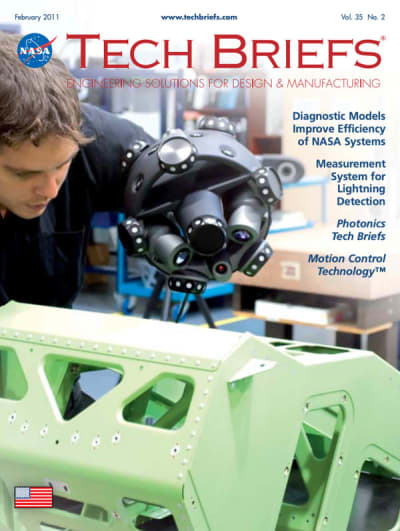
The February 2011 issue of NASA Tech Briefs, Photonics Tech Briefs, and Embedded Technology presents a comprehensive overview of the latest advancements and innovations in various fields of engineering and technology. This edition highlights significant developments that aim to improve efficiency, enhance diagnostic capabilities, and introduce new products that cater to the needs of design engineers and industry professionals.
Key Features and Innovations:
-
Diagnostic Models for NASA Systems: The issue opens with a focus on diagnostic models that enhance the efficiency of NASA systems. These models are crucial for monitoring and maintaining the performance of various aerospace technologies, ensuring that they operate optimally under different conditions. The integration of advanced diagnostic tools allows for real-time data analysis, which is essential for timely decision-making and system management.
-
Measurement System for Lightning Detection: A notable feature in this edition is the introduction of a new measurement system designed for lightning detection. This system is vital for both safety and research purposes, providing accurate data on lightning strikes and their impact on various environments. The technology behind this system represents a significant advancement in meteorological tools, enabling better forecasting and risk assessment related to severe weather events.
-
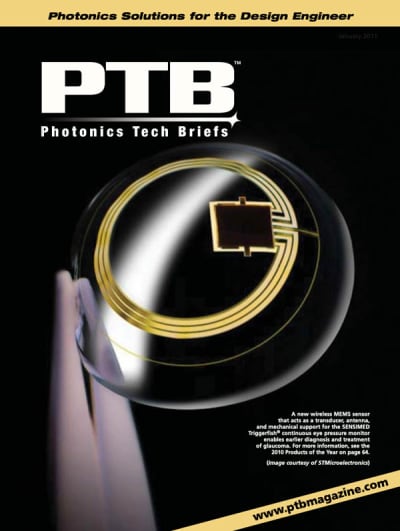
Photonics Solutions: The magazine also delves into photonics solutions tailored for design engineers. These solutions encompass a range of applications, from telecommunications to medical devices. The issue highlights a new wireless MEMS (Micro-Electro-Mechanical Systems) sensor that functions as a transducer, antenna, and mechanical support for the SENSIMED Triggerfish® continuous eye pressure monitor. This innovative device facilitates earlier diagnosis and treatment of glaucoma, showcasing the intersection of photonics and healthcare technology.
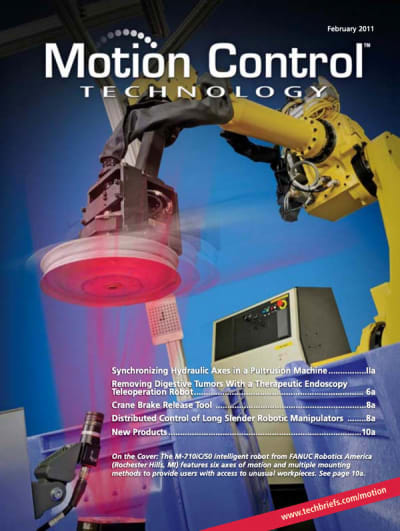
Motion Control Technology: Motion control technology is another focal point of this issue. The M-710iC/50 intelligent robot from FANUC Robotics America is featured prominently, illustrating its capabilities in handling complex tasks with precision. This robot, equipped with six axes of motion and multiple mounting methods, is designed to provide users with access to unusual workpieces, thereby enhancing productivity in manufacturing and assembly processes.
-
Teleoperation Robotics: The issue includes an article on teleoperation robots, which are increasingly being utilized in medical applications, such as removing digestive tumors through therapeutic endoscopy. This technology allows for minimally invasive procedures, reducing recovery times and improving patient outcomes. The advancements in teleoperation robotics signify a shift towards more sophisticated and less invasive surgical techniques.
-
Distributed Control Systems: Another significant topic covered is the distributed control of long slender robotic manipulators. This technology is essential for applications that require precise control over extended reach and flexibility, such as in aerospace and automotive industries. The article discusses the algorithms and control strategies that enable these manipulators to perform complex tasks with high accuracy.
-
New Products and Innovations: The magazine features a section dedicated to new products, showcasing the latest tools and technologies available in the market. This includes advancements in sensors, robotics, and control systems that are designed to meet the evolving needs of engineers and manufacturers. The introduction of these products reflects the ongoing innovation within the industry, aimed at improving efficiency and performance across various applications.
-
Industry Insights: Throughout the issue, readers are provided with insights into current trends and future directions in technology and engineering. The articles emphasize the importance of interdisciplinary collaboration and the integration of emerging technologies to solve complex challenges. The emphasis on research and development highlights the commitment of companies and institutions to push the boundaries of what is possible in engineering.
Conclusion: The February 2011 issue of NASA Tech Briefs, Photonics Tech Briefs, and Embedded Technology serves as a valuable resource for professionals in the engineering and technology sectors. With its focus on diagnostic models, innovative measurement systems, photonics solutions, and advancements in motion control technology, this edition encapsulates the spirit of innovation that drives the industry forward. By providing insights into the latest products and technologies, the magazine not only informs but also inspires engineers and designers to explore new possibilities in their work. As the landscape of technology continues to evolve, this issue stands as a testament to the ongoing pursuit of excellence and efficiency in engineering.
Features
-
Application Briefs
Crew Test Module Provides Launch Escape System
Enterprise Systems Help Consolidate NASA’s IT and Data Services
IT Services Support NASA Scientists and Engineers
Motion Components Optimize Performance of Liquid Chromatography System
Tech Briefs
-
Physical Sciences
Multi-Segment Radius Measurement Using an Absolute Distance Meter Through a Null Assembly
Fiber-Optic Magnetic-Field-Strength Measurement System for Lightning Detection
Non-Contact Thermal Properties Measurement With Low-Power Laser and IR Camera System
Photocatalytic Active Radiation Measurements and Use
Computer Generated Hologram System for Wavefront Measurement System Calibration
Cycle Time Reduction in Trapped Mercury Ion Atomic Frequency Standards
Use of Dynamic Distortion to Predict and Alleviate Loss of Control
-
Manufacturing & Prototyping
Range 7 Scanner Integration With PaR Robot Scanning System
High-Operating-Temperature Barrier Infrared Detector With Tailorable Cutoff Wavelength
-
Materials
A Model of Reduced Kinetics for Alkane Oxidation Using Constituents and Species for N-Heptane
Thermally Conductive Tape Based on Carbon Nanotube Arrays
Lightweight, Ultra-High-Temperature, CMC-Lined Carbon/Carbon Structures
-
Mechanics & Machinery
Sample Acquisition and Handling System From a Remote Platform
Improved Rare-Earth Emitter Hollow Cathode
High-Temperature Smart Structures for Engine Noise Reduction and Performance Enhancement
-
Electronics & Computers
Products
-
Applications
-
Applications
-
Research News