

Are the shoes you’re wearing really made of leather? Is the table nearby made of wood? How can you be sure? These questions may seem trivial in everyday life, but knowing the precise chemical makeup of spacecraft components is a crucial part of quality control and can help ensure a successful mission. And learning that the paint on a canvas was produced using modern materials could be what prevents a museum from spending $10 million on a forgery.
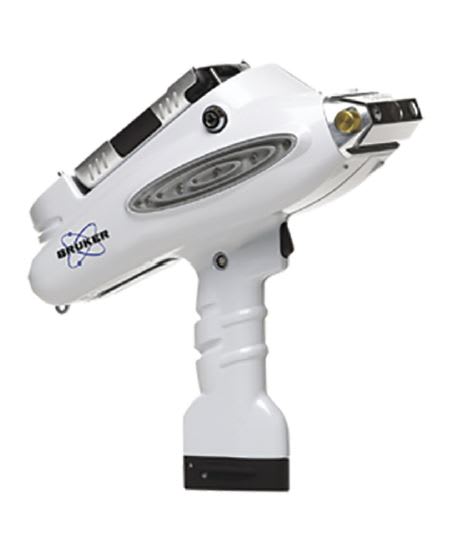
In 2001, scientists at Marshall Space Flight Center in Alabama began searching for ways to enable easy, accurate, and consistent XRF scanning of aluminum alloys using a portable device. Doing so would improve quality control on a wide range of flight hardware. Marshall partnered with KeyMaster, later acquired by Madison, WI-based Bruker AXS. Under a Space Act Agreement, Keymaster worked with Marshall’s Technology Transfer Office to develop a system for detecting lighter elements.
Because the primary hurdle facing light-element detection was the air between the scanner and its object, NASA and KeyMaster created a vacuum chamber that could be incorporated into the instrument. During development, NASA provided the materials for a prototype and personnel to evaluate the device; KeyMaster contributed its technical expertise and hosted the project in its facilities.
The resulting XRF scanner could easily detect lighter elements such as aluminum and silicon; in fact, it could detect any gas, liquid, powder, or solid heavier than neon. The company licensed the technology and made it commercially available. Bruker AXS now sells the technology as the Tracer III-SD and Tracer III-V.
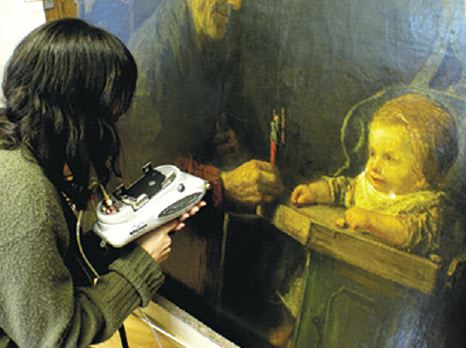
The NASA-improved XRF scanners have been particularly well received in museums, where they are used to authenticate artifacts and works of art, and assist those who conserve them. Tracer’s ability to detect the elemental composition of an object with a simple, nondestructive scan makes it ideal for analyzing precious, rare, or delicate items. More than 600 museums and universities worldwide now use the device, including the National Archives, the Louvre, the National Gallery, and the British Museum.
The expanded capabilities of XRF scanners have proven valuable for many other applications outside of museums. Tracer scanners have been used in the carpet cleaning industry and to test the composition of consumer products like food and medication to ensure they are free of contaminants.
Visit http://spinoff.nasa.gov/Spinoff2012/cg_6.html for more information.











