
Articles: Robotics, Automation & Control
Digital innovations in hydraulic components, such as digitally enhanced high-response directional valves, are moving the needle for machine builders and raising performance standards for machine builders. As hydraulic systems evolve, smart technology is enabling deeper connectivity for more productive machines. Read on to learn more.
Articles: Sensors/Data Acquisition
The shift from 12V to 48V systems is driven by the need for improved efficiency and reduced cooling requirements. Read on to learn more.
Articles: Power
In the evolution of fast charging, success will not be measured solely by how quickly a new standard is adopted, but by how responsibly the industry manages the journey there. Read on to learn more.
Articles: Power
A shift from reactive to preemptive thermal management is particularly important for improving performance, efficiency, and service life. By maintaining a uniform, stable temperature and minimizing even small momentary disruptions to such a steady state, thermal management systems backed by coupled electrothermal modeling will be key to pushing the envelope for EV motor quality. Read on to learn more.
Articles: Sensors/Data Acquisition
See the products of tomorrow, including Chalmers University of Technology's new sensor that is well suited to humid environments — and actually performs better the more humid it gets; a new fabrication technique that can produce multifunctional “smart synthetic skin” from a research team at Penn State; and RMIT University researchers' flexible nylon-film device that generates electricity from compression and keeps working even after being run over by a car multiple times.
Articles: Manned Systems
Originally scheduled for September 2025, Artemis II, NASA’s first crewed mission in the Artemis program is now targeted no later than April 2026 for launch. Taking the crew around the Moon is going to be the agency’s first step toward sustained lunar presence. Read on to learn more about it.
Articles: Data Acquisition
By leveraging rich simulation data to train AI models, which can then be used to quickly explore a design space and guide further simulations, the existing product design process can be enhanced to become faster and more flexible. Read on to learn more.
Articles: Electronics & Computers
See the products of tomorrow, including a bio-mimetic, light-powered soft lens that mimics the human eye’s ability to refocus and adjust to varying light conditions; a new material for insulating windows that could improve the energy efficiency of buildings worldwide; and more.
Articles: Design
On the heels of taking first place in the Aerospace & Defense category at the 2023 Create the Future Contest, Zulu Pods has grown in nearly every way imaginable and shows no signs of slowing down (nor a desire to!) at any point soon.
Articles: AR/AI
To address the staggering power and energy demands of AI, engineers have developed a revolutionary new thin-film material that promises to make AI devices significantly faster while dramatically cutting energy consumption. In this interview, Alamgir Karim, who is leading the research, discusses the new approach, its benefits, and how Nobel Prize-winning chemistry enabled this discovery.
Articles: Propulsion
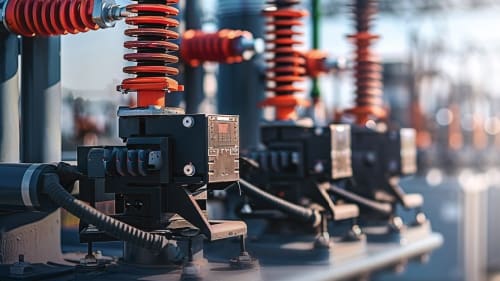
Pinggao Group focuses on the development and production of high-voltage and ultra-high-voltage electrical equipment. Different teams at the company use simulation to explore in depth the factors that affect the performance of high-voltage switches as well as to optimize switch designs and predict the operational status of equipment. Read on to learn more about the work.
Articles: Physical Sciences
See the products of tomorrow, including a new nanoscale optical device that works at room temperature to entangle the spin of photons (particles of light) and electrons to achieve quantum communication; a dust sensor for use in space environments; and more.
Articles: Manufacturing & Prototyping
As electric vehicle designs change and production targets grow even more aggressive, advanced laser welding technologies have continued to evolve to help manufacturers be more efficient and stay competitive. Read on to learn more about it.
Articles: Imaging
This article highlights requirements for an IR imaging C-UAS platform and examines the design of one state-of-the-art lens system for this application. Read on to learn more.
Articles: Communications
Although RF-over-Fiber systems are engineered and ruggedized to withstand harsh environments, aerospace systems remain vulnerable to environmental stressors that can degrade the performance of components over time. Maintaining signal integrity requires consistent testing and preventative maintenance of key equipment. Read on to learn more.
Articles: Imaging
From autonomous vehicles navigating in darkness to UAVs detecting threats, thermal imaging steps in when visible cameras fail — and lens design determines performance, cost, and reliability. Read on to learn more.
Articles: Sensors/Data Acquisition
Endoscopic imaging system development requires coordination between various engineering disciplines, especially for optical illumination and imaging engines, particularly when adding fluorescence imaging capabilities. Read on to learn more about it.
Articles: Power
Traditionally, most motors used in EVs and mobility platforms have been radial flux systems. In recent years, there have been major strides in alternative axial flux motor architectures. What exactly do these architectural differences mean for motor design and production? Read on to find out.
Articles: Green Design & Manufacturing
The EU Battery Regulation demands unprecedented granularity in supply chain tracking. Read on to learn more about what this means.
Articles: Energy
Will EV sales in the U.S. double by the end of the decade, or more? Will the U.S. keep pace with China’s relentless iterative improvements on EV technology, or will China increasingly dominate the rapidly electrifying global transportation industry? Read on to learn more.
Articles: Robotics, Automation & Control
Battery packs are becoming larger and heavier, particularly in applications such as electric trucks, aviation and renewable energy storage. As payload requirements increase, manufacturers are turning to advanced automation and material handling systems to keep pace. Read on to learn what this means.
Articles: Robotics, Automation & Control
Without integrated vision, robots can only perform tasks in precisely the same way every time. If a part is even slightly out of position or rotated differently, the robot may fail to complete its task, or worse, cause an error in the process. Read on to learn more.
Articles: AR/AI
The future of industrial autonomy will not be defined by systems that operate as opaque black boxes, but by approaches that deliberately embed the expertise of the people who know the processes best. Machine teaching makes this possible by making the skills and strategies of expert operators the foundation of AI system design. Read on to learn more.
Articles: Mechanical & Fluid Systems
While growing up, many of us were fascinated by watching gears turning, whether in bicycles, clocks or garbage trucks packing trash on the old rear-load machines. Today, gearing systems play a crucial role in machinery, transmitting power efficiently and reliably across a wide range of applications. Read on to learn more.
Articles: Software
Through a combination of modeling, simulation, and machine learning (ML), USM researchers are laying the groundwork for intelligent uncrewed underwater vehicles (UUVs) capable of autonomously and accurately revealing what lies beneath the waves. Read on to learn more.
Articles: Aerospace
The micro-vibration test instrument gives the ESA a high confidence that a satellite’s mechanisms in space will generate verified forces and torques as displayed and confirmed on the micro-vibration test instrument on Earth. Read on to learn more about it.
Articles: Manufacturing & Prototyping
See the products of tomorrow, including a drone with flapping wings that can locate and hover around a moving light like a moth to a flame; a new multi-layered metalens design that could revolutionize portable optics in devices like phones, drones, and satellites; and more.
Articles: Electronics & Computers
The electrification of military systems is a positive step that will deliver enormous technical, operational, and sustainability advantages across defense equipment lifecycles. But it requires deep system-level technical expertise to ensure systems work seamlessly together across power conversion, distribution, and conditioning. Read on to learn more.
Articles: Transportation
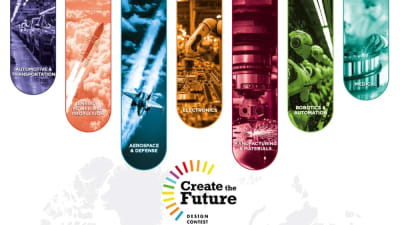
In this article, you’ll learn about the Create the Future Design Contest finalists in all seven categories chosen from over 600 new product ideas submitted from 67 countries.